NOAA’s Space Weather Prediction Center (SWPC) issued a rare S4 solar radiation storm on Monday, Jan. 19, 2026, which is the first solar radiation storm rated at 4 (out of 5) since October 2003. This is combined with G4 level severe geomagnetic storm (G4) conditions as high energy particles reached the Earth’s upper atmosphere. Short term radio communication blackouts were observed ahead of what could be the most intense display of aurora borealis across the northern United States since November of last year.
An S4 severe solar radiation storm is now in progress – this is the largest solar radiation storm in over 20 years. The last time S4 levels were observed was in October, 2003. Potential effects are mainly limited to space launch, aviation, and satellite operations. pic.twitter.com/kCjHj4XYzB
— NOAA Space Weather Prediction Center (@NWSSWPC) January 19, 2026
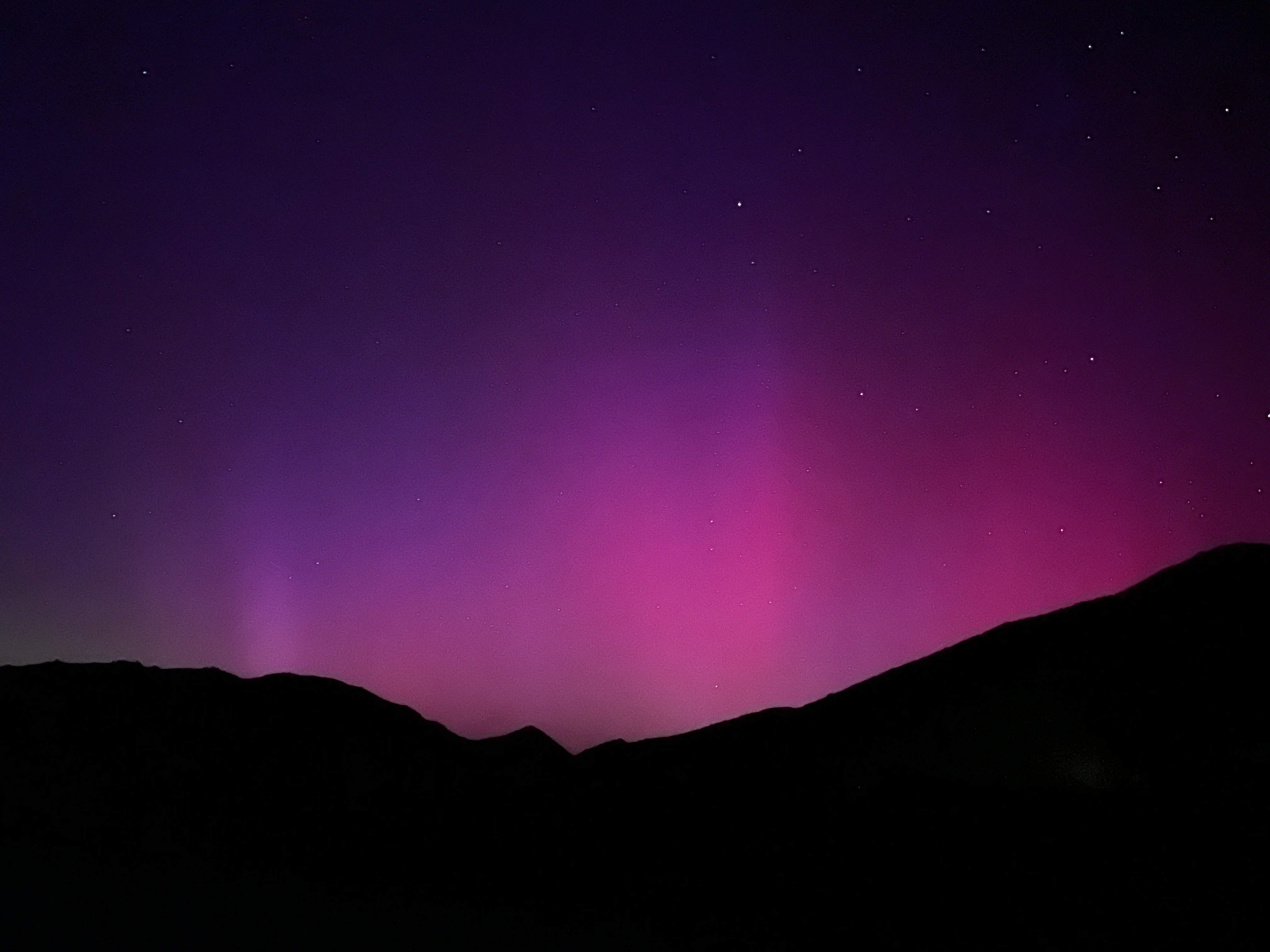
You may recall the views we had around the Bay Area also in May 2024, where many were able to get photos or time-lapse videos of aurora borealis on their cameras and smartphones using three seconds to 10-second time exposure settings. The vibrant colors are caused by upper atmospheric nitrogen and oxygen molecules reacting to the high energy solar particles, acting a bit like a neon tube.

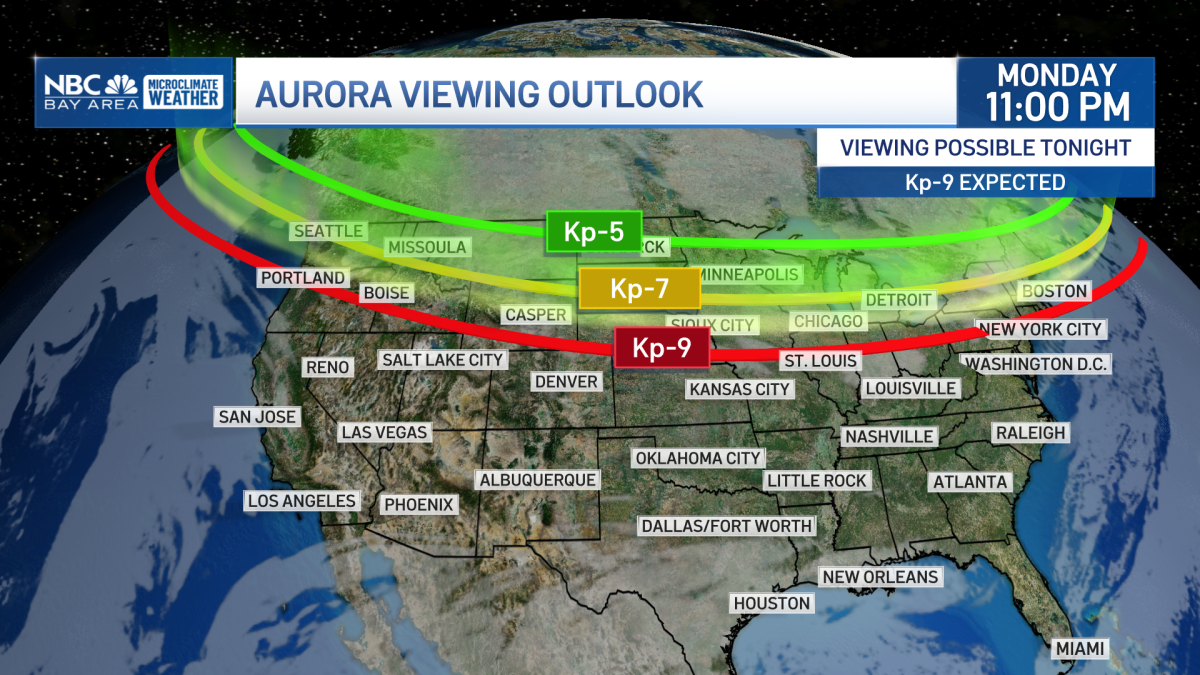
On Monday, SWPC forecasters were expecting the peak of the current solar storm dayside Monday into early Tuesday morning timeframe.
Aurora viewing for this most recent event has been vibrant across Europe and may continue to stay active into Monday night locally with aurora displays possible across Northern California to sunrise Tuesday morning.
G4 (Severe) storm conditions first reached at 1938 UTC (2:38pm EST) upon CME shock arrival. Please continue to visit https://t.co/TV7Yw6Lq1Y for the latest information and updates. pic.twitter.com/rXtthPmP9C
— NOAA Space Weather Prediction Center (@NWSSWPC) January 19, 2026
G4 Watch in effect for 20 Jan UTC-day (late 19 Jan EST to early 20 Jan EST) due to anticipated CME arrival at Earth. We will make a video update later this afternoon about this activity. Look for the latest info & updates by staying space weather aware at https://t.co/kwJj9rIpub pic.twitter.com/KYqgsN9oIt
— NOAA Space Weather Prediction Center (@NWSSWPC) January 19, 2026
The first S4 solar radiation storm since October 2003 is impacting the Earth as of midday Monday January 19th, 2026. For the first time since last November, Aurora viewing opportunities will be possible into the Bay Area tonight. @nbcbayarea 1/19/2026 pic.twitter.com/J27kOLZrDr
— Rob Mayeda (@RobMayeda) January 19, 2026
NBC Bay Area’s Rob Mayeda shares viewing tips and some of the science behind what makes the aurora borealis, also known as the northern lights, visible in our skies in the video above.