A familiar ending demands a smarter response from the Houston Texans. At some point, they have to realize that talent alone stops being enough. The Texans have reached that inflection point. Their latest Divisional Round loss wasn’t a collapse of belief or effort. It was a reminder that playoff football exposes structural weaknesses more ruthlessly than any other stage. If Houston wants to stop treating January as a ceiling instead of a doorway, the response this offseason must be precise, restrained, and ruthless. There is one trade that fits that description perfectly.
Houston belongs
The 2025 Texans were not supposed to look like this. After stumbling out of the gate with an 0-3 start, Houston recalibrated and never looked back. They finished 12-5 and second in the AFC South. Head coach DeMeco Ryans oversaw one of the league’s most impressive midseason turnarounds. This was fueled by a suffocating defense that ranked second in yards allowed and third in defensive EPA.
That defense was built around stars. Will Anderson Jr continued his ascent as one of the NFL’s most disruptive edge defenders. Meanwhile, Derek Stingley Jr erased top receivers weekly. The Texans rode that identity to the postseason and delivered a franchise milestone in the Wild Card round. They dismantled the Pittsburgh Steelers 30–6 for their first-ever road playoff victory.
The final flaw
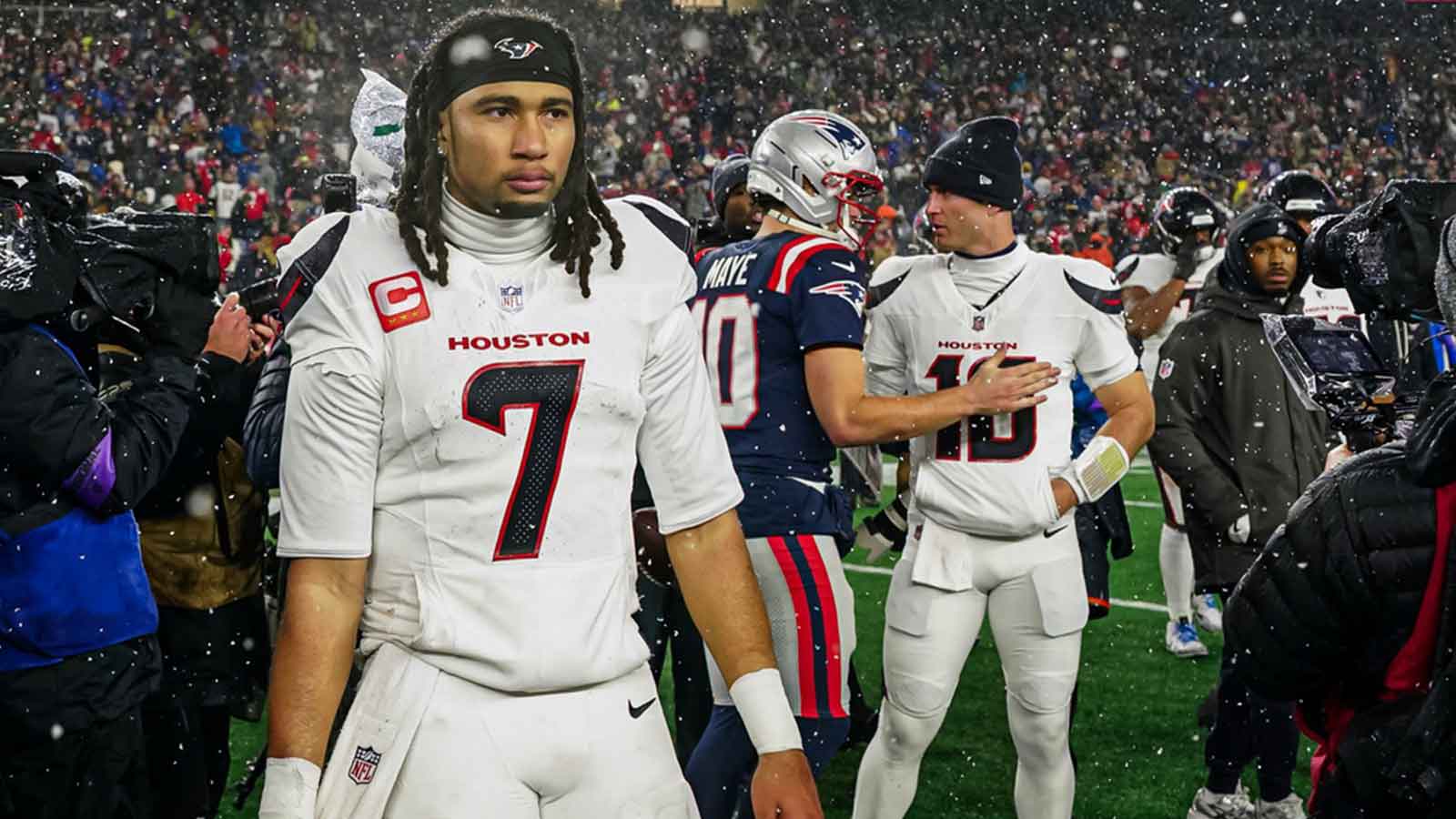
The dream stopped in Foxborough, though. On Sunday, Houston’s season unraveled in a 28–16 Divisional Round loss to the New England Patriots. It was a game defined by snow, turnovers, and trench warfare. CJ Stroud threw four first-half interceptions. One of those was returned for a touchdown. Houston finished with five turnovers as a unit.
Context matters, of course. Stroud played without Nico Collins and lost Dalton Schultz mid-game. Still, the deeper issue wasn’t the quarterback. Despite forcing four fumbles from Drake Maye, Houston couldn’t control the interior. New England leaned on physical run concepts, shortened the game, and forced Houston to play uphill. Once again, the Texans fell to 0–7 all-time in the Divisional Round.
Cap reality
Houston doesn’t have the luxury of swinging wildly this offseason. The Texans are projected to have roughly $13.3 million in cap space. They must also already consider early extensions for Stroud and Anderson. Caserio can manufacture room—post-June 1 savings from a Schultz or a Joe Mixon release. Those are very real options. Even then, though, Houston won’t be a top-of-market buyer.
That reality forces discipline. The Texans’ most pressing needs are in the trenches. That is particularly true along the interior defensive line. Unfortunately, quality interior defenders almost never hit free agency. Trading premium assets for star veterans would undermine Houston’s long-term flexibility. The solution must be cheaper, younger, and targeted.
Fixing the middle
That’s where New York Jets defensive tackle Mazi Smith enters the picture.
To finally break their Divisional Round curse, the Texans must fortify the one area that failed them in January. That is interior run defense. Trading for Smith is the rare move that aligns need, value, and cap reality.
Smith is a former first-round pick. He is built for exactly what Houston lacks. At 6-foot-3 and 337 pounds, he’s a true space-eater who can absorb double-teams and prevent interior linemen from climbing to the second level. With Anderson and Danielle Hunter already terrorizing edges, Houston doesn’t need another penetrator. It needs an anchor.
Fitting Houston perfectly
Smith’s value isn’t measured in sacks. It’s measured in how clean he keeps everyone else. His presence would allow linebackers to flow downhill instead of fighting through trash. It would prevent playoff opponents from leaning on ground-and-pound scripts that shorten games and neutralize Houston’s speed.
Just as importantly, Smith fits the Texans’ financial reality. He’s entering the final year of his rookie deal. He also carries a manageable, fully guaranteed salary that won’t interfere with future extensions. For a team preparing to invest heavily in its core, that matters.
Smith is also a complementary piece, not a disruptive one. Houston wouldn’t need to redesign its defense around him at all. They just need to reinforce it.
Price makes sense
The Jets’ side of the equation makes this trade realistic. Since being included as a throw-in at the 2025 trade deadline during the Quinnen Williams blockbuster, Smith has barely seen the field. He has appeared in just three games and failed to record a solo tackle. New York is widely expected to decline his fifth-year option and could release him outright.
That reality crushes his market value.
A fifth-round pick or even a conditional sixth would be enough to acquire Smith before he hits waivers. For Houston, that’s a low-risk flyer on a former first-round talent with high-level physical traits. For the Jets, it’s recouping draft capital for a player unlikely to be part of their rebuild.
Proposed trade terms:
Texans receive: DT Mazi Smith
Jets receive: 2026 fifth-round pick
Contender or champion
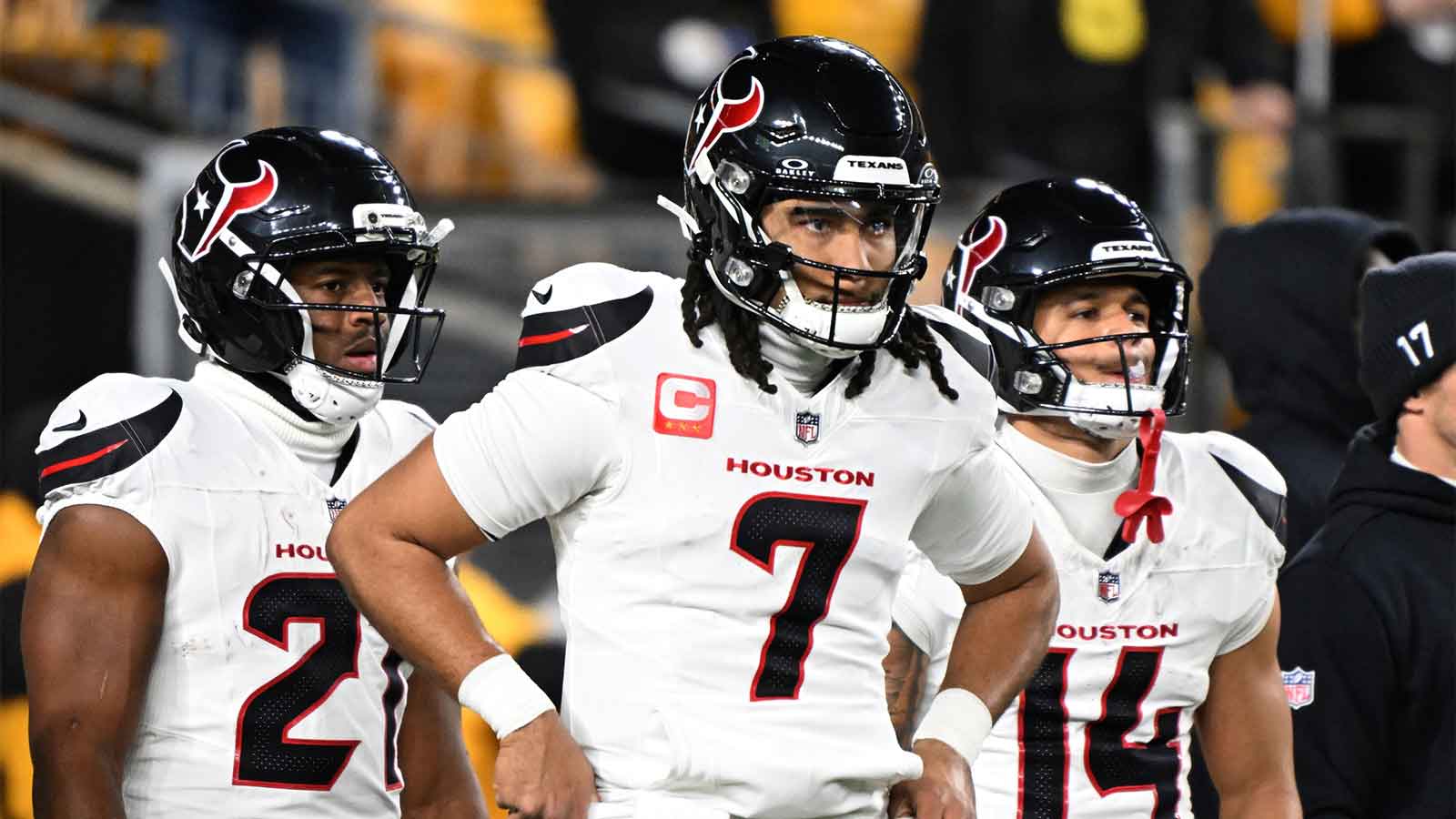
Houston doesn’t need fireworks this offseason. It needs answers. The Texans already have their quarterback, coach, and defensive identity. What they lack is the interior muscle to survive January football.
Mazi Smith isn’t a headline grabber by any stretch. He’s something far more valuable, though. He is the kind of move that prevents seasons from ending the same way twice.
The post Perfect offseason trade Texans must make after losing in Divisional Round once again appeared first on ClutchPoints.