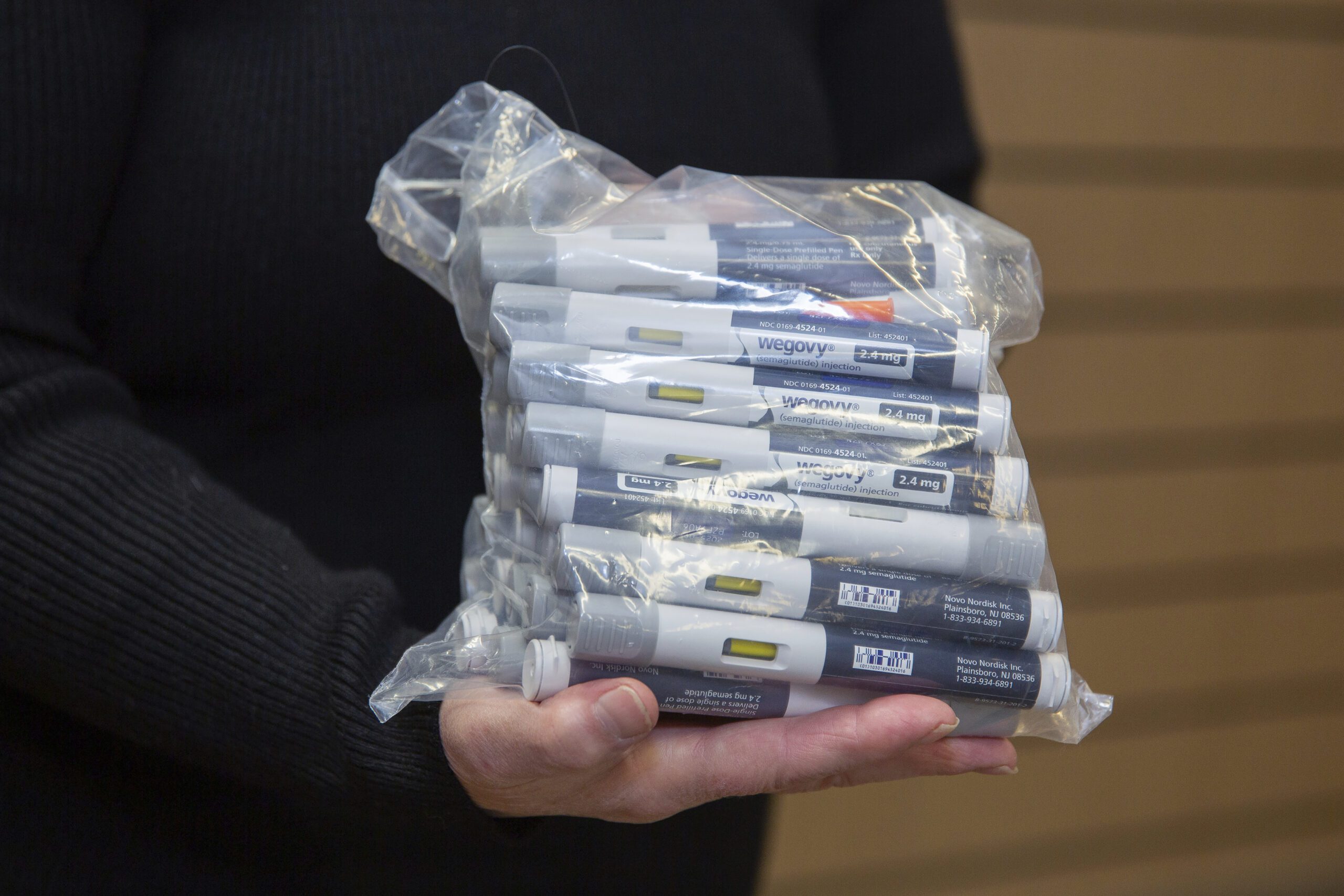
North Carolina has become a key manufacturing hub for GLP-1 weight-loss drugs, and the arrival of a daily pill version of Wegovy adds momentum to a market that continues to grow.
The pill format could make the medication easier to produce and more convenient for patients than weekly injections. That matters in a category that has moved quickly from niche to mainstream. A recent KFF poll found about one in eight U.S. adults — roughly 32 million people — take GLP-1 medications. Cost remains a major obstacle, however. The poll found about 55% of users struggle to pay for the drugs, with or without insurance.
The Wegovy pill is taken daily to support weight loss and help address obesity-related health complications, including cardiovascular disease. Like the injectables that came before it, the active ingredient is semaglutide, which first gained traction last decade as a diabetes treatment that also helped patients lose weight.
Manufacturing for the new pill runs through the Triangle. A Novo Nordisk spokesperson told Axios the Wegovy pill is made “end to end” in the region, adding that more than 2,000 of the company’s 10,000 U.S.-based employees work in North Carolina. Novo Nordisk operates three sites in Clayton and one in Durham, and the company says it has invested $10 billion in Triangle-area manufacturing since the mid-1990s.
State industry leaders say the moment has been years in the making. Laura Rowley, vice president of life science economic development for the N.C. Biotechnology Center, said North Carolina has been building the workforce and infrastructure needed to support large-scale biomanufacturing long before GLP-1 drugs dominated headlines.
Supply has improved, too. A months-long shortage for GLP-1 drugs ended about a year ago, and Novo Nordisk says it is confident it can meet demand for the pill version, which is currently approved only in the U.S.
Novo Nordisk is not the only weight-loss drug manufacturer expanding in the state. Eli Lilly, the maker of Zepbound and Mounjaro, has expanded its presence in Research Triangle Park and Concord since 2020 and has taken market share. Eli Lilly is also expected to bring its own oral weight-loss drug to market after filing for FDA approval in December.
The growth has also intersected with workforce training efforts. Durham Technical Community College recently broke ground on a new biotechnology training center funded in part through a $6 million gift from Novo Nordisk, the largest corporate donation in Durham Tech’s history.
“One of the reasons why manufacturing has been such an exciting area and has been so broadly embraced in so many communities in North Carolina is that there are a range of jobs,” Rowley said. “It’s not just for Ph.D.-level scientists, but actually, moreover, for folks that may have just a certificate beyond their high school education.”
The post NC powers next wave of weight-loss drugs first appeared on The North State Journal.