Le Journal

Sincere apologies to Maine’s Somali people | Letter

Celtics blow 23-point lead, but hold on to beat Raptors

Brewer’s Abbie Derosier wins Miss Maine Field Hockey award
Brewer’s Abbie Derosier displays the Miss Maine Field Hockey trophy at Sunday’s ceremony at Augusta. (Drew Bonifant/Staff Writer) " data-image-caption="Brewer’s Abbie Derosier displays the Miss Maine Field Hockey trophy at Sunday’s ceremony at Augusta. (Drew Bonifant/Staff Writer) " data-medium-file="https://www.pressherald.com/wp-content/uploads/sites/4/2025/12/1000005000.jpg?w=300" data-large-file="https://www.pressherald.com/wp-content/uploads/sites/4/2025/12/1000005000.jpg?w=780" />The goaltender beat out Skowhegan midfielder Grace Mayo for the award, given to the state's best senior.

Maine Celtics top Skyhawks for 8th straight win

Infectious IDeas Podcast: Driving Impact Beyond the Bedside
New CTC Analysis Finds Foreign Terrorist Fighter Threat “In Stasis,” but Still Evolving
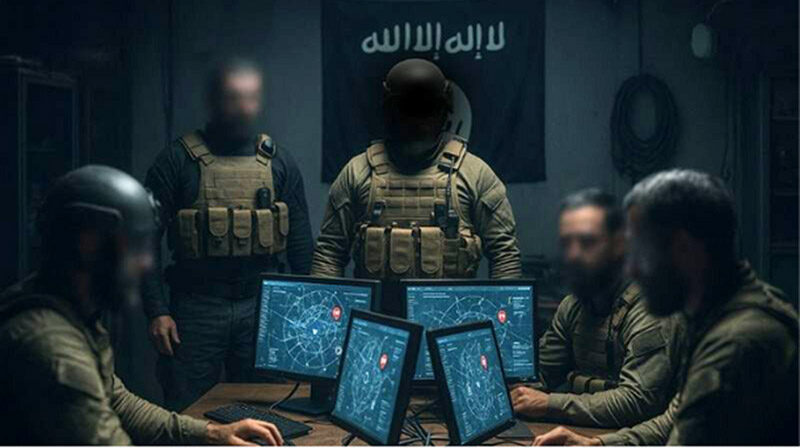
A new research piece from the Combating Terrorism Center (CTC) takes a fresh look at the global picture of foreign terrorist fighters (FTFs) and offers a nuanced assessment: the threat hasn’t disappeared, but it also hasn’t surged. Instead, researchers describe it as being “in stasis”—persistent, adaptive, and still capable of shaping extremist networks worldwide. The study traces the long arc of foreign fighter activity, linking today’s Islamic State–aligned operatives to earlier generations connected to al-Qa`ida and the Arab Afghans. The throughline is clear: foreign fighters have always played a role in exporting violence, moving between conflict zones, and carrying new tactics, techniques, and procedures wherever they go. According to the analysis, those patterns continue. FTFs remain involved in external attack plotting against Western targets and continue to act as conduits between Islamic State affiliates and supporters abroad. What’s changed is how they communicate and influence. Today’s networks use encrypted messaging, generative AI tools, and cryptocurrencies to recruit, coordinate, and move resources with greater speed and anonymity. The report titled: Foreign Terrorist Fighters: A Threat in Stasis, stresses that none of these developments signal an immediate escalation. In fact, many governments have spent the past decade strengthening relevant laws, sharpening intelligence-sharing, and tightening law enforcement cooperation specifically aimed at tracking and disrupting foreign fighter travel and activity. Those measures, the authors argue, have helped keep the threat from expanding. But the study also cautions against complacency. The stability of the threat hinges on continued investment—both in monitoring foreign fighter flows and in maintaining the partnerships that make it possible to detect them early. Click here to read the full report. (AI was used in part to facilitate this article.)

Jaclyn Rubino Named to Lead DHS One Big Beautiful Bill Principal Executive Office
The Department of Homeland Security has tapped Jaclyn Rubino to serve as Executive Director of the One Big Beautiful Bill Principal Executive Office – a move announced by Rubino via LinkedIn. Rubino, who was honored as a Homeland Security Today Trailblazer in 2023, has long been recognized as one of the federal government’s most effective voices on category management and strategic sourcing. Rubino brings more than 15 years of DHS experience to the post. Most recently, she served as Executive Director of the Strategic Programs Division within the Office of the Chief Procurement Officer, where she led DHS’s category management and industry engagement strategy. Under her leadership, DHS became the only federal department to earn an A+ in meeting government-wide category management goals. Before that, she directed the DHS Strategic Sourcing Program Office, overseeing more than 80 contract vehicles valued at over $60 billion. Rubino is also known for ensuring DHS procurement remains accessible to small businesses. Her sourcing strategies have balanced efficiency with inclusion, maintaining strong opportunities for small firms even as category management practices matured across the federal landscape. Rubino’s expertise is well recognized beyond DHS. She is an active participant in the federal-wide Category Management Leadership Council, where she mentors others and lends her expertise in sourcing strategies and category management. In February 2016, Rubino was named as the government-wide Security and Protection Category Manager, leading a cross-agency category team and developing and implementing government-wide strategies that align with established category management principles and methodologies. Prior to her federal career, Rubino served as a Principal with E3 Federal Solutions for several years during which time she consulted on DHS procurements. She has received numerous awards for her professional efforts while at DHS including the Federal 100, DHS Management Directorate Partner of the Year Award, and the Multiple-Award in Government and Industry Conference (MAGIC) Small Business Engagement Award. (AI was used in part to facilitate this article.)

COLUMN: Beyond the Emergency Preparedness Plan
“Everyone has a plan until they get punched in the mouth.” — Mike Tyson In emergency management, that first punch can take many forms: a storm track that suddenly shifts, a cyberattack that cascades through systems we assumed were isolated, or a partner agency that doesn’t show up when the call goes out. The point is the same — the moment reality arrives, the plan begins to unravel. That doesn’t mean planning is worthless. It means we’ve confused the process with the product. A plan is a snapshot of what we thought might happen, written at a moment in time, with assumptions that may or may not survive first contact with chaos. Planning, on the other hand, is the living act of thinking, rehearsing, and coordinating in a way that builds relationships and muscle memory. That’s where resilience actually resides. The Plan Problem Emergency managers love plans. We plan for every imaginable contingency: floods, fires, pandemics, active shooters, cyber incidents, civil unrest. We build annexes and checklists. We dutifully send drafts through coordination channels and wait for signatures. Then, too often, we print the final copy, stick it in a three-ring binder, and file it under “prepared.” But when the lights flicker and the radio crackles, almost nobody reaches for that binder. They grab their phones, their radios, their instincts — and each other. The irony is that the document meant to guide response rarely guides anything at all. Why? Because a plan written to satisfy compliance requirements is not the same as a plan designed to be lived. The first is paperwork. The second is culture. The Real Work Happens Elsewhere The real work of preparedness happens in practice. In exercises, in conversations, in those sometimes-awkward coordination meetings where egos collide and agencies negotiate their turf. It happens in after-action reviews that are brutally honest rather than politically safe. It happens when partners pick up the phone just to check in — not because a grant demands it, but because trust requires it. Plans can help facilitate that. But only if they’re used as conversation starters, not conversation enders. During my years in FEMA and in local response work, I watched communities that excelled during disasters. They weren’t the ones with the thickest plans or the most polished templates. They were the ones where the police chief and fire chief had coffee together every week. Where the public works director knew how to reach the school superintendent on a Sunday morning. Where mutual aid agreements weren’t just signatures, but relationships. You can’t write that into a plan. Paper Is Easy. People Are Hard. There’s comfort in paperwork. It feels like progress. When we’re staring down uncertainty, a detailed plan feels like control. But the truth is that most crises fail not because the plan was missing, but because the people were misaligned — politically, emotionally, or logistically. Disasters test culture, not just capability. They reveal whether your organization values flexibility or hierarchy, whether you empower decisions at the edge or cling to control at the center. A well-rehearsed team with an average plan will outperform a rigid team with a perfect one every time. Exercises: Where Planning Comes Alive Exercises are the crucible where planning becomes practical. They expose the seams between agencies, the untested assumptions, the quiet “we’ll figure it out” that turns into “we should’ve figured it out.” The best exercises don’t just validate a plan — they interrogate it. They ask, “What happens when this doesn’t work?” They stress systems until they bend. They uncover the awkward truth that the person assigned to a key role in the plan is actually on vacation during hurricane season every year. And then (this is key) the lessons get incorporated back into the culture, not just an after-action report. When we treat exercises as bureaucratic obligations instead of opportunities to fail safely, we waste them.…
U.S. Provides Assistance to Sri Lanka in Wake of Tropical Cyclone Ditwah

Emily Fortman Steps In as Interim Regional CEO for the American Red Cross Central & Southern Ohio Region

FEMA Shares Four Tips to Help Prepare for Winter Weather Risks