
Le Journal

Observational Documentary ‘Aluk’ Traces Seven Years With Indonesian Tana Toraja Family at JAFF Future Project

Time-Travel Drama ‘To My Dearest, My Dear’ From ‘The Most Handsome Fish on Earth’ Director Lands at JAFF Future Project

PlushDaemon Group Reroutes Software Updates to Deploy Espionage Tools

Praveen Morchhale on ‘White Snow,’ Kashmir and Film Censorship: ‘Cinema Today Lives Under the Shadow of Fear of Disappearance’
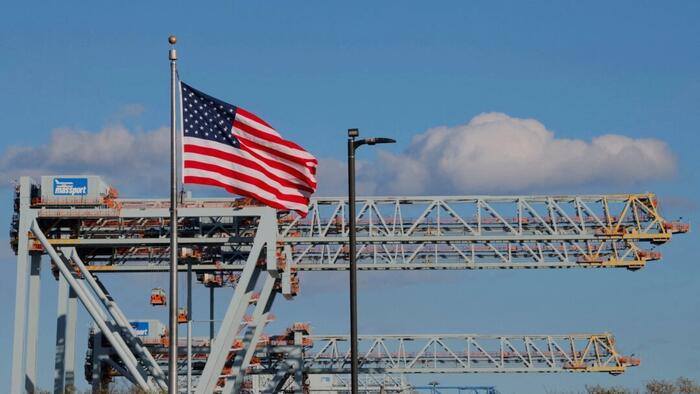
Tariff Revenue Surges To Record High Of $31.4 Billion In October
Tariff Revenue Surges To Record High Of $31.4 Billion In October Tariff revenues surged to $31.4 billion in October, setting a new monthly record as the Trump administration’s trade policies continue to remake U.S. trade flows and reshape the federal government’s balance sheet, according to newly released Treasury Department data. The Monthly Treasury Statement for October, published on Nov. 25, shows net customs duties totaling $31.4 billion, surpassing all prior monthly readings and marking the strongest single-month tariff haul since the modern reporting era began. Treasury records show gross customs receipts of roughly $33.1 billion, offset by about $1.7 billion in refunds, resulting in the $31.4 billion net figure. The record inflow points to the profound fiscal impact of President Donald Trump’s tariff policies, which imposed a 10 percent baseline levy on most imports beginning earlier this year and included a series of reciprocal and country-specific duties that pushed some tariff rates as high as 40 percent. As Tom Ozimek details below for The Epoch Times, the October tariff income surge appears to reflect a deeper structural shift, with tariffs shifting from a marginal revenue source to one of the most rapidly expanding components of federal receipts. The month’s $31.4 billion haul surpassed the previous record of $29.7 billion set in September and came in more than four times higher than the $7.3 billion collected in October 2024. Trump, speaking during a Thanksgiving call with U.S. service members on Nov. 27, said the revenue boom could soon allow the United States to dramatically reduce—or even eliminate—federal income taxes for many Americans. “We’re taking in hundreds of billions of dollars like we’ve never done before,” Trump said, adding that a portion of the money could be returned to Americans in the form of a dividend, while the rest would contribute to debt reduction. “Over the next couple of years, I think we'll substantially be cutting and maybe cutting out completely ... income tax.” The remarks echoed Trump’s earlier statements, including an April social media post in which he suggested that Americans earning under $200,000 might see their income taxes sharply reduced or eliminated once the tariff program reached full effect. Trump reiterated that theme on Nov. 24, writing on Truth Social that tariff revenues would skyrocket as foreign buyers exhaust stockpiles of pre-tariff goods. Independent models show the magnitude of the shift. The Penn Wharton Budget Model, drawing on Treasury data, estimates the United States has collected more than $320 billion in customs and excise duties so far this year, compared with roughly $171 billion at the same point in 2024. The Tax Policy Center estimates Trump’s tariff actions have lifted the average U.S. tariff rate to 17.6 percent, with tariff revenue expected to total $2.3 trillion between 2026 and 2035. It projects the tariffs will add about $256 billion to federal receipts next year, though it cautions that its estimates remain “highly uncertain” given the complexity of stacking rules and the unpredictable impact of foreign countermeasures. Court Challenge Looms The Trump administration’s tariff policies face a pivotal legal test at the U.S. Supreme Court. Justices heard arguments on Nov. 5 in a case challenging the president’s use of the International Emergency Economic Powers Act (IEEPA) to impose broad, across-the-board duties. Neal Katyal, a former acting U.S. solicitor general representing business groups opposed to the tariffs, argued in court that the duties amount to taxes beyond what Congress authorized. Solicitor General D. John Sauer countered that tariffs remain regulatory tools squarely within presidential authority under IEEPA. A ruling against the administration could upend major portions of the tariff program. Trump has urged the high court to rule quickly, calling the matter “urgent and time sensitive.” U.S. Trade Representative Jamieson Greer…
The Illusion Of Progress & The Pursuit Of 'More'

FDA's "Profound Revelation": COVID Shots Killed At Least 10 Children, Stronger Vax Rules Coming
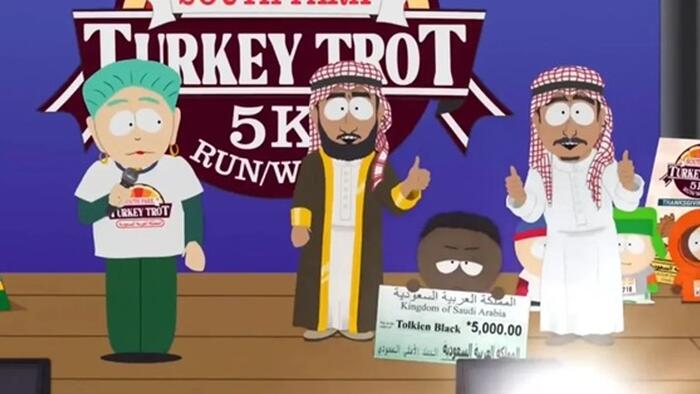
South Park Roasts Americans Taking Saudi Money In Thanksgiving Special
South Park Roasts Americans Taking Saudi Money In Thanksgiving Special Via Middle East Eye The makers of the popular satirical cartoon show South Park turned their sights on Saudi Arabia in their latest episode, attacking American media personalities, politicians and sporting events for taking money from the state. Titled Turkey Trot, the episode starts with Mayor McDaniels convening a meeting with local businesses trying to secure sponsorship for its annual Thanksgiving Turkey Trot race. Struggling to find funds due to the economic crisis in the US, one character suggests there is someone "who'd be willing to give South Park a bunch of money", adding "they're giving money to everyone else". The scene then cuts to a mock advert for the Turkey Trot, which features mock Arabic singing, shots of Saudi men dancing and a warning that "disparaging remarks towards the Saudi Royal family are strictly prohibited". That appears to be a reference to the recent Riyadh Comedy Festival, which Saudi Arabia hosted in September and October, and featured comedians including Kevin Hart and Dave Chappelle amid much criticism. According to contracts for the event leaked by comedian Atsuko Okatsuka, performers had to abide by a list of conditions, which included agreeing not to disparage Saudi Arabia's political leadership, religious values and legal system. As the South Park episode develops, the show's anti-hero Eric Cartman becomes an advocate for Saudi Arabia, eager to cash in on the Turkey Trot's $5,000 prize. When his teammate Tolkien Black bows out of the race because "it doesn't feel right", Cartman takes on the challenge of changing his mind. "They're trying to be progressive, okay," he argues. "You want them to go back to what they were doing?" "You want Saudi Arabia to go back to cutting people up and paying Kevin Hart," says Cartman. "Is that what you want? "Them wanting to help pay for American things is good. Because, guess what, if Saudi Arabia is out paying for sporting events, they're not out hacking up reporters and inviting Pete Davidson to come do comedy." Cartman continues: "They allow women to drive! It's like practically a lesbian utopia over there." Tolkien remains unconvinced despite Cartman's arguments, which at one point include blaming him if Saudi Arabia resumes "stuffing journalists into suitcases". That reference is to the murder of Middle East Eye columnist Jamal Khashoggi by Saudi agents in October 2017. Since Saudi Crown Prince Mohammed bin Salman became the kingdom's de facto ruler in 2017, Riyadh has diversified its investment interests to include sporting events and popular entertainment. In entertainment, besides the Riyadh Comedy Festival, the country also hosts the Red Sea Film Festival, which opens next week and which regularly attracts Hollywood's A list. In sports, the LIV Golf tour attracts some of the best golfers in the world and the Saudi Pro League features football stars including Cristiano Ronaldo, Neymar, Karim Benzema and Sadio Mane. Performers and athletes are attracted to such events by industry-leading payments despite criticism that they are helping to sanitise Saudi Arabia's reputation. Not all big names are taking the criticism lightly and have defended their right to perform in Saudi Arabia. The most significant of these was the comedian Dave Chapelle, who argued that US critics lacked the moral standing to criticize his appearance in Saudi Arabia given the state of free expression in their home country. "Right now in America, they say that if you talk about Charlie Kirk, that you’ll get cancelled," Chappelle said during a performance in Saudi Arabia. "It's easier to talk here than it is in America." Egyptian comedian Bassem Youssef argued that the criticisms of comedians appearing in Saudi Arabia made no sense given that the US was also accused of human rights violations and no one had objected to their appearances there. In a follow-up video, Youssef reiterated his point. "My point was…

"The Whole Model Is Broken": 'Tech Mafia Wife' Admits 'We Were Klaus Schwab's Useful Idiots'

Trump Pushes To Reopen California Coast To Offshore Drilling
Is Ukraine's Anti-Corruption Investigation Turning Into A Rolling Coup?
