Le Journal
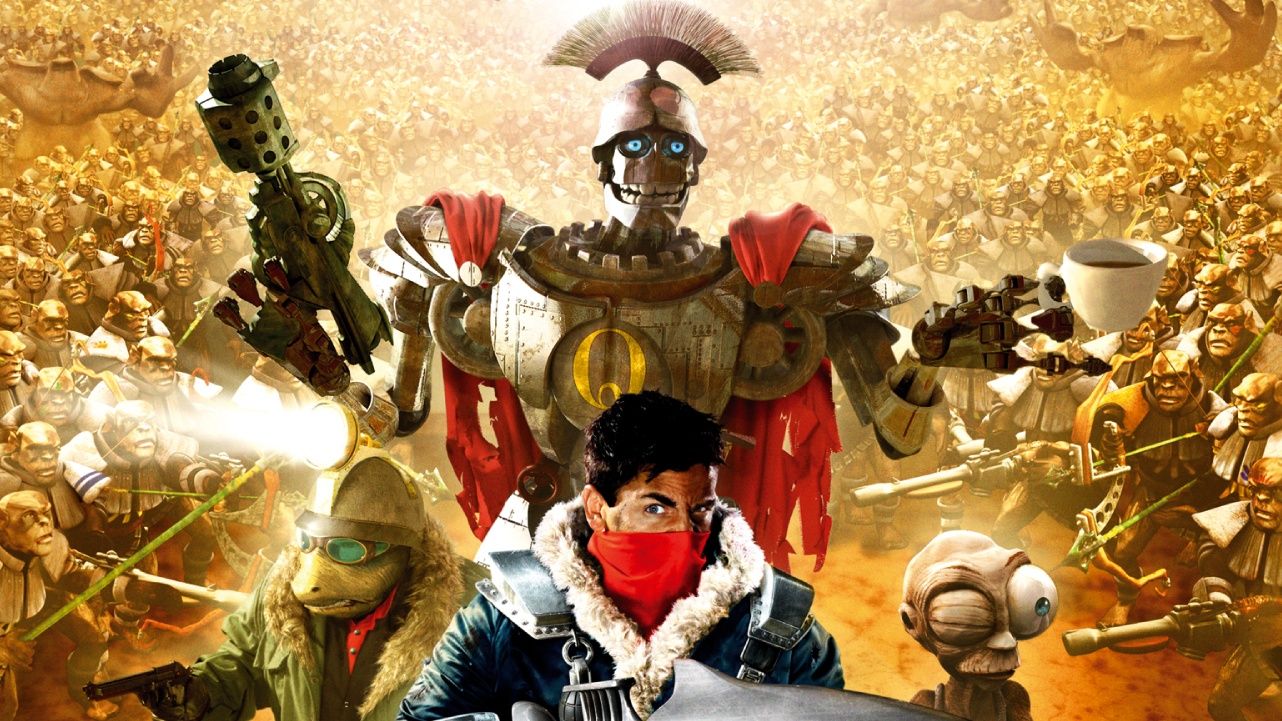
Disney delists 14 games from Steam without warning, most notably Armed and Dangerous and that one Hercules game you vaguely remember playing in 1997
Micron signs a deal to acquire a chip foundry in Taiwan for $1.8 billion, though it won't make a dent in the memory supply crisis until 2027 at the earliest
Stepping up.

A stupid Windows 11 requirement makes Asus' simple new Wi-Fi motherboard feature a winner

One of my most anticipated games for 2026 is a little sandbox puzzle game that plays like the lovechild of Unpacking and PowerWash Simulator
Donald Trump’s war against ‘biased media’ crumbles as Republicans force him to fund $643 million agency he wants destroyed
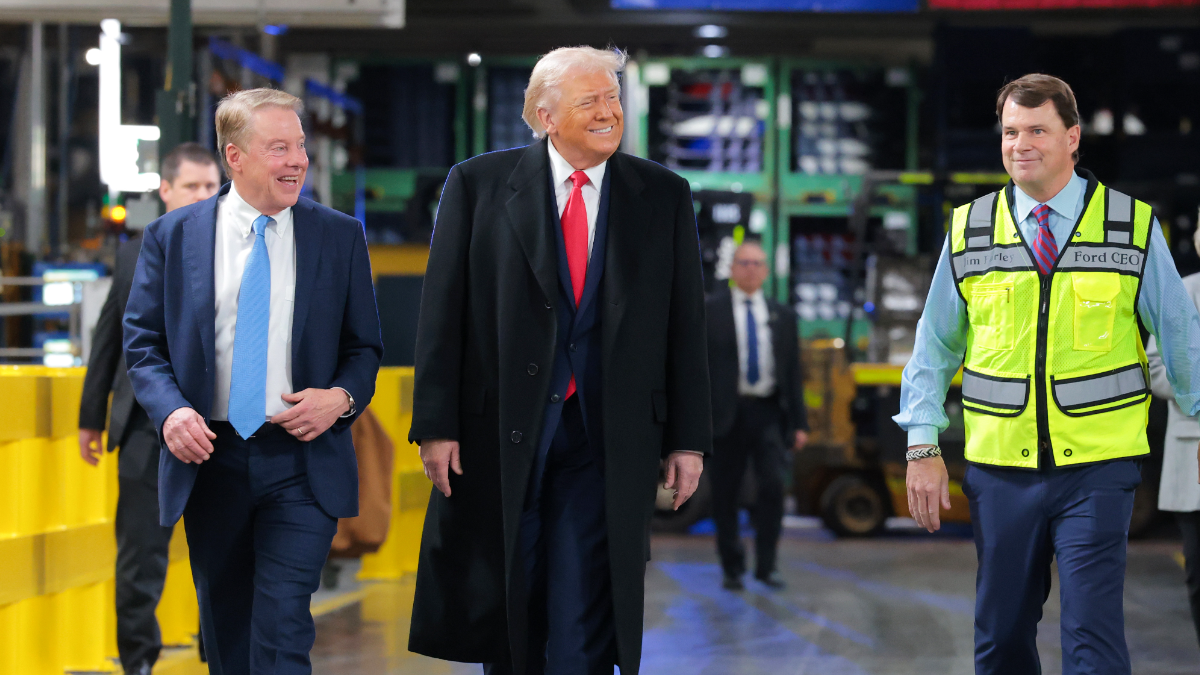
Congressional Republicans just approved $643 million in funding for the U.S. Agency for Global Media (USAGM), an organization Donald Trump has actively tried to destroy, which works on radio, television, internet, and broadcasting, primarily focused on the Middle East. This massive funding, which passed both chambers of Congress this week, was included as part of the must-pass National Security, Department of State and Related Programs Act (NSRP). Ultimately, the GOP chose legislative unity and avoiding a government shutdown over adhering to the president’s long-standing opposition to the agency. Unity wins out as Republicans swallow $643M in funding for Trump-opposed media agency https://t.co/ek7NfOse5R— Gideon Blustein (@GideonBlustein) January 16, 2026 The president claimed the organization had a clear anti-Republican bias and doesn’t serve the country’s domestic interests. However, the courts ruled that the administration simply lacked the power to remove its congressionally approved funding, so the agency stayed open. So Trump can’t just take down media he hates The reality is that Republicans are currently working with razor-thin margins in the House. They hold just a two-seat majority, which is precarious following the recent retirement of Rep. Marjorie Taylor Greene, R-Ga., and the sudden death of Rep. Doug LaMalfa, R-Calif. Rep. Clay Higgins, R-La., a member of the fiscally conservative House Freedom Caucus, made it clear that he personally wants the agency gone. He supports the president’s actions and executive orders. “I would prefer that the federal government funds zero,” Higgins stated moments before the vote. “We just don’t have extra money to spend on things.” But even with that strong personal opposition, Higgins voted to advance the funding bill, underscoring the tough political calculation lawmakers had to make. He emphasized that Republicans must pick their battles carefully, and not that some did the right thing when the time came. “I’m not going to let something like that stop me from supporting the larger measure,” Higgins added. “We don’t have the luxury of just casually opposing our own bills. It’s just so tight, man. So, our goal is to pass our legislation — especially when you’re faced with the alternative of a government shutdown.” While the full $643 million was approved, some Republicans claim they still managed to move toward the president’s wishes by trimming the budget. Rep. Mark Alford, R-Mo., who worked on the NSRP, pointed out that the bill includes a significant reduction. “I think the cuts that we’re making, which is a 25% reduction, is a significant step forward to meeting what Kari Lake wants as well,” Alford said. Kari Lake is a senior advisor for the agency and has close ties to President Trump. Alford confirmed he consulted with her during the process. “She seemed to me like we’re on the same team on this,” he commented, adding that he hopes they can do even more cutting in the 2027 appropriations bill. This successful passage, despite the internal conflict, shows just how much leverage Democrats have in the current climate. Rep. Mike Quigley, D-Ill., noted that the package was the result of intense bipartisan negotiations. “How things get into these appropriations bills in this climate — all we do is advocate and leverage whatever we have,” Quigley said, summing up the legislative chess game beautifully. “Some days you’re the bug, some days you’re the windshield.” The NSRP, complete with the USAGM funding, has now cleared Congress and is headed straight to President Trump’s desk for his signature. It’s going to be interesting to see if he signs off on a bill that funds an agency he tried so hard to eliminate.

Rockstar responds to plea for a terminally ill 'huge GTA fan' to get his hands on the game early
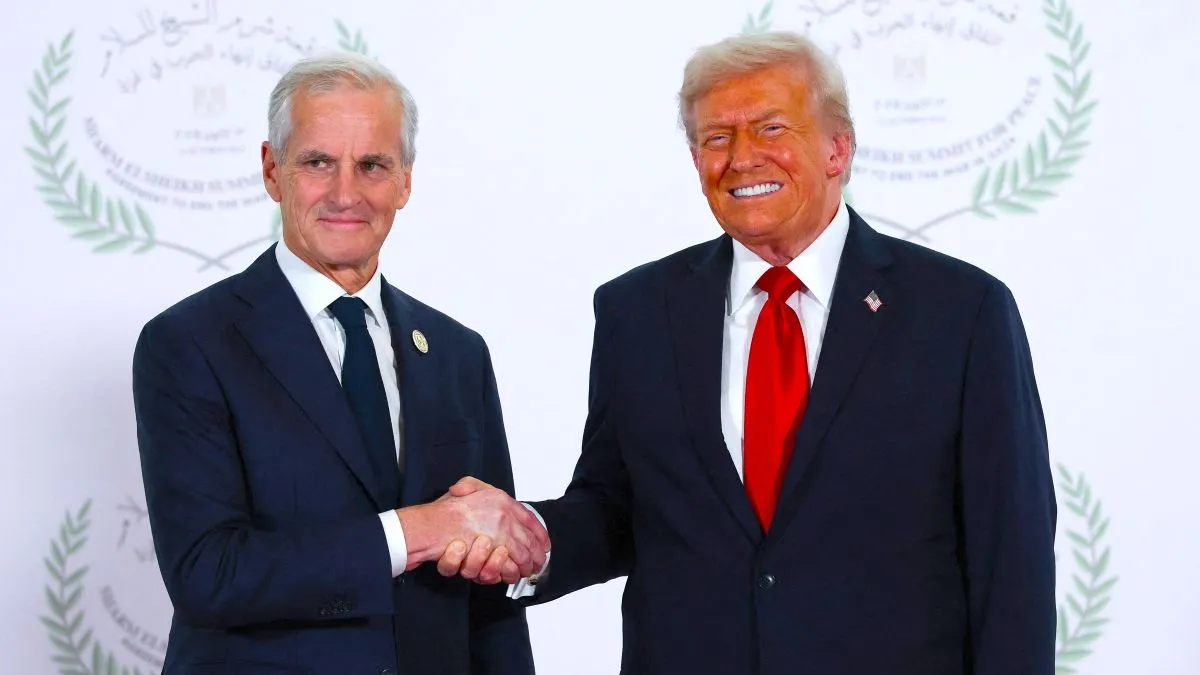
Norwegian PM says Trump ‘begs’ him for Nobel Peace Prize, can’t grasp that he doesn’t award them
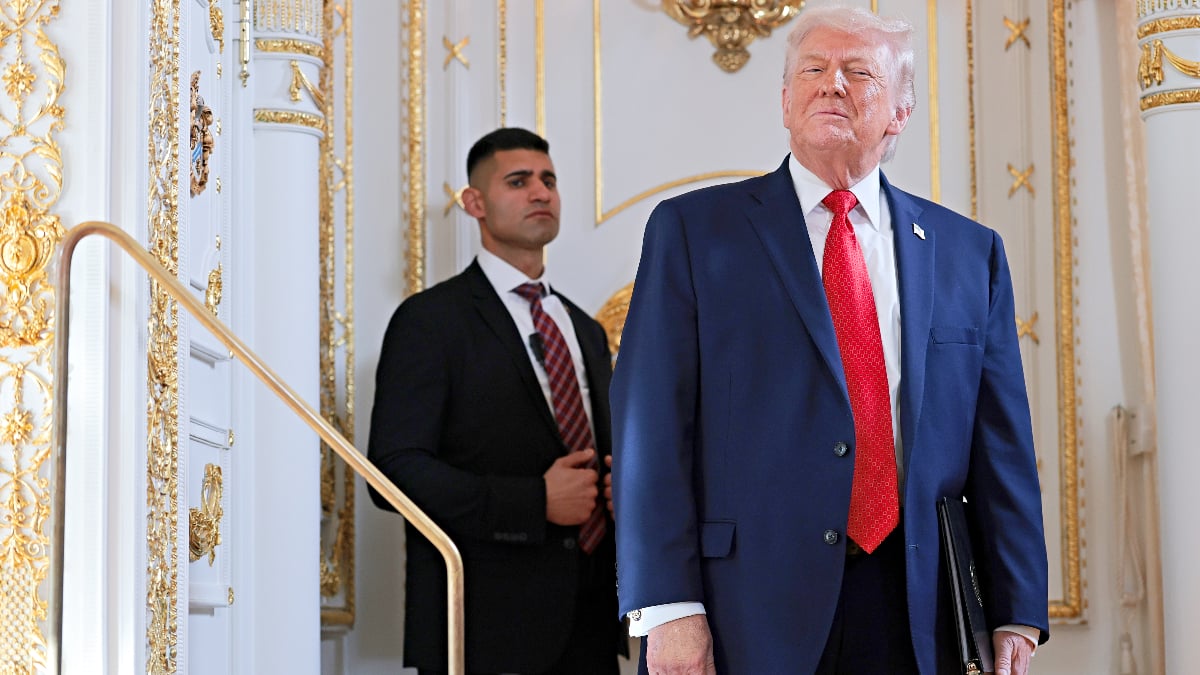
‘Pedo Boulevard?’ Donald Trump renames yet another place after himself, but everybody hated that place anyway
The boulevard that runs from Florida’s Palm Beach International Airport toward Mar-a-Lago has officially been renamed… President Donald J. Trump Boulevard. Trump celebrated the renaming publicly as an “amazing gesture” and proudly unveiled the new sign. Trump claimed he’s “tremendously honored” and called the road a “very important stretch.” This adds to a growing list of things Trump has attached his name to, including last month’s Trump-Kennedy Center. But unlike the Trump-Kennedy Center, the boulevard renaming doesn’t bother people much. Trump’s infamous Mar-a-Lago has been under a bad light anyway after the release of Epstein’s case files, so why not underline his connections to a place that’s becoming a byword for child abuse? Now, the renaming has given people another reason to steer clear of the place. But that didn’t stop social media users from taking jabs at the announcement. One user on X wrote, “Bet a vast majority of people will do everything they can to avoid that road.” Another added, “Epstein likely also traveled that same road. Where are the rest of the files?” Nobody was sentimental about the boulevard to begin with A majority of comments folded in long-running public criticism of Trump’s associations and unanswered questions surrounding the Epstein files. One mocked, “Is the new name ‘pedophile protector’ boulevard?” While another added, “A street named after a pedophile, how exciting, not.” Most comments were accusatory, angry, and intentionally provocative. They reflect how poisonous Trump’s public image has become. Yet, here we are, renaming public streets after such a figure. But what makes Trump’s renaming movement even more absurd is the timing. Trump: I am tremendously honored that the main boulevard from palm beach international airport to mar-a-lago is being renamed in my honor. That's a very important stretch. A lot of important people… and not important people travel that road. pic.twitter.com/cnpzntQcNz— Acyn (@Acyn) January 16, 2026 It’s true that cities rename streets after presidents all the time. But it’s usually after they leave office and some historical distance has settled. But Trump has been dedicated to putting his name on everything while he remains politically active and under constant scrutiny. This doesn’t symbolize service, but his ego. As one user puts it, “He thinks he’s a f—king Pharaoh.” Pharaohs carved their names into stone because they believed permanence validated power. But chances are, Trump’s name will be wiped off everything as soon as his party loses power. Which might be sooner than we think, judging by the GOP’s actions. But the less poetic truth of the boulevard is that the road itself was never beloved. So, Trump slapping his name on the sign isn’t half bad, if we ignore the ego-boost he’s getting.
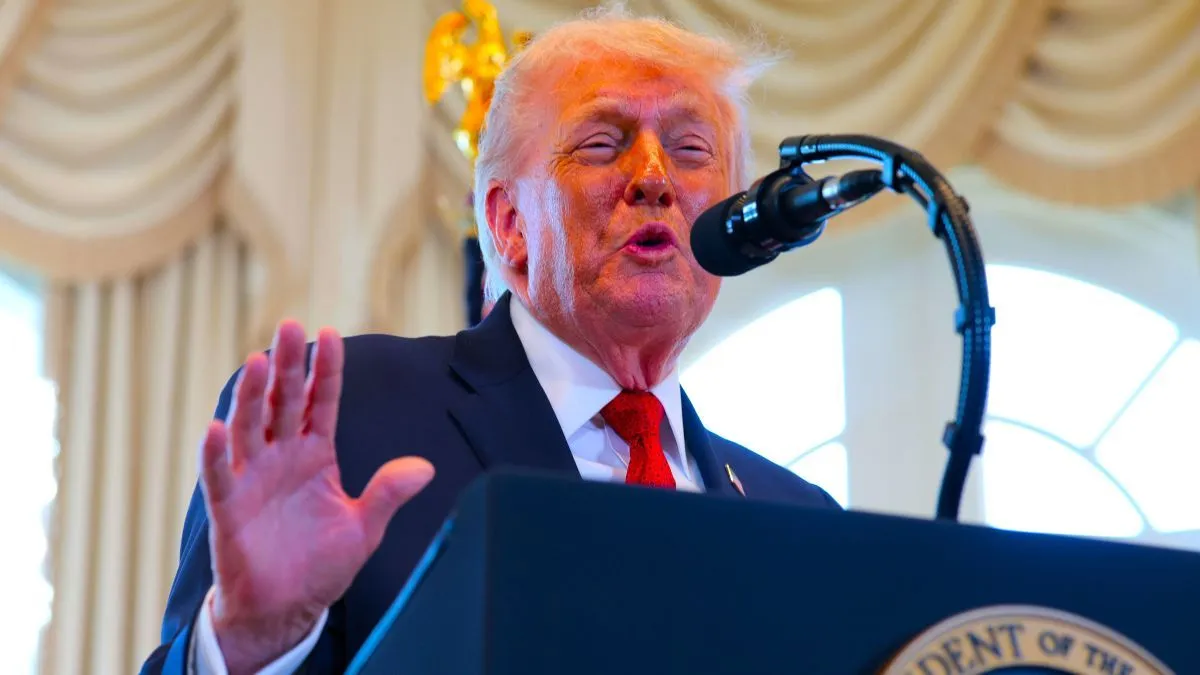
‘Law & order huh?’: Trump pardons fraudster, she commits massive new fraud, Trump pardons her again
Donald Trump‘s list of pardons is a rogue’s gallery of immoral, greedy criminals who exploit people to wring as much money out of them as possible. So, perhaps it’s not exactly a mystery why Trump sympathizes with them to the point of throwing out presidential pardons like confetti. Enter Adriana Camberos. In 2016, she and her husband were convicted on conspiracy charges after authorities unravelled an elaborate and bizarre scheme to import millions of bottles of counterfeit 5-Hour Energy shot drinks to the United States from Mexico. Aside from circumventing multiple importation laws, putting counterfeit energy drinks onto the market has the potential to harm the public, who are unknowingly consuming a highly caffeinated beverage that wouldn’t be regulated by the FDA. As such, a federal jury sentenced her to 27 months behind bars. She’d only served half her sentence when, in one of the last acts in his first term, Trump commuted her sentence and set her free. So, what did Camberos do with this lucky break? Learn her lesson? Go legit? Make money legally? Law & order huh?— THEE ROCKSTAR #rockstar (@VonWolf9) January 18, 2026 Turns out crime DOES pay! Well, no. The lesson she (totally understandably) learned was that crime pays and consequences are fleeting. And, by 2024, Camberos was back at it with a new scheme that involved defrauding major manufacturers by claiming she was buying goods for sale in Mexico or that would be sold to prisoners, while actually selling them to U.S. consumers at much higher prices. All too soon, Camberos was reaping the rewards of crime, owning multiple houses in San Diego and cruising the streets in a Lamborghini Huracan. Once again, the feds swooped in, she was once again convicted by a jury of multiple charges of fraud, and tossed back behind bars. But Trump, presumably thinking that the third time’s the charm, decided that she deserves one more chance of going straight. And so, on Jan. 17, Trump officially pardoned her again, leaving her free to stroll out of prison, hop into her Lambo, and peel out of there in a cloud of dust. By our reckoning, Camberos has at least three years to cook up one more massive fraud against American consumers and manufacturers, just in time for one more Trump pardon at the end of his second term. Maybe this time she can upgrade to a Ferrari, or possibly even a McLaren if she really puts some effort into her next enormous crime!
‘You win the internet’: The White House posted a ‘Mister Tariff’ Trump pic and one user transformed it into what it begged to be
Late last week, the official White House X account shared a black-and-white image of Donald Trump leaning over the Resolute Desk. Yes, the exact photo used in his “Milk Mustache” edit by the Department of Agriculture a few days ago. But this time, there’s no white mustache on him or a glass of milk on the table. It’s “Mister Tariff” for you now. The picture is the same. Trump is glowering into the camera like a catalog model for authoritarian nostalgia. But the caption was different. It was simple, confident, and catastrophically unaware: “MISTER TARIFF.” It already looked like a meme. In response to the post, a user prompted Grok to edit the image by “replacing the desk with a walker.” And suddenly, the photo made sense. The posture, the stiff arms, and the gravity-defying lean all fit perfectly into the edit, and now the White House knows that if you treat governance like content, you can’t control the edits. This was inevitable The White House wants to portray Trump as the hard man of tariffs, the strongman taxing the world into submission. What people saw instead was a frail, aging president propped up by policy gimmicks. “Mister Tariff” is taxing Americans while pretending to punish foreigners. He doesn’t menace Beijing or Brussels; he raises prices at Walmart for his own citizens. That’s how tariffs work. Social media comments were as brilliant as the Grok edit. “ I prefer MISTER $2000 TARIFF CHECKS,” one user wrote. And there couldn’t have been a better jab at Trump’s long-abandoned promise of mailing tariff revenue directly to Americans. Others cut to facts, reminding the White House that “Tariffs aren’t paid by foreign governments. Companies pass the costs to consumers.” MISTER TARIFF pic.twitter.com/uC41VZYV6d— The White House (@WhiteHouse) January 17, 2026 And just like that, the cosplay collapsed under basic economics. Then the edits escalated. A user replied to Grok’s walker version with an even cleaner edit. Trump was gripping the walker naturally, almost like it had always been there. Users admitted they’d thought the original already included one. One wrote, “It was how I thought the picture was, before I scrolled far enough down.” Another added, “Maybe they started with a walker and edited it out. It’s an awfully awkward pose.” We hardly needed much more proof, but this is something of a referendum on how unserious official communication has become. The White House posted a moody portrait instead of explaining policy, Grok added a walker, and the public added context.