Le Journal

Arbitres et statistiques… Projection sur LOSC – OM et la 15e journée de Ligue 1

Latinos are underrepresented in Catholic higher ed. These schools are trying to change that.

L’avant LOSC – OM des supporters marseillais : « Ce LOSC ne me fait pas peur »
Le LOSC reçoit l'Olympique de Marseille ce vendredi dans le cadre de la quinzième journée de Ligue 1. Pour l'occasion, Le Petit Lillois est allé à la rencontre de Leonardo, supporter marseillais. C'est un match chargé d'histoires qui nous attend ce vendredi. Si Chancel Mbemba retrouve l'Olympique de Marseille, son dernier club, Angel Gomes, Benjamin [...]

For ex-Haredi Jews, forgiveness may be a route to greater happiness, study finds
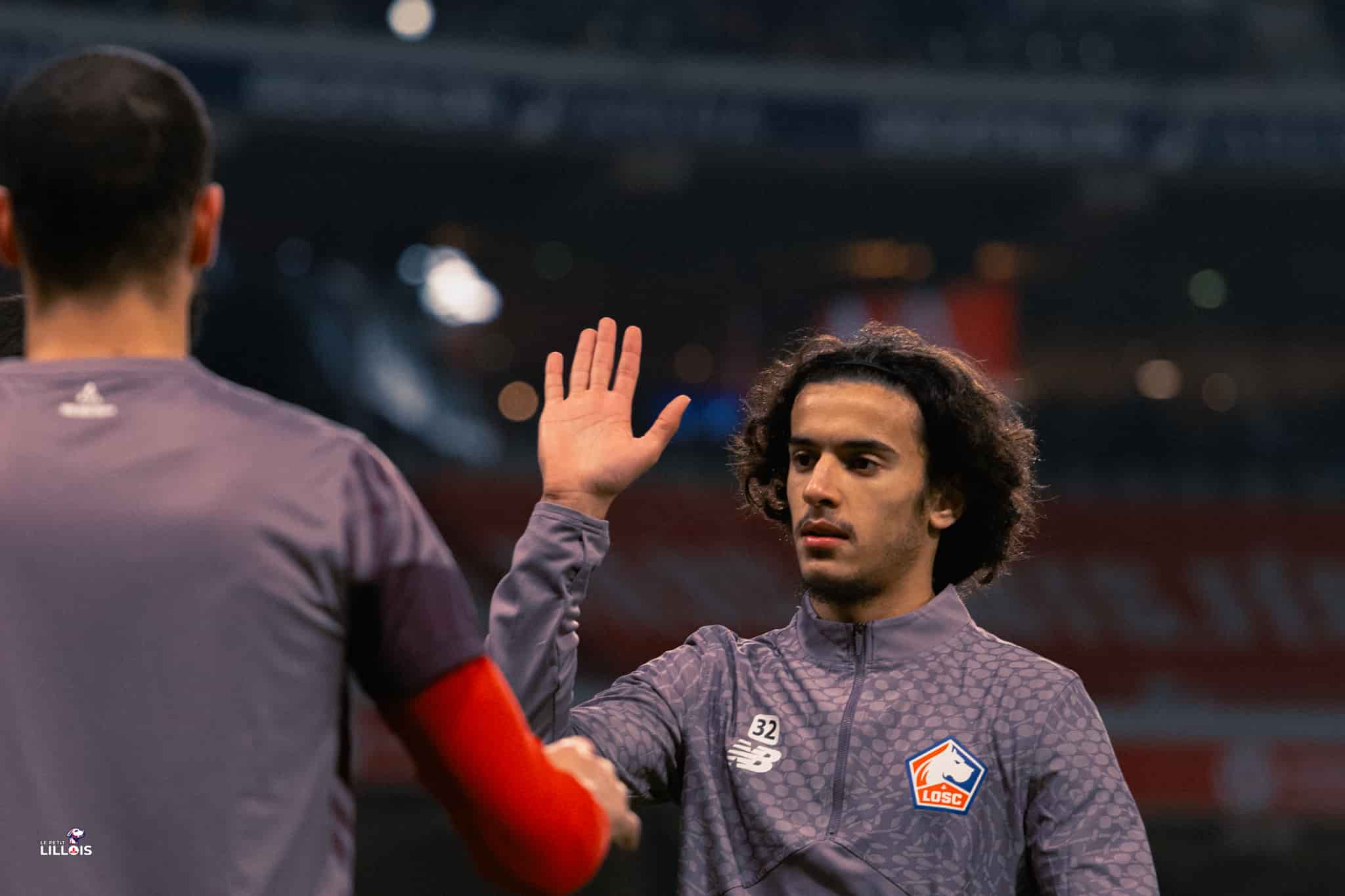
Sanction connue pour Ayyoub Bouaddi, expulsé pendant Havre AC – LOSC

‘I couldn’t go to anybody’s rally’: Since Oct. 7, some Black Jews struggle to find belonging
(RNS) — After the Oct. 7, 2023, Hamas attacks on Israel and the ensuing war in Gaza, some Black Jews noticed behavior from fellow Jews that made them feel like strangers in their own community. Whether receiving suspicious glances in a synagogue, having their “Shalom” greeting answered by a “thanks” or being asked what they considered intrusive questions on their views of the Israel-Hamas war, their fealty to the community seemed tested. And outside Jewish spaces, exposure to antisemitism and remarks that conflated their Jewishness with support for Israeli government policies also felt alienating. “Most people are not exposed to what it means to be Jewish and experience anti-Blackness and antisemitism,” said Ilana Kaufman, CEO of the Jews of Color Initiative, a nonprofit concerned with creating multiracial, anti-racist Jewish communities. Though Jews of color have long struggled to have their concerns heard more broadly, the past two years have been even more difficult, she added. Sensing a shift around these issues after Oct. 7, the Black Jewish Liberation Collective, a project of the left-leaning group Jews for Racial & Economic Justice, began a survey. The report released this fall suggests that many Black Jews have felt increasingly marginalized in their Jewish communities yet tokenized outside of them. Meanwhile, as much of the Jewish world focuses fundraising on Israel and Jewish safety amid rising antisemitic incidents, some funding for racial equity initiatives has dried up. Advocates worry these trends could unravel the past decade’s achievements in uplifting voices and experiences of Jews of color. The survey, titled “Black Jews after 10/7,” circulated mostly in the United States from Oct. 1, 2024, to Jan. 31, 2025. Of 104 participants, it found that 62% reported feeling marginalized in their Jewish community after Oct. 7, and more than half (53%) felt marginalized in non-Jewish communities. Moreover, 11% said they lost friends in Jewish spaces and 13% lost friends in non-Jewish spaces after Oct. 7. BJLC Executive Director Autumn Leonard said many participants indicated they believed their identity was being both flattened and scrutinized. The pressure to live up to the “real Jew” standard felt daunting, she explained. “A big thing that started happening is a feeling of just being pushed to the margins, of being told things like ‘You can be Black, or you can be Jewish, but you can’t be both,’” said Leonard, who is based in Brooklyn, New York. Michael W. Twitty is a culinary historian and the author of “Koshersoul: The Faith and Food Journey of an African American Jew,” which won the 2022 National Jewish Book Award. But since Oct. 7, 2023, he said he hasn’t found much space to talk about his experiences with antisemitism as a Black Jewish man. Twitty has grown a beard and worn a yarmulke, a Jewish skullcap, since his conversion to Judaism decades ago. Now, he sometimes considers removing them in fear of antisemitic attacks, he told RNS. “Those are the signifiers that I made a commitment to my people,” said Twitty, who is based in Fredericksburg, Virginia. “ … They’re the way I’m publicly Jewish to people.” A longtime Hebrew school educator, Twitty also said he feels less welcome in synagogues, as few assume he is Jewish and may question his presence. Issues regarding Israel have also put him in a tough spot. Since Oct. 7, mainstream Jewish institutions have often elevated Black Jews’ voices when they embrace pro-Israel views, he said. On the other hand, though he disapproves of the far-right Israeli government, Twitty said that outside of the Jewish community, his attachment to Israel has often been interpreted as support for Israel’s military campaign in Gaza. It became impossible for him to hold a nuanced position in this climate, he said. “I couldn’t go to anybody’s rally,” he said. “ … I don’t want to hear people say ‘Turn Gaza into a parking lot’ and I don’t want people shoving swastikas in my face talking…

Christmas — and hope — return to Bethlehem after two somber years
(RNS) — After two somber and muted Christmas seasons, the city where Christ was born is preparing to celebrate again. The Palestinian town of Bethlehem, a symbol of hope for Christians worldwide, will light its Christmas tree in Manger Square on Saturday (Dec. 6), signaling not only the start of the holiday season but the resilience of a people determined to reclaim joy after years of grief. The ceasefire in Gaza, brokered by the United States in October, has not halted Israeli attacks on Palestinians, nor has it eased the suffering in Gaza or the West Bank. Yet Bethlehem is choosing to celebrate. According to centuries-old protocols observed by Holy Land religious communities, the city will host three Christmas observances: Dec. 25 for Western churches, Jan. 7 for the Orthodox Christians and Jan. 18 for Armenian Christians. Scouts will march, choirs will sing and midnight Masses will once again fill the Church of the Nativity. RELATED: Palestinian Christians issue ‘Kairos II,’ a cry of hope in a time of darkness Bethlehem’s decision has encouraged other Palestinian towns to join in. From Beit Jala and Ramallah to Nablus and Zababdeh, streets and churches are being decorated in a collective attempt to invite spiritual reflection and restore the bonds of the community. Bethlehem Mayor Maher Canawati said that Christmas in Palestine is “a deeply spiritual act — a time for peace, solidarity and compassion for those who continue to suffer,” and that the lighting of the tree represents “a strong reaffirmation of community, unity and faith.” Former Mayor Anton Salman adds that this year’s festivities express Palestinians’ determination to maintain hope “amid ongoing adversity.” Samir Hazboun, head of the Bethlehem Arab Society for Rehabilitation, emphasized that the celebrations unite Muslims and Christians alike in a spirit of national solidarity. Archbishop Atallah Hanna of the Greek Orthodox Church in Jerusalem said the world should remember that, despite a lull in active fighting, suffering and oppression persist. “Yet hope endures,” he said. “Christmas embodies the values of peace, love and brotherhood.” Beneath the lights and carols, the reality on the ground is grim. Unemployment in Bethlehem has soared to 31%. Tourism — normally the city’s economic lifeline — is actually costing the city roughly $2.5 million every day. In 2022, Bethlehem welcomed 1.5 million visitors; today, the industry teeters on collapse. Hotels and workshops operate at a fraction of capacity. Families that once relied on pilgrimage-related income fear bankruptcy. If economic hardship were the only struggle, the situation would be dire enough. But the last two years have also seen an alarming escalation in Israeli settlement expansion and settler violence. On Nov. 25, Gov. Mohammad Taha Abu Aliya, whose jurisdiction covers 10 cities in the West Bank, including Bethlehem, told journalists that settler attacks, land confiscations and military incursions continue “unabated,” even as global attention shifts elsewhere. The governor appealed directly to Pope Leo XIV, global church leaders and world governments to protect the historic city, criticizing muted international responses to the constant violence, while praising journalists for documenting both occupation and resilience. “Bethlehem is a window to Palestine,” he said. Just south of Bethlehem lies Beit Sahour, home to the Shepherds’ Field, where the Gospel of Luke says angels appeared to shepherds to tell them about the birth of the Christ child. There, the danger is even more immediate. The town’s mayor, Elias Iseed, recently sent an urgent letter to world and church leaders warning of an Israeli plan to build a new settlement on the town’s lands — an “act of dispossession,” he writes, that would “terrorize” a peaceful, predominantly Christian community. The targeted area is part of Area C, under full Israeli control. It includes the locally popular Osh Ghurab park and recreation grounds, already…

Après le LOSC, Benoît Costil reconverti dans la production d’huîtres
Ancien gardien du LOSC, dont il a défendu les couleurs pendant six mois dans un rôle de numéro 2, Benoît Costil vit aujourd'hui en Bretagne où il a relancé un chantier ostréicole. L'après-carrière de Benoît Costil (38 ans), second de Lucas Chevalier de janvier 2023 à juillet 2023 au LOSC, est riche en activités. Vice-président, [...]

Israeli forensics experts examine remains handed over by militants in Gaza

Photos of the Week: Pope Leo’s first trip, Hong Kong fire

Conservative Catholic colleges growing as families opt for ‘faithful’ schools