
Le Journal
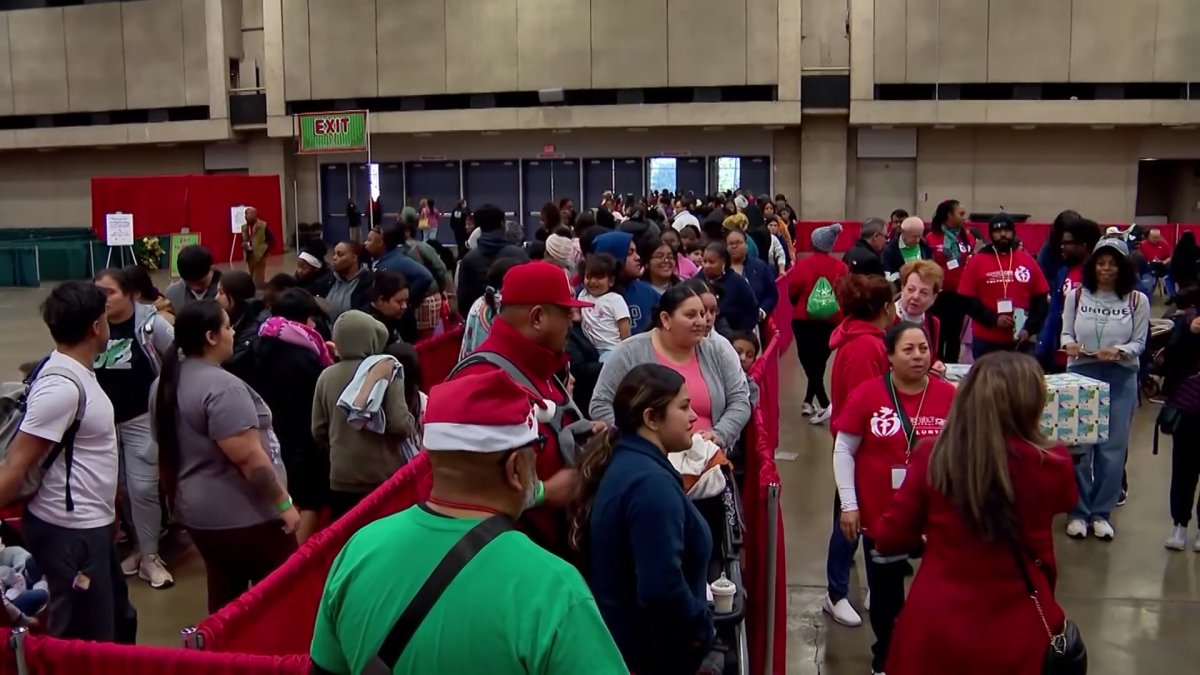
Charity hosts Christmas celebration for North Texans in need
A Christmas celebration in downtown Dallas highlighted the generosity of North Texans and the growing need on Saturday. Operation Care International hosted its yearly Christmas party at the Kay Bailey Hutchison Convention Center. The non-profit brings together churches, businesses and volunteers to serve those most in need. Organizers said they recognized the challenges facing North Texans experiencing homelessness and financial insecurity. Volunteers prepared to greet 7,500 people and offered hot meals, new coats, shoes, socks, dental and medical care, counseling, prayers and more. “This day we celebrate Jesus’ birthday. We tell the people about the love of God, that God loves them and then we wash feet. Why do we wash feet? Because it emulates the character of Christ, which is humility, servanthood and compassion,” said Operation Care International Founder and President Susie Jennings. Children were gifted new toys along with holiday entertainment and activities. Organizers said the event requires roughly 1500 volunteers. Cheryle London returned to volunteer for the second year. “I believe that’s what God would want us to do to help others. Take care of your brothers and sisters,” London said.

Kumail Nanjiani Says He’s ‘Very Proud’ of His Performance in Marvel’s ‘Eternals’: ‘I Do Not Get to Choose What the Reviewers Are Going to Think’
)
Horóscopo de hoy, lunes 22 de diciembre, consulta la predicción para tu signo

Maroc : Hakimi, "un plus" pour Aguerd
Préservé pour le match d'ouverture de la Coupe d'Afrique des Nations face aux Comores (2-0) ce dimanche, après sa grave entorse de la cheville gauche ......

CBS to Honor Rob Reiner in One-Hour Special Tonight: Here’s How to Stream ‘Scenes From a Life’ Online

Le Havre : le coup de gueule de Digard

le but somptueux d'El Kaabi

Lyon : Fonseca a dû hausser le ton
Accroché à la mi-temps, l'Olympique Lyonnais a fini par s'imposer (3-0) contre les amateurs de Saint-Cyr (R1) en 32e de finale de Coupe de France ce d......

: L’année révolutionnaire pour Tesla et Elon Musk

La fusion nucléaire : la nouvelle stratégie audacieuse de l’ère Trump

« Transformer la monnaie courante en crypto-épargne : le parcours de Jean-Baptiste qui investit ses arrondis bancaires en Bitcoin »

California Voice: Schools can’t afford to cut counselors who keep kids alive
Weeks after a student and staff member were stabbed and four students arrested at Watsonville High, the school district that serves them is considering laying off every mental health clinician and most of its school counselors. If you want a snapshot of how we are failing young people, especially boys, you can start there. To balance its budget, the Pajaro Valley Unified School District is considering eliminating the equivalent of 15 full-time counselors, all 13 mental health clinicians and dozens of intervention staff at its schools — at a time when youth suicide is one of the leading causes of death for people ages 10 to 24. Men and boys make up nearly 80% of suicides in the United States. For LGBTQ youth, the picture is even more alarming. A national survey found nearly 39% seriously considered suicide in the past year, and 12% attempted it. This crisis is not abstract. It is here. It is now. And it is local. Young people rely most heavily on school-based support, so if you remove counselors and clinicians, you remove the adults best positioned to intervene when a student’s silence becomes dangerous. And when we talk about violence, context matters. What we frame as “school safety” is often a reflection of untreated pain. When a boy explodes, we see a threat. When a boy shuts down, we assume he is fine. We rarely name what both can be — symptoms of a system that teaches boys to swallow everything and then acts surprised when the pressure finally breaks. I see this every week in my work as project director of a countywide stigma reduction campaign on the Central Coast. Our youth ambassadors — many of them Black, brown or LGBTQ — lead a movement called Break the Stigma Not the Vibe. They design billboards, bus ads and schoolwide messaging rooted in language they needed when they were younger. Their message is simple: Asking for help is strength. You don’t have to go through this alone. And you deserve to be seen before you collapse. Their words will soon move appear on buses and corridors, reaching thousands of students who may not talk to a teacher or open up at home. Sometimes visibility is the intervention. Now, imagine pairing that visibility with the removal of every trained mental health professional on campus. That is the contradiction this moment demands we confront. You cannot cut lifelines in a suicide crisis and call it a safety strategy. Related Articles Trump administration moves to cut off transgender care for children U.S. is spending big on child mental health, addiction treatment, study says Nordic people know how to beat the winter blues. Here’s how to find light in the darkest months Faith leaders embrace sound baths to connect with spiritual seekers Marin schools edge toward recouping $12.5M in mental health grants School counselors and clinicians are not extras; they are core safety infrastructure. They are the adults who notice when a student stops being themselves, when grades slip, when friendships change or when a child who laughs easily is suddenly withdrawn. We have to stop treating mental health as a side conversation. These cuts are happening in winter — when depression, isolation and suicidal ideation increase. They are happening in communities still recovering from violence, and after the federal government removed the “Press 3” LGBTQ-specific option on the national 988 Suicide & Crisis Lifeline — a resource that has supported more than a million people. We are watching lifelines shrink at the moment young people need more of them. California has invested heavily in youth behavioral health in recent years. But investment means little if school boards eliminate the positions that translate those state dollars into daily, life-saving support. If we are serious about preventing suicide, especially among boys and historically marginalized youth, then counselors, clinicians and trusted adults must be the last thing on the chopping block — not the first. I say this not just as someone who works…