Le Journal
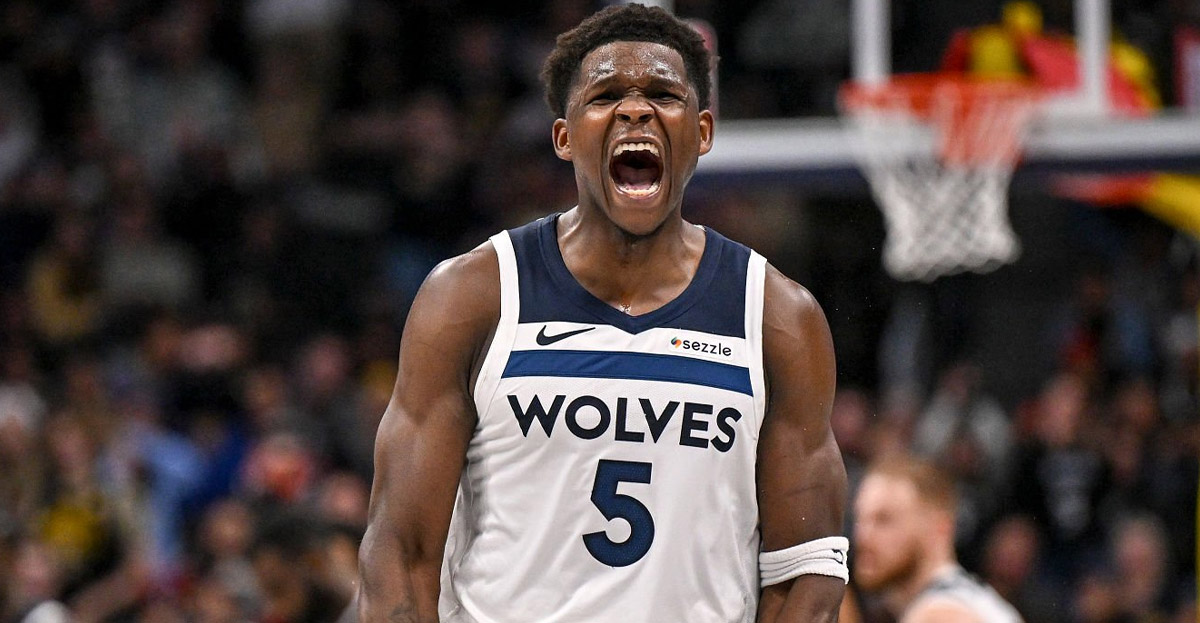
Débat : Quel joueur est le plus gros snobé des cinq majeurs du All-Star Game ?
Capitalism has failed to spread wealth and prosperity — and AI could do the same, says BlackRock CEO
Elon Musk said automakers don't want to license Tesla FSD. We're starting to see why.
Tesla CEO Elon Musk said it's "crazy" that automakers don't want to license Tesla FSD.Marc Piasecki/Getty ImagesTesla CEO Elon Musk said he has offered to license Full Self-Driving to other automakers.Companies like Ford and Rivian announced in recent weeks that they'll pursue self-driving in-house.Nvidia also released a toolkit that lowers the barrier to entry for pursuing autonomy.Elon Musk has called legacy automakers' hesitancy to license Tesla's Full Self-Driving software "crazy," but a slew of industry moves show that their reluctance is strategic.In recent weeks, more automakers have released roadmaps to build key pieces of automated driving software rather than outsourcing the technology. Because automakers see vehicle tech as a brand-defining component, a Tesla license can become a hard sell.Rivian, for example, is going deeper into vertical integration by designing a proprietary chip for the brain behind the company's autonomous driving computer. CEO RJ Scaringe even broached the idea of pursuing a robotaxi business at Rivian's Autonomy & AI Day in early December.Legacy automakers aren't taking the same ambitious route of designing custom chips, but they have begun to seek in-house solutions.Ford announced at the Consumer Electronics Show in Las Vegas that it plans to develop eyes-off driving software for public roads by 2028. The company said going in-house cuts costs by 30% and provides more control over how the software is integrated and deployed."To integrate, I can't do this with all these suppliers," Paul Costa, Ford's head of electrical engineering, told Business Insider. "We need to bring this stuff in-house, and it allows for this ability to do the trifecta at once: smaller, cheaper, and higher performance."Automakers haven't gone 'crazy'Musk said in a X post in November that it was "crazy" that legacy automakers didn't want to license Tesla FSD, an advanced driver assistance system (ADAS) that the EV maker has said will enable fully autonomous driving."When legacy auto does occasionally reach out, they tepidly discuss implementing FSD for a tiny program in 5 years with unworkable requirements for Tesla, so pointless," Musk said in the post.Musk didn't specify what those requirements were. A spokesperson for Tesla did not respond to a request for comment.Experts who track the software side of the automotive industry told Business Insider there's a practical reason to go in-house, even if there are near-term challenges.Chris Ahn, a principal at Deloitte who consults for key automakers, told Business Insider that companies have to decide what level of autonomy their customer base will want and how to achieve it, like using lidar or using a cameras-only system."It's not so much like, 'I'm taking it in-house because I don't want to use somebody's technology.' But this is a competitive business for them," Ahn said. "People who own Fords own Fords for certain reasons that are probably different reasons than why people who own Mercedes own Mercedes. And I think each of these automakers are going to have to define what does ADAS mean for the user base of my brand today."Steve Man, a senior auto analyst for Bloomberg Intelligence, told Business Insider that the technology stack of autonomous vehicles could be thought of as three interconnected parts: the software, the sensors, and the actuators — the components that control the physical movement of the car.All three components need to be able to "talk" to each other within a vehicle platform, Man said, which can be challenging and costly to do when an automaker relies on multiple suppliers."It's actually cheaper to bring everything in-house to integrate those three buckets of things," Man said.Nvidia lowers the barrierAs automakers seek more control over their technology, the tools to…
Vibe coding startup Emergent has raised $70 million, led by Khosla and SoftBank
A day in the life of the CEO of Athletic Brewing, from living room burpees to British murder mysteries
We want to hear how Gen Z's shopping habits are changing. Tell us in this survey.
Young people are increasingly shopping secondhand.NurPhoto/NurPhoto via Getty ImagesThe secondhand fashion and luxury market has surged and is forecast to keep growing in 2026.Gen Z is driving some of the growth of resale apps like Depop and Vinted.Fill out our survey to tell us where you like to shop.Secondhand shopping is becoming the first choice for many consumers — especially Gen Z.The trend is reshaping the fashion industry.The secondhand fashion and luxury market is forecast to grow two to three times as fast as the firsthand market through 2027, according to a November report from The Business of Fashion and McKinsey. Online resale is driving a lot of that growth, and is forecast to grow 16% annually in the next two years.Part of that growth is driven by a search for value, but there are also more platforms than ever to shop for secondhand goods.Gen Z has been gravitating toward resale platforms like eBay, Depop, Pickle, and Vinted. Online marketplaces like these accounted for 88% of resale spending in 2024, according to the November report.Shopping for vintage clothes ignites a sense of individuality that fast-fashion can't always achieve, three Gen Zers said at a retail conference in January.President Donald Trump's tariffs also helped boost the US secondhand market in 2025. Negotiations and uncertainty around imported goods pushed some US shoppers towards more stable options, such as thrifting.It's a new year, and the resale market is on track to keep growing. We want to hear where you're shopping in 2026. Please fill out the survey below.Read the original article on Business Insider
Inside the women-only executive retreat that turns boxing into leadership training
Erin Renzas is a former marketing executive.Dina Litovsky for BIErin Renzas spent nearly two decades dutifully climbing the career ladder before she hit a breaking point.She had achieved many of the outward markers of success, like a high-paying tech career, including a stint as marketing lead during Square's IPO. So why wasn't she satisfied?"I decided, like so many women do, the thing I hadn't changed was my body," Renzas said. "I was looking for how I could perfect myself into the point of happiness." That included becoming "the perfect version of what society tells us to be," she said, losing more than 100 pounds through diet and exercise.Rather than finding happiness as she got smaller, her mental health deteriorated. She said she found herself experiencing dissociative episodes. At times, she was convinced she had died.Renzas was working as an operating partner at investment group Prosus in Amsterdam at the time. "I would go into big, huge meetings and then I would go to the gym, and then I would come home and tell my mom I didn't exist — for basically two years," she said.Renzas throws a punch at Gleason's in Brooklyn.Dina Litovsky for BIHer gym had a boxing ring in the back. Sick of running, she decided to give it a try.She was immediately hooked. Boxing was the only time that she "felt whole," Renzas said. Unlike other sports, she found it impossible to dissociate while boxing. "You have to be so grounded in your body."She's now an amateur boxer who has competed in four fights, all wins, and is writing a memoir about how boxing "fixed" her brain.This year, she also co-launched a new retreat for senior executives, encouraging other women to give the sport — and the perspective that boxing can provide — a try."Left hook, left liver," boxing coach Malic Groenberg calls out over the rhythmic din of punches.He and three of Renzas' other coaches have flown out from Amsterdam to Gleason's in Brooklyn. Groenberg talks through a basic combination, watching closely as two women wearing boxing gloves jab at punching bags being held in place by a pair of novice boxers."So we start, 1,2, catch, and then, as soon as you feel the punch here … Yeah, you've got it," he says to them.Most of these women hadn't put boxing gloves on before until 24 hours ago, let alone trained at Gleason's, the longest-operating boxing gym in the country. With its bright red walls and crooked portraits of past heavyweights, the bustling institution is an unusual place for a women's executive retreat.That's exactly the point."Boxing is about operating in the chaos," said Renzas. "It's about finding the clarity and rest and seeing your shots in the midst of everything else going on."Shea O'Neil facilitates a session.Dina Litovsky for BIThe sport gives you a chance to consider: "What do you do when your back is against the corner?" said somatic and executive coach Shea O'Neil, who cofounded the retreat with Renzas. "And how do you pivot and reclaim space?"O'Neil used to be Renzas' executive coach, and the pair discovered that the vocabulary and philosophy surrounding boxing was especially relevant to their work."Shea and I began bringing the language of boxing — what I was learning about fight strategy — into our conversations exploring career, the definition of success, and what was worth fighting for," she said.Renzas said she was having similar conversations with other leaders in her network, and O'Neil was using the same ideas with other executive clients she was working with, too. It "really struck a chord," Renzas said.So, they decided to offer a formal program for women executives, which they named Fight Co.Lab — a hybrid boxing intensive and personal development workshop. Eleven women participated in the inaugural…
DoorDash salaries revealed: Here's how much the delivery giant pays data scientists, software engineers, and others
DoorDash's H1B visa data for 2025 spans roles from data science to managers overseeing new verticals for the delivery service.Chelsea Guglielmino/Getty ImagesDoorDash wants to expand its delivery business with new technologies, such as autonomous vehicles.CEO Tony Xu has said that DoorDash plans to invest hundreds of millions in key initiatives in 2026.Here's what DoorDash pays its tech workers, from data scientists to engineers.DoorDash, one of the biggest names in delivery, is trying to deliver even more.The company's couriers, known internally as "dashers," are a common sight as they zip around the US delivering food, groceries, and other goods to customers.Now, DoorDash is investing in new tech, including autonomous vehicles, as it looks to the future. CEO Tony Xu said on an earnings call in November that DoorDash would invest hundreds of millions of dollars this year in key initiatives, including a global tech platform for all its brands and autonomous tech.DoorDash employees don't just work on big problems, though. The company requires its corporate workforce to periodically make deliveries themselves through a program called WeDash.Some of the people making all of that happen at DoorDash corporate have joined the company from outside the US, and the company has sponsored H-1B visas.Employers include salary information when submitting applications to the US Department of Labor for H-1B work visas. The publicly available data includes ranges for base pay, but excludes equity or other benefits that companies often offer employees. The filings also include industry average pay rates for US workers in similar roles.Business Insider analyzed how much money companies from Apple to Walmart are paying for tech jobs and other roles. Explore salary data from America's biggest employers.In the year ending September 30, 2025, DoorDash submitted roughly 540 H-1B visa applications, which can offer insight into what the delivery company pays for certain jobs.The H-1B visa application process is changing under President Donald Trump.In September, Trump imposed a $100,000 fee on new H-1B visa applications. He's also proposed changes to work visa rules that could tilt the already competitive visa lottery in favor of the highest-paid applicants, lawyers told Business Insider.Here's a look at some of the jobs for which DoorDash has disclosed salaries in the work visa data. DoorDash did not respond to a request for comment from Business Insider.Associate Manager, Strategy & Operations: $104,400 to $174,000Associate, Finance & Strategy: $90,272 to $184,800Associate, New Verticals: $65,208 to $111,100Data Scientist: $146,000 to $268,200Data Scientist, Analytics: $131,000 to $271,000Director, Enterprise Strategy & Operations: $284,000 to $426,000Engineering Manager: $201,900 to $342,000Machine Learning Engineer: $126,400 to $302,900Manager, Analytics: $170,373 to $325,200Manager, Finance & Strategy: $176,571 to $236,400Manager, New Verticals: $158,642 to $240,000Product Manager: $141,170 to $342,000Senior Data Scientist: $211,536 to $325,200Senior Data Scientist, Analytics: $191,800 to $325,200Senior Manager, Strategy & Operations: $180,000 to $270,000Senior Salesforce Developer: $155,709 to $242,000Senior Software Engineer: $163,862 to $282,000Software Engineer: $105,560 to $359,000Software Engineer, Data: $148,699 to $282,000Software Engineer, Machine Learning: $126,400 to $255,800Technical Program Manager: $165,610 to $342,000Have a tip? Contact this reporter at abitter@businessinsider.com or via encrypted messaging app Signal at 808-854-4501. Use a personal email address, a nonwork WiFi network, and a nonwork device; here's our guide to sharing information securely.Read the original article on Business Insider
Citi has quietly built a 4,000-person internal AI workforce

Claude Code d’Anthropic : Comment l’IA qui « vit » dans votre terminal change tout ?
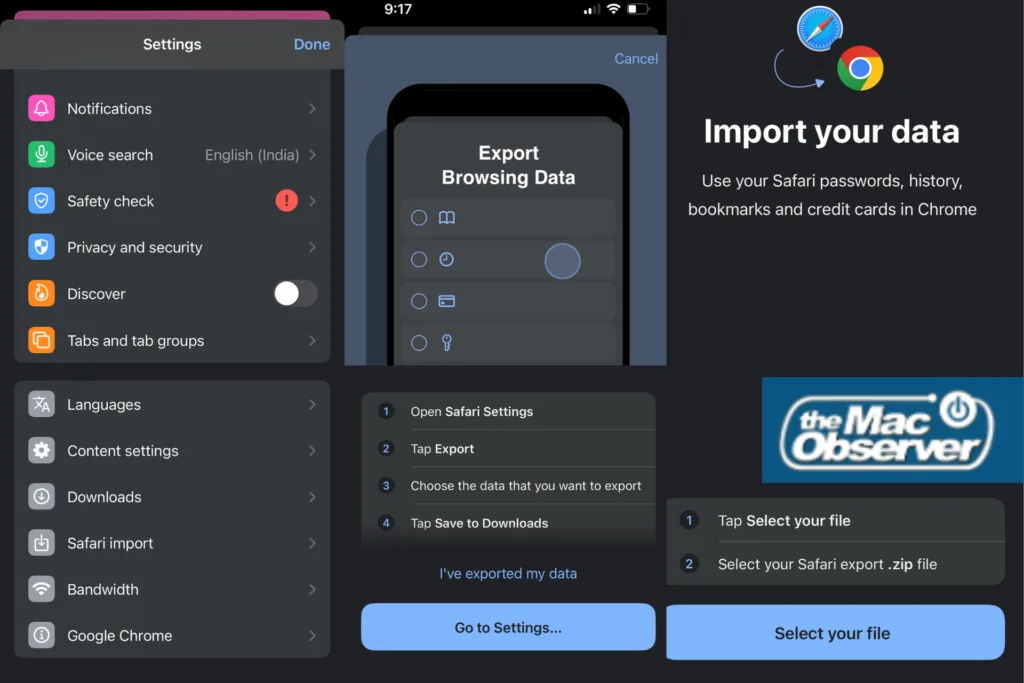
Google facilite le passage de Safari à Chrome sur iPhone avec un nouvel outil d’import