Le Journal
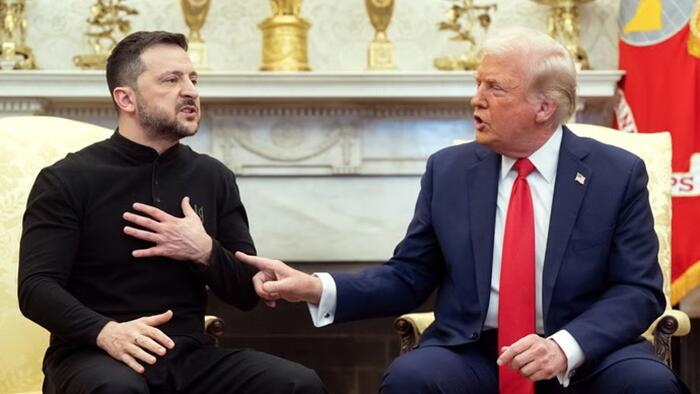
Regime Change In Kyiv? US Peace Plan Demands Ukraine Hold Rapid Elections After Signing

Amazon Sending $1.5 Billion In Automatic Refunds To Customers: 4 Things To Know
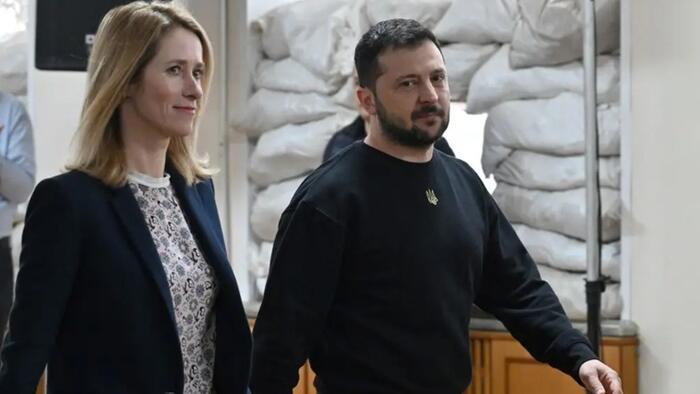
Ukraine & Europe Reject Trump's Russia Peace Plan, Prepare Emergency Call
Ukraine & Europe Reject Trump's Russia Peace Plan, Prepare Emergency Call By all estimates, this is the first ever US-proposed peace plan which actually demands major concessions from Ukraine, but it also seeks to provide assurances for Kiev's future protection modelled on NATO article five, according to Axios. Among President Zelensky's top objectives has long been to obtain a robust US and European security guarantee, and this new 28-point plan appears to give just that: President Trump's peace plan for Ukraine includes a security guarantee modeled on NATO's Article 5, which would commit the U.S. and European allies to treat an attack on Ukraine as an attack on the entire "transatlantic community," - writes Axios. AFP/Getty Images Such a pledge could be recipe for future war, however, and that's precisely how Moscow might see it, especially if other pressing issues of territory or military NATOization on Russia's doorstep aren't resolved. The security guarantee would be for up to a decade and could be renewed, according to the draft. There are also reports that the US is already advancing a very ambitious timeline - that it wants to see the plan signed by Thanksgiving, or as soon as next week. There are even lines for signatures on the document, indicating places for Ukraine, Russia the US, and even NATO and the EU. It's unclear just which representatives would sign from each country or bloc, and its as yet unclear whether Putin himself must sign. A senior Kremlin official cited in Axios said he was "optimistic" about the plan’s prospects, arguing that it aligns more closely with Moscow's views than previous diplomatic efforts. This is especially as a large portion of the Donbas will be recognized as under Russia's control, and the size and capability of the Ukrainian army will be scaled back, which a commitment to no foreign troops on Ukrainian soil as well. And yet, as predicted by many, Ukraine and its European backers stand ready to rejected the plan - though it's still only in its draft form and hasn't been seriously negotiated over by the warring sides. Newsweek reports: European leaders are preparing an emergency call to discuss U.S. President Donald Trump’s controversial proposal to end the war in Ukraine. German Chancellor Friedrich Merz cancelled a scheduled appearance to join the discussion, which will also include Ukrainian President Volodymyr Zelensky, British Prime Minister Sir Keir Starmer, and French President Emmanuel Macron. The 28‑point plan caught European capitals off guard. Leaders were not directly involved in the U.S. effort and learned the details only after the document was made public. Indeed Ukraine wasn't involved either, and the emerging complaint is that it too closely resembles earlier Russian talking points and proposals for ending the war. EU High Representative Kaja Kallas said Thursday, "We have always supported a lasting and just peace, and we welcome any efforts to achieve it, but for any plan to work, Ukrainians and Europeans are needed." In response to the risk of peace breaking out with the US-Russia peace plan - Germany speaks of supplying long-range fire, Britain wants to send troops, and the EU expresses its opposition. pic.twitter.com/nSfNjTHD0x — Glenn Diesen (@Glenn_Diesen) November 21, 2025 She went on to indicate her view that nothing fundamental has changed. "In this war there is one aggressor and one victim," she said. "If Russia really wanted peace, it could have agreed to an unconditional ceasefire some time ago," she added. So far Ukraine has only signaled a vague 'openness' to examining the US plan: "The President of Ukraine outlined the fundamental principles that matter to our people, and following today’s meeting, the parties agreed to work on the plan’s provisions in a way that would bring about a just end to the war," the Ukrainian presidential office has said. In the meantime, European leaders are making their objections known one by one, and roadblocks…
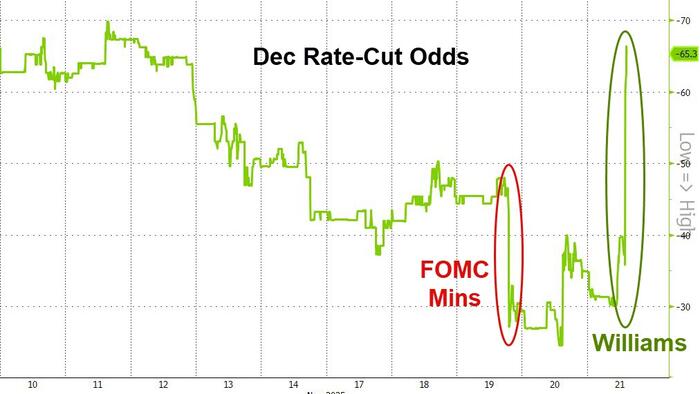
Stocks Rebound As Fed's Williams Sparks Surge In Rate-Cut Odds

Stratospheric Warming Sparks Goldman Warning Of Looming U.S. Polar Vortex
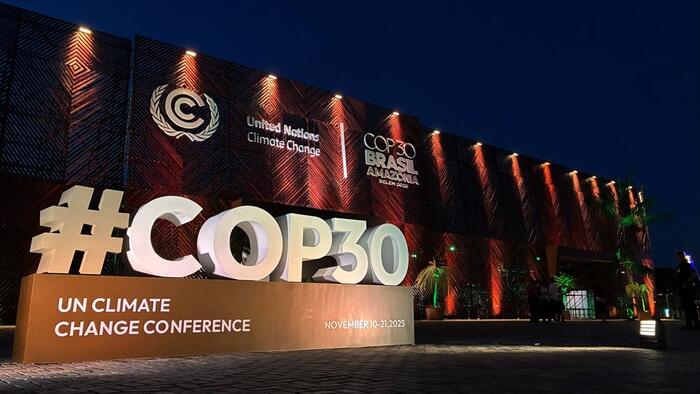
US & Qatar Force EU Climate Policy U-Turn – End of the ESG Era?
US & Qatar Force EU Climate Policy U-Turn – End of the ESG Era? Submitted by Thomas Kolbe While former German Foreign Minister Annalena Baerbock calls for a fight against climate-driven global apocalypse at COP30, Brussels is being forced into political restraint by pressure from the US and Qatar. On the horizon, the end of the EU’s grand climate machinations is becoming visible. November 13, 2025, could mark a turning point in European Union history. We may have witnessed the beginning of the end of European climate socialism. Media coverage of the day in Parliament downplayed its significance, focusing instead on the reform of the supply chain law, while fundamental changes unfolded at a different level. Politically, the event cannot be overstated; perhaps it should even be called a singularity in recent EU policy: The European Parliament paved the way for a dramatic dilution of corporate reporting obligations under the Corporate Sustainability Reporting Directive (CSRD) and the so-called due diligence rules (CSDDD). The unstoppable march toward a climate dictatorship has been abruptly halted. The End of the ESG Machine Advocates of the ESG doctrine—under which private industry is forced by lawmakers to integrate party-circulated environmental and social standards into corporate governance—suffered their first major setback. Reporting and due diligence obligations for companies have been so weakened that previously required climate-aligned transition plans at the corporate level are now eliminated. Responsibility for violations of the remaining rules now rests with national authorities, not Brussels, freeing multinational supply chains from massive oversight. The economy can, to some extent, escape the regulators’ grip—good news. For companies in the fossil energy sector, new market incentives emerge: exports to Europe can be conducted more easily, as regulatory hurdles are lowered and bureaucratic reporting requirements drastically reduced. Overall, the adjustment allows companies greater flexibility in supply chains, reduces the compulsion to invest in renewable or CO₂-neutral projects, and makes European markets more attractive to fossil energy exporters. Reality Check The EU Commission has recently faced mounting pressure from both Washington and the key LNG supplier, Qatar. US Trade Secretary Howard Lutnick had months earlier called on US companies to simply ignore Europe’s ESG framework if it significantly impeded operations—a direct affront to Ursula von der Leyen, who likes to portray herself as the morally superior, untouchable guardian of EU trade. Together, these forces launched an offensive to bring Brussels’ climate defense to its knees, where cognitive dissonance had taken hold and the undeniable drift of geopolitical power was being ignored. We have clearly entered the era of resource dominance. Europe imports roughly 60% of its required energy. Its irrational war on baseload energy sources such as nuclear and coal has only deepened dependence. In Brussels and EU branch capitals, the lesson is now unavoidable: being a resource-poor trading partner in negotiations reveals how Europe’s capital base has been massively weakened by EU policy. Europe has lost its historic dominant position. US President Trump, during negotiations with the EU, merely displayed what behind closed doors was already clear to everyone. Fear Wins in the End Ultimately, Brussels’ capitulation to Washington was a logical consequence of this dependence. The post-colonial extraction era—when France accessed uranium cheaply or Europe leveraged its Middle East dominance—is definitively over. Resource-rich regions now set the rules. Europe must comply, seek alliances, and become economically more robust if it wants a role in the future. Its path into eco-socialism was an illusion that has now burst. Germany’s crisis, its accelerated deindustrialization, is only the beginning—a snapshot of the global economic realignment. In the end,…
Le monde d’avant l’IA était un peu nul : désolée mais c’est mon avis
Avant l’IA, on nous vendait un âge d’or où les étudiants dévoraient les livres et rédigeaient des dissertations enflammées. C’était … Cet article Le monde d’avant l’IA était un peu nul : désolée mais c’est mon avis a été publié sur LEBIGDATA.FR.

Ils laissent ChatGPT imaginer leur enfant au lieu d’en faire un : où s’arrête la dystopie IA ?
L’IA est devenue une pro de l’imitation émotionnelle. Une nouvelle étude explore jusqu’où vont ces liens, en se concentrant sur … Cet article Ils laissent ChatGPT imaginer leur enfant au lieu d’en faire un : où s’arrête la dystopie IA ? a été publié sur LEBIGDATA.FR.

Black Friday spécial Hostinger : l’hébergement web plus accessible que jamais !

Google Maps va vous laisser insulter les commerçants en anonyme

Children First: Parlier's Conjunto Pantera connects kids with Hispanic music genre