
Le Journal

Votre Windows est trop triste ? La nouvelle option officielle pour tout relooker en un clic
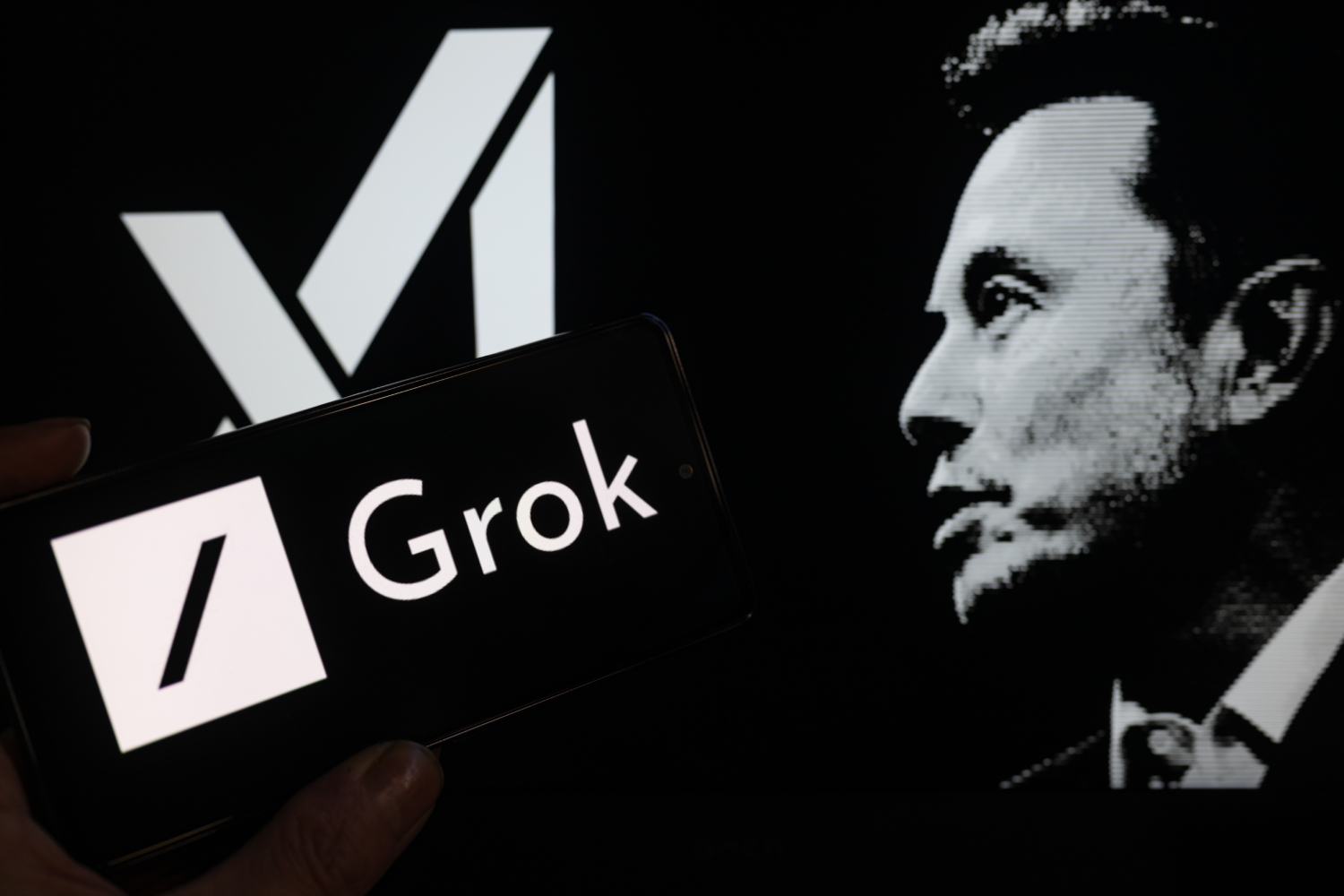
L'influence Musk progresse : ce pays déploie Grok comme outil éducationnel dans 5 000 écoles publiques
Le Salvador annonce un partenariat d'envergure avec xAI. Objectif : faire de Grok, l'intelligence artificielle (IA) qui a déjà essuyé plusieurs controverses, un outil éducatif majeur dans le pays.

WhatsApp ressuscite une fonctionnalité d'un autre temps, et elle est très pratique

Qualcomm lance deux nouveaux processeurs pour les smartphones pas chers

Il a tout gagné cette nuit : quel est ce jeu français qui vient de remporter les "Oscars" du jeu vidéo ?
Lors de la cérémonie des Game Awards qui s'est déroulée cette nuit à Los Angeles, c'est un jeu français qui a fait le show, en s'offrant pas moins de 9 statuettes, dont celle du prestigieux « Game of the Year ».

Google Maps s'améliore dans l'app Gemini : vos cartes deviennent bien plus utiles et sophistiquées

Why America gave up on economists

Trump’s redistricting loss in Indiana, briefly explained

Blame Republicans for our health insurance mess
Health insurance premiums on the Affordable Care Act’s marketplaces are set to spike after Congress failed to avert the rate hike. Health insurance premiums on the Affordable Care Act’s marketplaces are set to soar after Congress failed Thursday to pass a last-minute plan to avert the rate hikes. As many as 4 million people could be forced to go uninsured, because they can no longer afford their health plan. I spoke with some of them earlier this fall. These are working parents, entrepreneurs, and retirees — all now facing impossible choices because of the loss of their government aid. They are fed up with their livelihoods being exploited for politics, and it’s this population — those with health insurance subsidized by the federal government — who, in particular, think Republicans have dropped the ball. A recent survey found that 76 percent of people who get their insurance through the ACA and want the subsidies extended would blame President Donald Trump or Republicans in Congress if they are not. The broader public, the vast majority of whom would also like to see the aid extended, agrees; 48 percent of voters blame the GOP, while 32 percent pin it on the Democrats, per a new Morning Consult poll. On Thursday, the Senate failed to pass two partisan measures that were designed to avert premium spikes. One proposal from the Democrats would have extended the financial subsidies for three more years; it failed 51-48, with all Democrats and four Republican senators supporting it. The rest of the Republicans objected, and 60 votes were needed for the bill to advance. The other plan, put forward by Republicans, would’ve put money into a health savings account and pushed people to purchase catastrophic coverage with a higher deductible. It also fell short, at 51-48, with unified Democratic opposition. The only reason these votes happened at all is that the two parties agreed to end the government shutdown earlier this fall on the condition that the Senate would hold a vote by mid-December on a then-unspecified plan to restore the subsidies. Democrats had been pressing Republicans to address the assistance ahead of the shutdown and during the shutdown. Republicans, however, refused to negotiate at the time and failed to come up with a unified plan to fix the issue — until only a few days before the planned vote. Now, patients will have to pay their new, much higher premiums when coverage begins on January 1. And unless Democrats are willing to shut down the government again on January 30, when the current funding bill runs out, there likely won’t be another chance to fix the problem any time soon. Americans are right to blame the Republicans for this entirely avoidable health care catastrophe. The upcoming rate hikes are the result of the party’s failures to take health policy seriously for decades. Republicans have failed to unify around a real plan The Republican Party has been uninterested in health care reform for a long time. When President Obama finally passed the Affordable Care Act in 2010, he did so without the GOP’s support — even though his plan incorporated policies, such as the individual mandate, that were originally proposed by conservative policy thinkers. Ever since, the party has been focused singularly on dismantling it, rather than crafting a viable alternative to take its place. Their repeated pledges to repeal and replace the health care law ended in a disjointed and embarrassing failure in 2017. And, more recently, Trump himself could offer only “concepts of a plan” for health care during his second campaign for the presidency in 2024. Since then, the White House surprisingly floated a plan to address the issue in late November, seemingly without vetting it with congressional Republicans, who quickly shut it down. Trump has otherwise been disengaged on the urgent issue of keeping health coverage affordable for millions of voters while simultaneously arguing that Americans’ concerns over affordability in…

Caitlin Dewey Joins Vox as Senior Writer & Editor for the Today, Explained Newsletter
Vox editor-in-chief Swati Sharma and editorial director for politics, policy, and ideas Libby Nelson announced today that Caitlin Dewey is joining the brand as senior writer and editor for the Today, Explained newsletter. As the host of Vox’s flagship daily newsletter, Dewey will be responsible for helping Vox’s audience understand the biggest news stories and conversations affecting our world. She starts on December 15. “Caitlin is a unique voice and talent in the newsletter realm; her background in rigorous journalism, and in writing an approachable, reader-friendly newsletter, make her the perfect fit to helm Today, Explained. We’re excited to work with her to reimagine what the newsletter looks like in 2026 and beyond,” Nelson said. Dewey’s writing has appeared in the Washington Post, New York Times, Wall Street Journal, Elle, Slate, and The Cut, among other outlets. She began her career covering technology for the Washington Post, where she served as the paper’s first digital culture critic, and later moved to the Post’s national policy desk. In 2018, she returned to her native Western New York and spent five years as an enterprise and investigative reporter for the Buffalo News. She has worked as a contributing writer for Vanity Fair and Stateline and taught at Syracuse University and the Poynter Institute. She is also the author and publisher of the long-running independent newsletter Links I Would Gchat You If We Were Friends, which she will continue to publish after joining Vox. The Today, Explained franchise also extends to Vox’s award-winning podcast of the same name, which was recently ranked No. 37 on Spotify’s list of the top 50 podcasts of 2025 and entered the top 10 on Podtrac’s industry ranking. About Vox When Vox was founded in 2014, it was animated by a simple observation: The media did a good job of reporting the news and commenting on it, but there was a disconnect between that work and the audience truly understanding why something happened. Vox started as — and remains — an organization dedicated to addressing that gap, which not only persists but has grown. We are proud to have popularized explanatory journalism in many forms, across many mediums. Our work has been used to educate people everywhere, from elementary schools to college classrooms to vaccination sites in Taiwan to footnotes in congressional memos.

Yes, you should look up your home’s disaster risk
Earlier this month, the real-estate listing site Zillow ended a subtle social experiment. In 2024, they began to embed climate risk data directly in their property profiles, scoring a home’s future risks from flood, wildfire, wind, heat, and air quality on a 1-to-10 scale. Say you are looking for a home in your budget for your growing family, and you find the perfect three-bedroom Cape Cod house — but it’s close to a shoreline. Zillow’s property listing might show that it has a nine out of 10 flood risk score. Depending on your personal risk tolerance, that might rule out the house for you. Including this information seemed like an obvious move for Zillow. Disasters worsened by warming are contributing to multibillion-dollar damages to homes, and the site’s competitors, such as Redfin, already feature climate risk information in their listings. “Climate risks are now a critical factor in home-buying decisions,” Skylar Olsen, chief economist at Zillow, said in a statement last year. Zillow’s own data proved that many homebuyers were indeed starting to think more about climate change alongside square footage, nearby schools, and curb appeal — so much so that real estate agencies and sellers complained that the climate risk scores were starting to hurt sales. Which is kind of the point. Giving homebuyers a sense of where warming temperatures could lead to a higher chance of a wildfire or flood should ideally steer people away from properties facing greater danger. Over time, people would buy safer homes — and if they chose to buy in riskier areas, at least they were forewarned and could boost their insurance policies. Key takeaways Real-estate listing site Zillow began including climate disaster risk scores in its property listings last year, but recently removed them after complaints from realtors and sellers that the information was hurting sales. This is just one example of how sellers, realtors, and governments have sought to limit the use of risk forecasts that factor in climate change because of the effects on real estate. But just because some want to bury their heads in the sand when it comes to climate risk doesn’t mean these dangers will go away. Communities that have examined their own risks and taken steps to reduce them have seen benefits. One community near Lake Tahoe managed to reduce property insurance rates after taking steps to reduce wildfire risks. But climate risk assessments are not great if your current house has a bad score, and you’re trying to sell it. Under pressure from real estate groups, Zillow stopped including them. The climate risks, of course, haven’t gone away. Welcome to the “la, la, la, can’t hear you” climate era. In many parts of the US, populations are still increasing in areas vulnerable to disasters such as floods, extreme heat, drought, and fires, while the federal government under President Donald Trump is removing references to climate change from government websites. People, too, will cover their eyes when the climate reality threatens real estate prices. Clear Lake, Texas, for example, installed signs showing the potential high water mark from storm surge after Hurricane Ike in 2011, but when locals complained that the warnings were hurting sales, the signs were taken down. In 2012, North Carolina outlawed a forecast of sea level rise that showed that many more coastal properties were at risk of flooding over the next century, in favor of adopting a forecast that only looked 30 years ahead. Yet, while sellers might want to overlook future risks, banks, insurance companies, and buyers don’t want to lose money on what is often their single-most expensive purchase. More costly disaster damages are also taking a bigger bite out of the $55 trillion US residential housing market as a whole. “I don’t think this is a good thing for anyone but Zillow — people need to know more about their risk, not less,” said Marc Ragin, a researcher studying disaster risk at the University of Georgia, in…
