
Le Journal
Disappointing photos show what it's really like to backpack across Europe
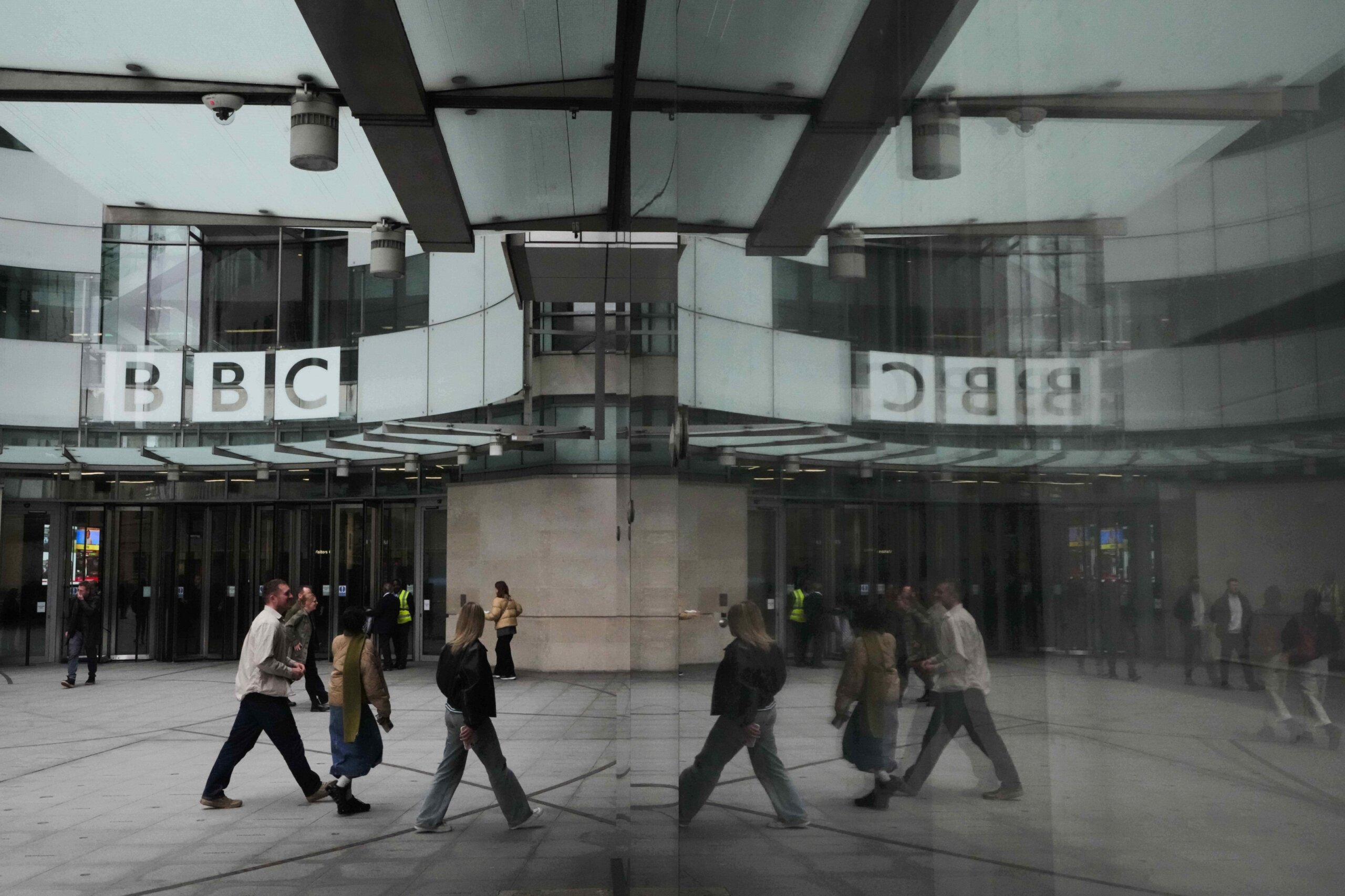
BBC leaders grilled by lawmakers over its standards after Trump threatened to sue
Every animated Disney film, ranked by critics
Ukraine's special ops forces say they just scored a battlefield first: taking out a Russian helicopter with a 'deep strike' drone
'Wicked: For Good' director Jon M. Chu on breaking set pieces, casting Dorothy, and the shot Universal wasn't allowed to see
(L-R) Ariana Grande, Jon M. Chu, and Cynthia Erivo on the set of "Wicked: For Good."Giles Keyte/Universal PicturesWarning: Major spoilers ahead for "Wicked: For Good."Director Jon M. Chu revealed how he got Colman Domingo involved and why he hid Dorothy's face.He also explains how the movie's final shot pays homage to the iconic poster of the musical.For more than four years, "Wicked" director Jon M. Chu has lived every waking hour inside the land of Oz. He shot 2024's critical and box-office success "Wicked" simultaneously with its sequel, "Wicked: For Good," which cultivates a cinematic conclusion he hopes will live up to the beloved Broadway musical it's based on.Crafting that conclusion required a delicate balancing act between adapting Act II of the Broadway musical and adding additional flourishes like new songs and character-building flashbacks to round out the story. "Wicked: For Good" kicks off as Elphaba (Cynthia Erivo) sets out on a mission, determined to reveal the Wizard (Jeff Goldblum) as a fraud. Meanwhile, Glinda (Ariana Grande) is torn between fame and her friendship with Elphaba. It all leads to the dramatic emergence of Dorothy — or at least, a silhouette of her.Now that "Wicked: For Good" is in theaters, Chu is ready for spoiler-heavy chat about everything that went into making the smash hit, from guiding Ariana Grande's career-best performance to how a discovery in rehearsals led to one of the movie's most dramatic moments. On making Elphaba a badass, casting Dorothy, and sliding into Colman Domingo's DMsCynthia Erivo returns as Elphaba Thropp in "Wicked: For Good."Universal PicturesBusiness Insider: You open "Wicked: For Good" with a scene that's not in the musical: Elphaba saving animals who are building the Yellow Brick Road. What was behind that choice?Jon M. Chu: I'm a big fan of "Batman," the Tim Burton version, so I love a cold open. I also wanted to show that the Yellow Brick Road that we think of that's so iconic actually had to be built by somebody, or some animals. That it was not just this pristine idea. That the building of it was poisoned, and that Elphaba was this badass who, on her own, had this mission to free the animals and expose the truth. Some main characters from "The Wizard of Oz" appear this time around, though you only show Dorothy in far shots, silhouettes, or just her feet. How tempting was it to shoot her face? We had opportunities to show more, and we shot some things where you could see her face, but our intention, from the beginning, was not to show her face. But was I sure of that choice? We did get options for it, but every time, it was a distraction.The thing we went by the whole time was something from the stage show. They told us, "It's about the girls!" Whatever is happening, it's about the girls. So every time it drew us to, "What does Dorothy think?" we reminded ourselves of that.Even though the plan was to show a limited amount of Dorothy, was it still a long audition process to cast the role?Oh, yeah. At the auditions, we would put a sheet up, looking at the performer's silhouette. Through that, I was looking at how she could walk, but also, could I guide her in that way? The person had to have youthful energy, so we ultimately chose a dancer.What's the dancer's name?Bethany Weaver.We also get a cameo from Colman Domingo. How did he come to play the Cowardly Lion?We have this amazing team of movement actors on set playing the animals, but we always knew we would replace their voices. There was a point this past year where we were cutting the movie together and we needed the voice because it was throwing me off. I had a bunch of names, but I kept seeing Colman on the award circuit. And I felt he would be really fun. So I DMed him. I don't even have his phone number. I DMed him on Instagram and said, "Hey Colman, I know we've met a couple of times, but there's this role of the Cowardly Lion, there's not a lot of lines, it's not a lot of money, but it could be…
I've traveled to all 50 states. These are the 7 most overrated tourist attractions in the US.
Anthropic unveils new Claude Opus 4.5, its 'most intelligent' model
The question managers should ask to see whether to 'take action' on an employee, according to a former Stripe HR leader
HR pro Rachel Lockett said that "engaging in the hard conversation" about employee performance can "lead you to the clarity that you need to take action."vittaya pinpan/Getty ImagesFormer Stripe and Pinterest HR leader Rachel Lockett said there's a key question managers should ask about employees.Lockett's question: "Would you enthusiastically rehire this person for the same role?""You have an immediate reaction that is honest to that question that provides clarity," she said on "Lenny's Podcast."Did you hire the right talent? For HR pro Rachel Lockett, it comes down to one question.Lockett worked as an HR leader at major tech companies, including Stripe and Pinterest, before founding her own executive coaching consultancy. On a recent episode of "Lenny's Podcast," Lockett gave a peek behind the curtain for her talent strategy.It's difficult for managers to accept that their talent is underperforming, Lockett said. She suggests asking: "Would you enthusiastically rehire this person for the same role?"Lockett always asked that question at Stripe, she said."When the answer is no to that, no matter how many difficult conversations you have, this is not going to work," she said.The question is clarifying, she said, because it is a binary choice."Even engaging in the hard conversation and seeing what happens can lead you to the clarity that you need to take action on talent that's not working," Lockett said.As tech companies strive for "talent density," they can employ various methods to determine whether their teams have the desired makeup — and whether talent should stay.Lockett's question is reminiscent of Netflix's famous "keeper test." It's evolved over the years, but it asks Netflix managers to consistently ask themselves: "If X wanted to leave, would I fight to keep them?" or, "Knowing everything I know today, would I hire X again?" If the answer is no, the employee is given "generous severance" and cut so that a stronger replacement could be found.Meta looked for so-called "low performers." Mark Zuckerberg laid off some 4,000 employees in February to "make sure we have the best people on our teams." Microsoft took a similar strategy, cutting nearly 2,000 employees who were deemed low performers.Host Lenny Rachitsky chimed in to say that a "no" to Lockett's question doesn't always mean employees should be exited on the spot. There are other methods to address performance, he said."It could be, talk to them about it, put them on a performance plan, put them in a different role," Rachitsky said. "It doesn't mean you have to fire them immediately."Lockett responded by saying that the size of the business mattered, too. "In quickly scaling businesses, it's natural that the leadership team's job will change, and that you'll have to make some evolution over time," she said.While a performance improvement plan may be preferable to termination, employees have come to dread them. In Big Tech, PIPs took on a new name: "quiet layoffs."Part of the question's appeal is its directness, Lockett said."You have an immediate reaction that is honest to that question that provides clarity," she said.Read the original article on Business Insider