
Le Journal

The Global Brand Behind Store-Bought Cracker Barrel Cheese
The Cracker Barrel cheese that you find in grocery stores is not related to the Cracker Barrel restaurant. Here's the global company behind the cheese.

NJ Governor Phil Murphy signs new e-bike safety legislation after a number of dangerous crashes

4 Frequently Returned Sam's Club Food Items
Those Who Try to Erase History Will Fail
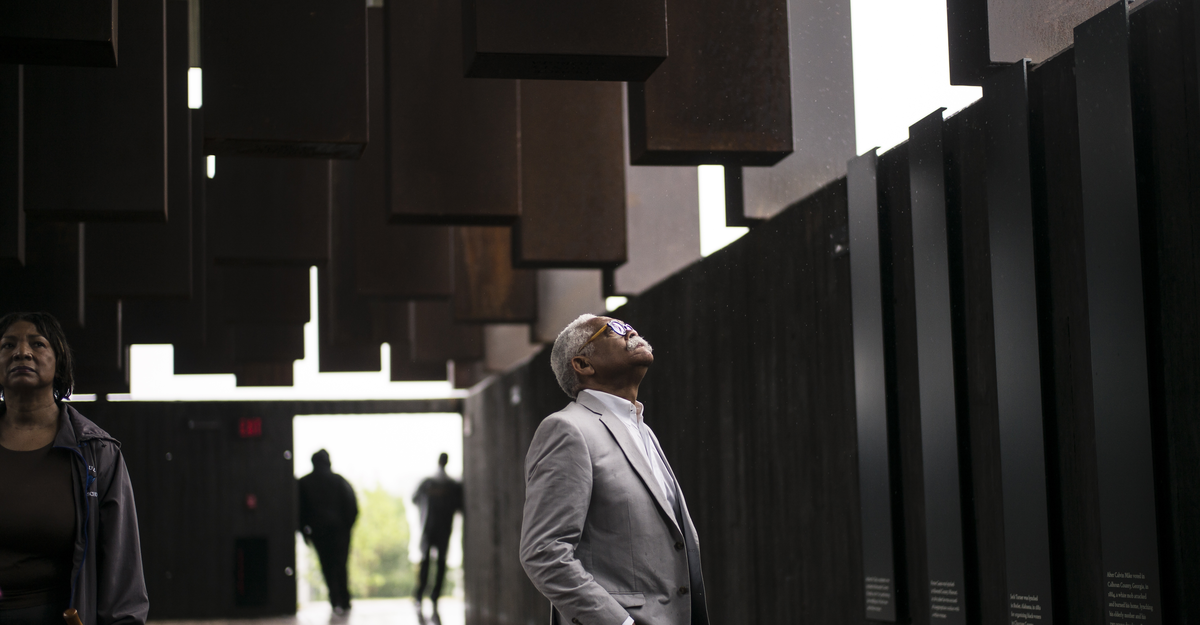
Belzoni, Mississippi, a town of about 2,000 people, is known as the “Catfish Capital of the World”; it is also known as the site of one of the first civil-rights-era lynchings. On May 7, 1955, two members of the local White Citizens’ Council shot into the cab of Reverend George Lee’s car; the bullets ripped off the lower half of his face. Lee had been a co-founder of the town’s NAACP chapter and the first Black person to successfully register to vote in Humphreys County since Reconstruction. He’d also registered about 100 of his fellow Black citizens to vote, a remarkable feat given Belzoni’s size and the ever-present threat of violence against Black people throughout the South who dared to exercise their franchise during the Jim Crow era.The Mississippi NAACP, led by Medgar Evers, began to investigate the death as a murder. But the county sheriff rejected the idea that there had been any foul play, instead suggesting that Lee had died in a car accident and that the lead bullets detected in his jaw were simply dental fillings. The local prosecutor refused to move forward with the case, and the white men went free.I learned this story recently, after visiting the National Memorial for Peace and Justice—known to many as the National Lynching Memorial—in Montgomery, Alabama. The memorial consists of more than 800 rectangular steel pillars, each representing a different county in which a lynching took place. One of them is Humphreys, in Mississippi.[From the June 2024 issue: The lynching that sent my family north]It was a cold, rainy day, and my first time seeing the memorial. The space is haunting in its stillness, and overwhelming in its scale. Some of the steel pillars are suspended from above, while others are closer to the ground, forcing you to walk among them, through a steel labyrinth of racial terror.A man named Lee Perkins was also at the memorial that day, being pushed around in a wheelchair by his son-in-law Chris Brown. Perkins was born in Belzoni in 1937. He was 17 when the lynching took place. As he told me about growing up as a Black child in the Mississippi Delta, he looked up, his eyes tracing the pillars’ long, still bodies. He had a coarse voice with a warm southern drawl. “I never thought I would see something like this,” he said, his neck craning to read the names on each piece of steel. Dusk began to settle around us, and the sky slowly darkened at its edges.“I pray to God they never get rid of this history,” Brown said. “We as a Black race went through so much, and they’re trying to erase that.”The lynching memorial has two sister sites in Montgomery—the Legacy Museum, which traces the history of Black oppression in America from slavery to Jim Crow to mass incarceration, and Freedom Monument Sculpture Park, a 17-acre site that uses both contemporary sculptures and original artifacts to illuminate the lives and experiences of enslaved people. All three were created by the Equal Justice Initiative, a nonprofit legal organization founded in 1989 that has expanded into narrative and public-history work over the past decade and a half under the leadership of its founder and executive director, Bryan Stevenson.Stevenson began his career as a public-interest lawyer, and went on to argue in front of the Supreme Court on five occasions, winning favorable judgments in all but one. He successfully argued, for example, against mandatory life sentences without parole for children, and for incarcerated people with dementia to be protected, in some cases, from execution. But he has said that as time passed, he came to understand that his legal work would not be enough on its own to effect meaningful criminal-justice reform. The American public, he felt, needed a deeper understanding of how the realities of the country’s history shaped the present-day system.The Legacy Museum, which opened almost eight years ago, is perhaps the closest thing America has to a national slavery museum. Crucially, however, it is completely…

The Snow Monsters of Mount Zao

‘Looksmaxxing’ Reveals the Depth of the Crisis Facing Young Men
Minnesota Had Its Birmingham Moment
How to Understand Trump’s Obsession With Greenland
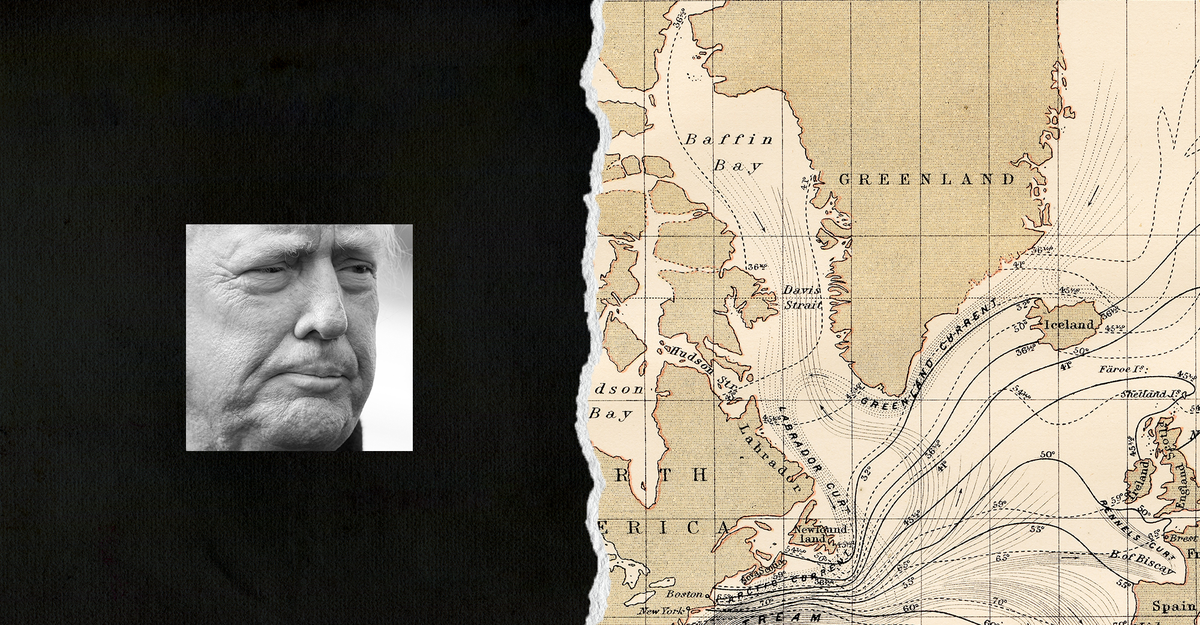
European leaders are in a dither, understandably but inexcusably, about Donald Trump’s threats to take Greenland by force, and to use tariffs to slap around anyone who objects: understandably, because no previous president would ever have acted this way; inexcusably, because a clear if unpalatable solution lies right before them.If European countries were to permanently deploy, say, 5,000 soldiers armed with surface-to-air and anti-ship missiles to Greenland, keeping them there with orders to fight invading American soldiers to the last round of ammunition, Trump would not order the paratroops and the Marines to assault that frozen wasteland—too many body bags. If they were willing to put comparable economic sanctions in place—denying American companies access to Europe’s economy, still collectively the world’s third largest—he would back down from those threats as well. Such policies go against the grain of a continent that is, to use the word popularized by the British military historian Michael Howard, debellated, but that’s the world they are in.The Greenland episode, disgraceful and shameful as it is, should be seen in the context of Trump’s other foreign-policy escapades—the capturing of Nicolás Maduro; the bombing of the Iranian nuclear program; the attempt to rebuild and reorient war-shattered Gaza; the on-again, off-again relationships with Vladimir Putin and Volodymyr Zelensky; the tariff bazookas that get downgraded to squirt guns with China. Erratic as the president sounds, the Trumpian worldview is comprehensible and even, in some respects, predictable.Trump is an ignorant man; unlike many other would-be or actual dictators, he does not read books and has difficulty writing more than a few badly spelled sentences on social media. But he does intuit certain truths, and one must give him credit for those, because he is not stupid and they animate his policy. Greenland really has been neglected by Denmark and, since after the American Civil War, has been coveted by the United States. The Iranian nuclear program was a regional and in some respects global menace, and, after a week and a half of Israel softening up, was vulnerable to a single heavy punch. Europe has long underspent on defense, and where American cajoling for decades had not worked, a few face slaps succeeded.Trump’s domestic political gift is the feral instinct for weakness that characterizes most authoritarians. That instinct is shakier in international affairs, but it shapes the way in which he views the world. With an image of American industrial and military power that is rooted in the world of several generations ago, he has enormous confidence in American strength and therefore assumes that bullying is preferable to negotiation, unless you are up against someone who is as tough as you, even if less muscle-bound.He knows what he hates in foreign affairs—the mealymouthed multilateralism of the Biden administration, its catering to deadbeat allies, and its weakness in fleeing Afghanistan. He likewise despises the caterwauling about liberal values and democracy and the long-term military commitments of the George W. Bush administration. Indeed, although he cannot get over Joe Biden—Trump’s insecurities and grievances about the 2020 election and the various prosecutions he has faced between then and now prohibit it—from a foreign-policy point of view, he is at least as anti–George W. Bush as he is anti-Biden. And he despises the reverence for deliberate decision making, consultation with experts, and the willingness to engage in the conventional diplomacy that characterizes both. He views talk of international leadership, much less its practice, as claptrap.Above all, he has three principal instruments in foreign policy: tariffs and kindred economic sanctions, brief bombing campaigns, and commando raids. He has no tolerance for bloody battles, which is why he will not authorize an Arctic amphibious campaign that faces real opposition. If he is going…

Will Anderson Jr. Told CJ Stroud He’s “Still The Best QB In NFL” After Horrendous Performance vs Patriots (VIDEO)
Josh Shapiro Settles Some Scores

Chicago Legend Jim Cornelison Gets Solider Field Hype With The National Anthem (VIDEO)

Kayshon Boutte Makes A Ridiculous One-Handed Touchdown Catch
What a freaking catch. During the fourth quarter of Sunday’s Texans-Patriots AFC Divisional Round Playoff Game, Patriots wide receiver Kayshon Boutte made a ridiculous one-handed touchdown catch to put the Patriots up 28-16. The post Kayshon Boutte Makes A Ridiculous One-Handed Touchdown Catch appeared first on Daily Snark.