Le Journal
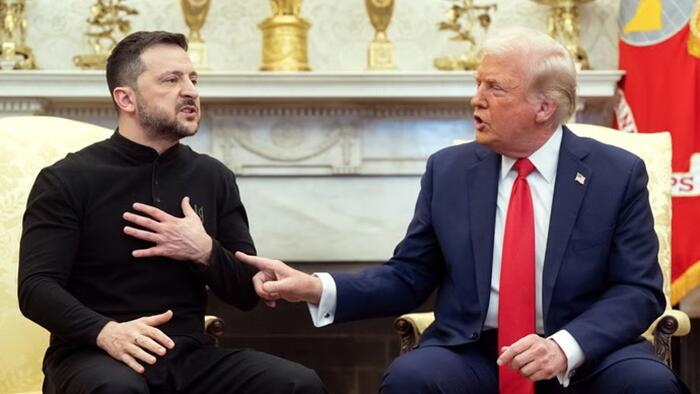
Regime Change In Kyiv? US Peace Plan Demands Ukraine Hold Rapid Elections After Signing

Amazon Sending $1.5 Billion In Automatic Refunds To Customers: 4 Things To Know

Ukraine & Europe Reject Trump's Russia Peace Plan, Prepare Emergency Call
Ukraine & Europe Reject Trump's Russia Peace Plan, Prepare Emergency Call By all estimates, this is the first ever US-proposed peace plan which actually demands major concessions from Ukraine, but it also seeks to provide assurances for Kiev's future protection modelled on NATO article five, according to Axios. Among President Zelensky's top objectives has long been to obtain a robust US and European security guarantee, and this new 28-point plan appears to give just that: President Trump's peace plan for Ukraine includes a security guarantee modeled on NATO's Article 5, which would commit the U.S. and European allies to treat an attack on Ukraine as an attack on the entire "transatlantic community," - writes Axios. AFP/Getty Images Such a pledge could be recipe for future war, however, and that's precisely how Moscow might see it, especially if other pressing issues of territory or military NATOization on Russia's doorstep aren't resolved. The security guarantee would be for up to a decade and could be renewed, according to the draft. There are also reports that the US is already advancing a very ambitious timeline - that it wants to see the plan signed by Thanksgiving, or as soon as next week. There are even lines for signatures on the document, indicating places for Ukraine, Russia the US, and even NATO and the EU. It's unclear just which representatives would sign from each country or bloc, and its as yet unclear whether Putin himself must sign. A senior Kremlin official cited in Axios said he was "optimistic" about the plan’s prospects, arguing that it aligns more closely with Moscow's views than previous diplomatic efforts. This is especially as a large portion of the Donbas will be recognized as under Russia's control, and the size and capability of the Ukrainian army will be scaled back, which a commitment to no foreign troops on Ukrainian soil as well. And yet, as predicted by many, Ukraine and its European backers stand ready to rejected the plan - though it's still only in its draft form and hasn't been seriously negotiated over by the warring sides. Newsweek reports: European leaders are preparing an emergency call to discuss U.S. President Donald Trump’s controversial proposal to end the war in Ukraine. German Chancellor Friedrich Merz cancelled a scheduled appearance to join the discussion, which will also include Ukrainian President Volodymyr Zelensky, British Prime Minister Sir Keir Starmer, and French President Emmanuel Macron. The 28‑point plan caught European capitals off guard. Leaders were not directly involved in the U.S. effort and learned the details only after the document was made public. Indeed Ukraine wasn't involved either, and the emerging complaint is that it too closely resembles earlier Russian talking points and proposals for ending the war. EU High Representative Kaja Kallas said Thursday, "We have always supported a lasting and just peace, and we welcome any efforts to achieve it, but for any plan to work, Ukrainians and Europeans are needed." In response to the risk of peace breaking out with the US-Russia peace plan - Germany speaks of supplying long-range fire, Britain wants to send troops, and the EU expresses its opposition. pic.twitter.com/nSfNjTHD0x — Glenn Diesen (@Glenn_Diesen) November 21, 2025 She went on to indicate her view that nothing fundamental has changed. "In this war there is one aggressor and one victim," she said. "If Russia really wanted peace, it could have agreed to an unconditional ceasefire some time ago," she added. So far Ukraine has only signaled a vague 'openness' to examining the US plan: "The President of Ukraine outlined the fundamental principles that matter to our people, and following today’s meeting, the parties agreed to work on the plan’s provisions in a way that would bring about a just end to the war," the Ukrainian presidential office has said. In the meantime, European leaders are making their objections known one by one, and roadblocks…
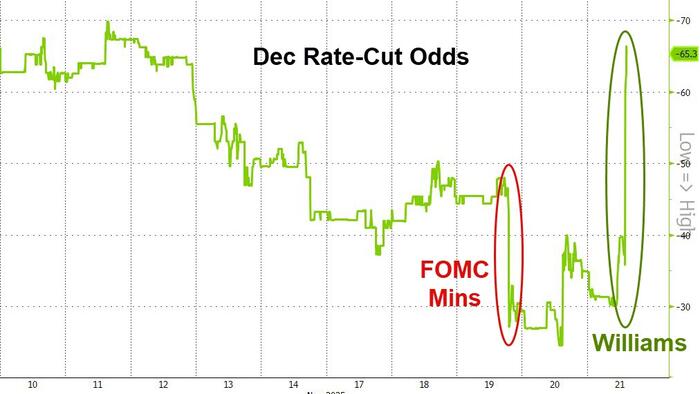
Stocks Rebound As Fed's Williams Sparks Surge In Rate-Cut Odds

Stratospheric Warming Sparks Goldman Warning Of Looming U.S. Polar Vortex
US & Qatar Force EU Climate Policy U-Turn – End of the ESG Era?
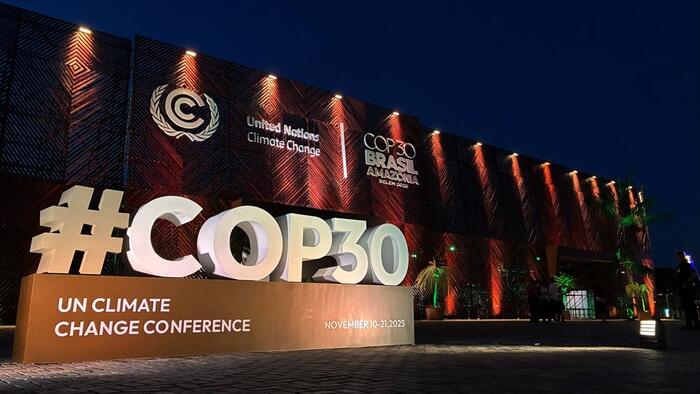
US & Qatar Force EU Climate Policy U-Turn – End of the ESG Era? Submitted by Thomas Kolbe While former German Foreign Minister Annalena Baerbock calls for a fight against climate-driven global apocalypse at COP30, Brussels is being forced into political restraint by pressure from the US and Qatar. On the horizon, the end of the EU’s grand climate machinations is becoming visible. November 13, 2025, could mark a turning point in European Union history. We may have witnessed the beginning of the end of European climate socialism. Media coverage of the day in Parliament downplayed its significance, focusing instead on the reform of the supply chain law, while fundamental changes unfolded at a different level. Politically, the event cannot be overstated; perhaps it should even be called a singularity in recent EU policy: The European Parliament paved the way for a dramatic dilution of corporate reporting obligations under the Corporate Sustainability Reporting Directive (CSRD) and the so-called due diligence rules (CSDDD). The unstoppable march toward a climate dictatorship has been abruptly halted. The End of the ESG Machine Advocates of the ESG doctrine—under which private industry is forced by lawmakers to integrate party-circulated environmental and social standards into corporate governance—suffered their first major setback. Reporting and due diligence obligations for companies have been so weakened that previously required climate-aligned transition plans at the corporate level are now eliminated. Responsibility for violations of the remaining rules now rests with national authorities, not Brussels, freeing multinational supply chains from massive oversight. The economy can, to some extent, escape the regulators’ grip—good news. For companies in the fossil energy sector, new market incentives emerge: exports to Europe can be conducted more easily, as regulatory hurdles are lowered and bureaucratic reporting requirements drastically reduced. Overall, the adjustment allows companies greater flexibility in supply chains, reduces the compulsion to invest in renewable or CO₂-neutral projects, and makes European markets more attractive to fossil energy exporters. Reality Check The EU Commission has recently faced mounting pressure from both Washington and the key LNG supplier, Qatar. US Trade Secretary Howard Lutnick had months earlier called on US companies to simply ignore Europe’s ESG framework if it significantly impeded operations—a direct affront to Ursula von der Leyen, who likes to portray herself as the morally superior, untouchable guardian of EU trade. Together, these forces launched an offensive to bring Brussels’ climate defense to its knees, where cognitive dissonance had taken hold and the undeniable drift of geopolitical power was being ignored. We have clearly entered the era of resource dominance. Europe imports roughly 60% of its required energy. Its irrational war on baseload energy sources such as nuclear and coal has only deepened dependence. In Brussels and EU branch capitals, the lesson is now unavoidable: being a resource-poor trading partner in negotiations reveals how Europe’s capital base has been massively weakened by EU policy. Europe has lost its historic dominant position. US President Trump, during negotiations with the EU, merely displayed what behind closed doors was already clear to everyone. Fear Wins in the End Ultimately, Brussels’ capitulation to Washington was a logical consequence of this dependence. The post-colonial extraction era—when France accessed uranium cheaply or Europe leveraged its Middle East dominance—is definitively over. Resource-rich regions now set the rules. Europe must comply, seek alliances, and become economically more robust if it wants a role in the future. Its path into eco-socialism was an illusion that has now burst. Germany’s crisis, its accelerated deindustrialization, is only the beginning—a snapshot of the global economic realignment. In the end,…
Futures Slide As Bitcoin Flash Crashes To April Low Ahead Of $3.1 Trillion Opex
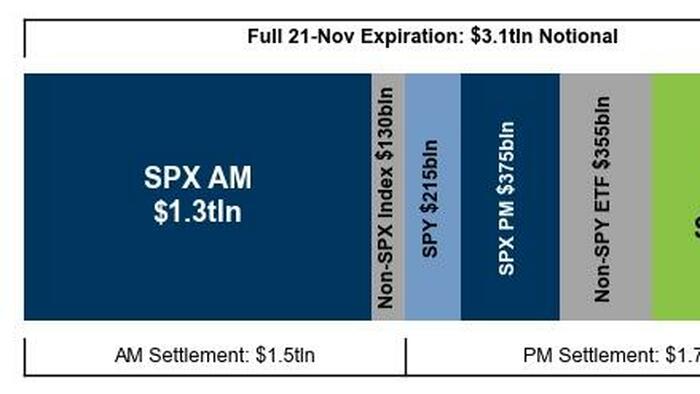
Futures Slide As Bitcoin Flash Crashes To April Low Ahead Of $3.1 Trillion Opex 10 Things You Shouldn’t Miss This AM… 1) Japan on Friday escalated its warning of currency intervention and the central bank governor signaled the chance of a near-term interest rate hike, as authorities sought to combat unwelcome yen falls blamed for pushing up the cost of living. RTRS 2) Japan’s inflation ticked higher and exports rose. National CPI for Oct is inline w/the Street, including on headline at +3% (up from +2.9% in Sept) and core (ex-food/energy) at +3.1% (up from +3% in Sept). BBG 3) India’s rupee fell to a record low against the dollar, pressured by uncertainty around a potential US trade deal. BBG 4) The US is open to lifting tariffs on EU goods such as beef and other foods to help keep grocery prices affordable. FT 5) The U.K. government’s borrowing continued to run ahead of projections in October, a deterioration in its finances that it will aim to correct with tax rises and some spending cuts in its annual budget statement next week. WSJ 6) Trump has lifted a 40% tariff on certain Brazilian agricultural products, including coffee, beef and fruits, as Brazil reaps the benefit of the US administration’s attempt to bring down domestic food prices. FT 7) The Fed’s Anna Paulson struck a cautious tone ahead of December’s meeting, saying, “Each cut raises the bar for the next.” Still, she remains more worried about labor market weakness. Stephen Miran reiterated that policy is very restrictive. BBG 8) America’s middle class is weary. After nearly five years of high prices, many middle-class earners thought life would be more affordable by now. Costs for goods and services are 25% above where they were in 2020. Even though the inflation rate is below its recent 2022 high, certain essentials like coffee, ground beef and car repairs are up markedly this year. WSJ 9) The Congressional Budget Office now estimates that Trump’s tariffs will reduce deficits by ~$3T over the next 10 years, down from a prior forecast of $4T. CBO 10) Including yesterday (dating back to since 1957) there have been 8 instances where the S&P 500 gaps up more than 1% only to reverse and close in the red. On the bright side here is S&P 500’s average performance after these 8 instances: 1 day later +233bps, 1 week later +288bps, 1 month later +472bps. US stock futures continued to sink following yesterday’s remarkable reversal - from +2% to -2% intraday, a move which according to Goldman has only happened 2 other times before: April 7th 2020 (after COVID crash) April 8th 2025 (after Liberation Day crash) - and broad underperformance in Asia (NKY -2.4%, HSI -2.4%, Kospi -3.8%). As of 7:15am, S&P futures were down 0.3% and Nasdaq futures slid 0.4% with a $3.1 trillion option expiration on today's calendar. Pre-mkt, Mag 7 were mixed, with Nvidia falling more than 1% in premarket trading as the biggest artificial-intelligence stocks remained under pressure. Meanwhile the collapse in bitcoin is accelerating, and after a flash crash in overnight trading, it's on pace for its worst month since the June 2022 crypto crash. Bond yields are 1-3bp lower; USD is largely unchanged. Commodities are mostly lower: oil -2.6%, Silver -3.3%. Today's we’ll get the global flash November PMIs, the November Kansas City Fed services activity update, and the Final UMIch numbers.Central bank speakers include the Fed's Williams and Logan, the ECB's Lagarde, de Guindos, Kocher, Muller and Nagel, and the BoE's Pill. In premarket trading, Mag 7 stocks are mixed: Nvidia falls 1.4%, on track to extend losses, with shares in the semiconductor giant lagging other Magnificent Seven stocks in premarket trading (Alphabet +0.7%, Tesla +0.8%, Amazon +0.2%, Meta +0.3%, Apple +0.1%, Microsoft -0.4%) AnaptysBio (ANAB) fell 15% after GSK initiated litigation against the company in the Delaware Chancery Court. Cryptocurrency-exposed stocks (MSTR -2.9%, COIN -1.3%, MARA 1.5%) tumble as Bitcoin is on…

NASA Debunks Rumors About Interstellar Comet 3I/Atlas
NASA Debunks Rumors About Interstellar Comet 3I/Atlas Authored by T.J.Muscaro via The Epoch Times, With the federal government shutdown over, NASA leadership was finally able to provide an update to the public about an interstellar object that was caught passing through the solar system in July. A press conference was livestreamed on Nov. 19, and it began with Associate Administrator Amit Kshatriya confirming that the object known as 3I/Atlas was an interstellar comet and nothing else. “I think it’s important that we talk about [the fact] that this object is a comet,” he said. ”It looks and behaves like a comet, and has and all evidence points to it being a comet. But this one came from outside the solar system, which makes it fascinating, exciting, and scientifically very important.” The name 3I/Atlas comes from the fact that it is only the third interstellar object (3I) NASA has discovered that originated from outside the solar system, and it was first picked up by the NASA-funded Atlas Survey Telescope located in the mountains of Chile. Discovered on July 1 by its planetary defense network—which also found it posed no threat to Earth—NASA retasked a large portion of its fleet of interplanetary science spacecraft to track the comet as it made its closest pass to the sun at the end of October. Nicky Fox, associate administrator for NASA’s Science Mission Directorate, said that 20 mission teams and counting contributed to collecting whatever data they could on the comet, including the Hubble Space Telescope, the Parker Solar Probe, Europa Clipper, and the James Webb Telescope. The planet 3I/Atlas came closest to was Mars, so NASA also tasked its Perseverance rover on the Martian surface, the Mars Reconnaissance Orbiter, and the MAVEN spacecraft to take pictures and learn what they could. That flyby took place at a distance of less than 20 million miles from the Red Planet on Oct. 3, and then the comet proceeded to make its closest approach to the sun while Earth was on the opposite side. Before that, 3I/Atlas was monitored through September by spacecraft sent to study asteroids named Psyche and Lucy. It takes time for NASA scientists to receive the images and data from deep space, process them, and prepare and make the initial findings ready for publication. The space agency’s website showed its last update on the comet published on Aug. 25. A shutdown of the federal government began on Oct. 1, which suspended public relations teams for nearly all government agencies, and did not end until Nov. 12. Amid NASA’s silence, speculation spread that the so-called comet was actually a spaceship of some kind built and sent by an extraterrestrial intelligence. While he did not specifically call out theories of aliens, Kshatriya saw it all in a positive light. “I’m actually very excited that a lot of the world was speculating about the comet while NASA was in a period where we couldn’t speak about it due to the recent government shutdown,” he said. “I think what I took away from that whole experience, and watching that as we were working during the shutdown, was just how interested and how excited people were about the possibility of what this comet could be. “What I think is really awesome is that folks are interested in this incredible finding that we observed and that we have that came from the heavens, and what that means. It expanded people’s brains to think about how magical the universe could be, and I'll tell you here at NASA, we think that every day.” Along with unveiling their backlog of images, NASA leadership shared that this comet likely came from a solar system much older than the Earth’s, though it is unclear which system. Moving at more than 60 kilometers per second (134,000 mph), it had an icy nucleus estimated to be between 1,400 feet and 3.5 miles in diameter, surrounded by a cloud of gas and dust called a coma, made mostly of carbon dioxide, vaporized water, nickel, and iron. Solidified in the extreme freezing…

Bitcoin Flash-Crashes Below $82,000 As UBS Says A "Flush" Is Needed Before "Turning More Constructive"
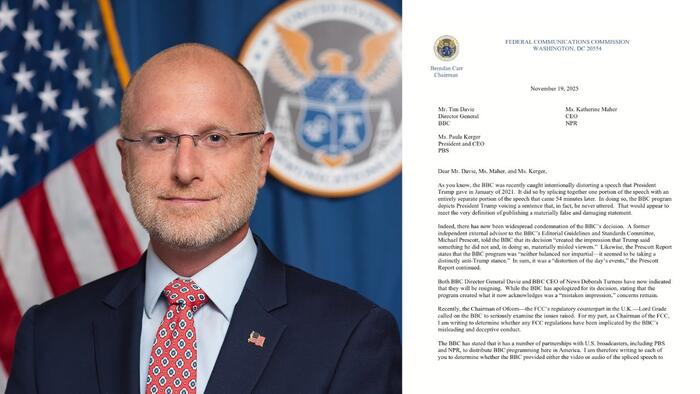
"Rigging The News Is Heinous" - FCC Chair Carr Probes BBC 'Corruption'
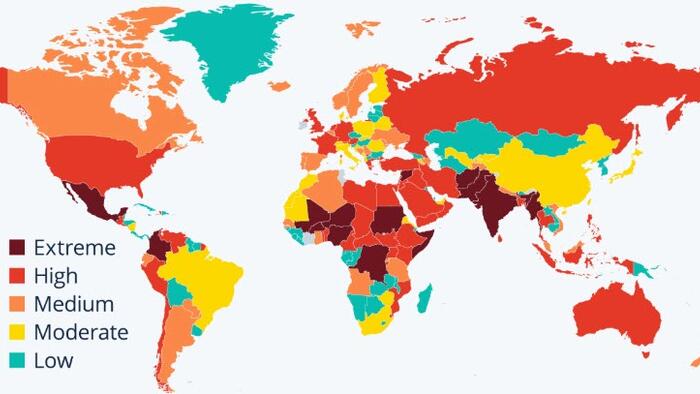
Visualizing The Impact Of Terrorism Around The World