
Le Journal

My Kitchen Rules star Colin Fassnidge is seen for the first time since he was charged with driving under the influence of cocaine

Ashy Bines slammed for using Bondi terror attack to promote wellbeing podcast: 'Just gross'
Ashy Bines has been slammed online after people claimed she was using the Bondi terror attack to promote her wellbeing podcast and program.

L’Ouganda prévoit d'emprunter plus de 600 millions USD pour financer ses infrastructures

David Harbour 'snatches bar patrons hat in bizarre incident'... as 'Madeline' defends herself against Lily Allen
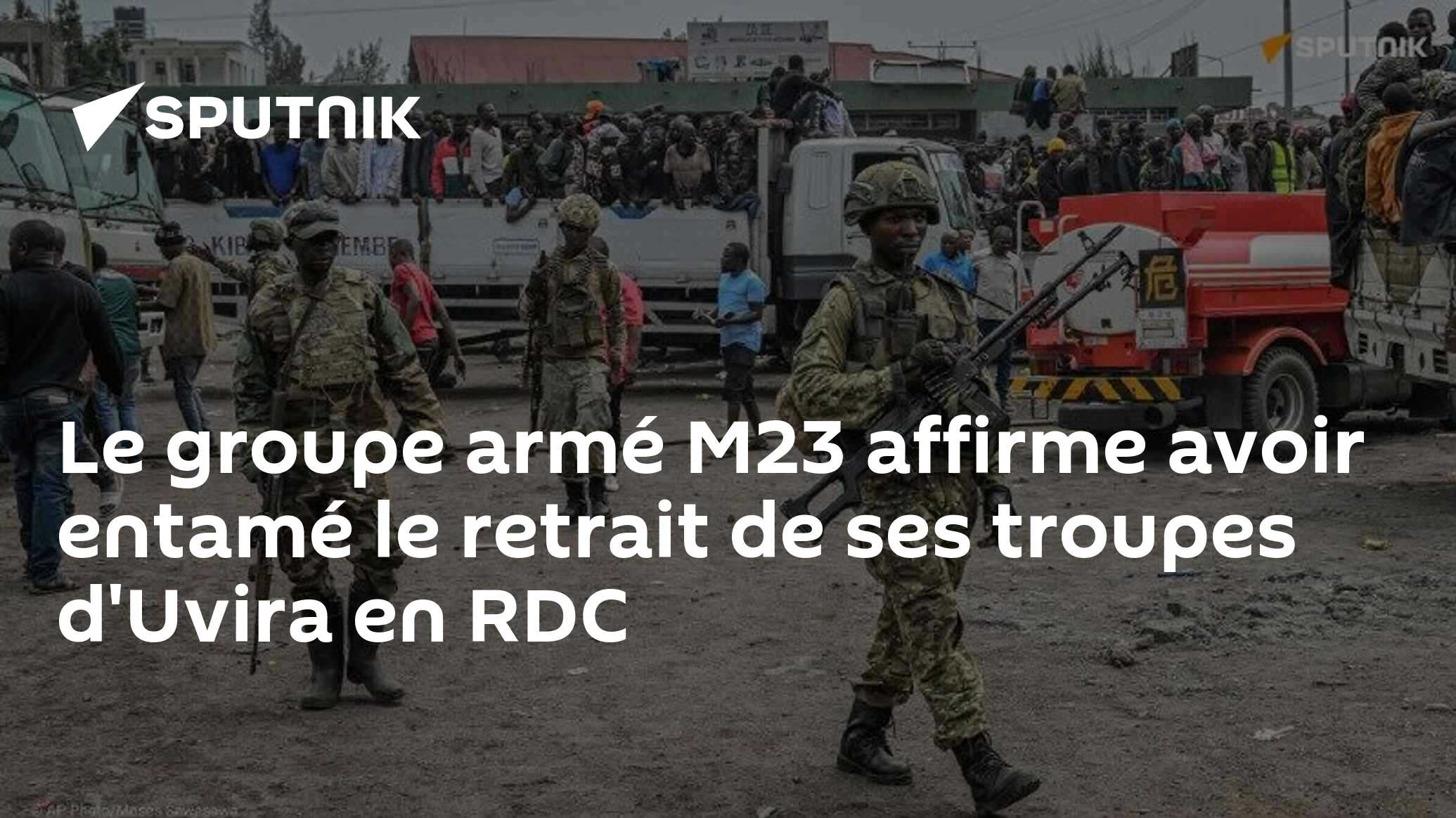
Le groupe armé M23 affirme avoir entamé le retrait de ses troupes d'Uvira en RDC
Le groupe armé M23 a entamé mercredi le retrait de ses troupes de la ville d'Uvira, dans l'est de la République démocratique du Congo (RDC), ont affirmé des responsables du groupe et des sources locales.

WVU Football WR Coach Contacts 2027 Georgia 3-Star

Will Mamdani’s successor in Albany be Muslim? Rana Abdelhamid eyes his vacant Assembly seat.

After Trump called Somalis ‘garbage,’ Minnesota faith groups answer with tea and coffee

GPS Devices in the 900MHz Band Coexist Today and Will Tomorrow
We at NextNav care deeply about helping solve an urgent national security issue that makes us all vulnerable. I’m talking about the growing threats to GPS. It’s a system we rely on every day, often in ways we don’t even realize. GPS helps to power our public safety networks, secure our energy grid, synchronize financial transactions and even navigate from point A to point B. Yet, at any moment, a range of natural or man-made events could disrupt the GPS satellite network. Around the world, GPS disruptions are no longer hypothetical. Incidents of GPS jamming and spoofing have become routine in places like the Middle East and the Baltic states and the increasing severity of these disruptions is spilling over into civilian life, putting us all at risk. We’ve seen the consequences here at home, too. Major airports have experienced man‑made GPS disruptions of unknown origin, and farmers have seen how even temporary GPS loss can upend precision agriculture. Whether caused by jamming, spoofing or natural disasters, the vulnerabilities are real and growing. I am encouraged by the ongoing dialogue between industry and government to support a system-of-systems approach to resilient positioning, navigation and timing (PNT). Building layers of space and ground-based complements and backups to GPS is the only way to overcome the risks relying on a single point of failure in GPS causes to everyday life. It’s a problem so big that a one-day GPS outage could cost the U.S. economy an estimated $1.6 billion per day. NextNav is on a mission to enable a terrestrial PNT solution to help solve this problem, and that is why we feel it’s so important to respond to those who are more focused on problem-finding than problem-solving. By ignoring both the urgency of the threat and the strength of the engineering analysis supporting near-term solutions such as 5G-powered 3D PNT, the Z-Wave Alliance argues that the U.S. can afford to wait. At NextNav, we strongly disagree. The Federal Communications Commission (FCC) is working to enable resilient PNT. Among the solutions that the Commission is examining is NextNav’s ground-based 5G-powered 3D PNT complement and backup to GPS. We are serious about solving an urgent national security problem and we will continue to do the hard work necessary to support the FCC’s fact-based, engineering-driven decision-making. The FCC is the expert authority on commercial spectrum issues and we believe it has all of the information it needs to take the next step in this process. The appropriate venue for resolving any remaining technical questions is a Notice of Proposed Rulemaking, where the world’s best spectrum engineers can put these competing claims to the test. In the meantime, here are the engineering receipts that should make anyone suspicious of entities like the Z-Wave Alliance, who don’t want the FCC to put their technical claims to the test. Unlicensed Part 15 Operations Can Continue Operating Across the Entire 902-928MHz Band We have filed multiple comprehensive engineering studies demonstrating that 5G operations in the Lower 900MHz band will not cause unacceptable interference to unlicensed devices. Those studies specifically examined five different unlicensed technologies, including Z-Wave technology. To ensure this discussion is fact-based, we’d like to set the record straight. First, let’s start by talking about the 900MHz band as it is today. Unlicensed lower 900MHz devices today successfully coexist with a wide range of unlicensed users that operate without coordination or interference protection. How? Part 15 devices are resilient because of the mechanisms that are used daily, including frequency hopping, bursty transmissions, adaptive modulation, redundancy paths (meshing), and self-healing, among other features. This includes coexistence with bandwidth-intensive use cases such as HaLow devices supporting 4K video streaming, wideband point-to-point and point-to-multipoint connectivity supporting up to…

Finance 101: The Basics of Cost Control and Expense Management
We all know cost control is something we should be doing, but let’s be honest—it’s not as simple as it sounds. Saying “no” is hard, and knowing when to say “yes” can be just as challenging. As a result, many businesses end up with unnecessary expenses. So how do we manage costs effectively? The good news: there is a way. But first, we need to clear up a few common misconceptions. Myth #1: We should focus on controlling costs only when business slows down or expenses rise. Not true. The best time to control costs is when business is strong—when you’re growing and adding expenses. That’s when you need to be most critical of the effectiveness of each new cost, not after the fact. Myth #2: Cutting costs means cutting growth. Again, not true. Some costs drive growth, but many do not. The key is knowing which is which. Myth #3: If costs are within budget, everything is fine. Absolutely not. Budgets are based on assumptions, and those assumptions rarely hold perfectly over time. The farther you get from when the budget was created, the more likely it is that real conditions have shifted. How Do You Begin Your Cost Control Journey? So where do you start? Begin by understanding your company’s value. What do you do that matters most to your customers—excellent service, fast response times, strong relationships? Know what sets you apart. Costs that support your core value should be protected and strengthened. If you’re known for superior customer service and cut those investments during tough times, you may face long-term consequences. In fact, during hardship you may need to invest more to maintain your competitive edge. Next, look at the flip side: costs that do not support your customer value should be minimized. Some non-value-add costs are unavoidable—taxes, regulatory requirements, etc.—but spend no more than necessary. Many other expenses add no value at all. These are the ones to cut immediately, whether times are good or bad. They might include a failed project, an underperforming leader, or software you don’t need. You tend to notice these wasteful costs more when business slows, but the best time to eliminate them is when things are going well. It’s also important to understand which costs are fixed and which are variable. Some will rise and fall naturally with your business. For example, inbound freight costs drop automatically when volume slows, so reducing them during a downturn isn’t a “win.” Negotiating better rates is helpful, but the real value comes from improving variable costs during periods of growth, not decline. Exploring the Heart of the Matter Then we get to the heart of cost control: fixed costs. This is often where the biggest opportunities lie. There’s a saying in accounting: “Over a short enough time frame, all costs are fixed; over a long enough time frame, all costs are variable.” For our purposes, think of fixed costs as those that increase in steps—holding steady, then jumping when expanded. Payroll is a common example. Fixed costs that don’t add value should be eliminated or reduced first. But—and this is key—even in slow times, fixed costs that do add value should be maintained or invested in if possible. Companies that prepare during downturns are typically the ones that thrive when recovery begins. Being lean means aligning resources to where customers see the most value and minimizing everything else. Finally, involve your customers and stakeholders. Keep them informed and engaged. Transparency is your ally. When customers, employees, and investors understand the reasoning behind your decisions, they’re far more likely to support the changes. You’ll need their help at times, and the more involved they are, the easier it will be to make—and execute—difficult decisions. Allen Riggs is the chief financial officer at PSA Network. The post Finance 101: The Basics of Cost Control and Expense Management appeared first on Security Sales & Integration.

Stationnement interdit à moins de 5 mètres d’un passage piéton dès le 1er janvier 2027
Comment bouter la voiture de l’espace public ? En additionnant les mesures qui rendent la vie impossible au volant. Radars, limitations de vitesse, voie de covoiturage, prix des places en voirie qui explosent… Les automobilistes français ne sont pas gâtés. Et ils le seront encore moins dès le 1er janvier 2027 avec cette nouvelle obligation inscrite à la loi LOM (loi d'orientation des mobilités) qui doit entrer en vigueur à cette date.
