Le Journal

Irony overload hits X as new location feature reveals many pro-Trump MAGA accounts are actually based outside of America

ESPN’s Adam Schefter Responds to Question on Pete Carroll’s Job Security with the Raiders

“For poor people”: Campbell’s Soup exec allegedly caught on secret audio trashing the “not healthy” product and its customers
A senior Campbell Soup Company executive is under scrutiny after a former employee filed a lawsuit that includes a secret recording containing crude and offensive remarks allegedly made during a work meeting. The audio, released as part of the complaint, purports to capture Vice President and Chief Information Security Officer Martin Bally criticizing Campbell’s products and disparaging the customers who buy them. Campbell’s says it is investigating and has placed Bally on temporary leave, adding that the alleged comments do not reflect the company’s values. What the lawsuit against Campbell's Soup alleges was said Former Campbell's security analyst Robert Garza worked remotely for the company beginning in September 2024. He said he recorded the meeting because his "instinct that something wasn’t right with Martin" pushed him to document what he heard. Garza said the session ran for more than an hour and left him sickened. Garza told Local 4 in Michigan that Bally insulted the company’s products and mocked the people who buy them. According to the filing, Bally claimed Campbell’s makes "highly processed food" for "poor people." The voice on the recording added, "We have sh*t for f*cking poor people. Who buys our sh*t? I don’t buy Campbell’s products barely anymore. It’s not healthy now that I know what the f*ck‘s in it.” He also rejected the idea of "bioengineered meat," saying, "I don’t wanna eat a piece of chicken that came from a 3-D printer." The recording also captured racist comments targeted at Indian coworkers. Bally allegedly said in one section of the audio, "F*cking Indians don’t know a f*cking thing. Like they couldn’t think for their f*cking selves." Additionally, Garza alleged that Bally admitted to arriving at work high from weed edibles, which he included in the lawsuit. In a statement to the Daily Dot, a Campbell's spokesperson wrote: "If the comments were in fact made, they are unacceptable. They do not reflect our values and the culture of our company. Mr. Bally is temporarily on leave while we conduct an investigation." "We are proud of the food we make, the people who make it and the high-quality ingredients we use. The comments heard on the recording about our food are not only inaccurate—they are patently absurd." "Keep in mind, the person alleged to be speaking on the recording works in IT and has no nothing to do with how we make our food." View this post on Instagram A post shared by Local 4 News Detroit (@local4news) As for the chicken, the spokesperson added, "The chicken meat used in our soups comes from long-trusted, USDA approved U.S. suppliers and meets our high quality standards. All of our soups are made with No Antibiotics Ever chicken meat, meaning we don’t allow antibiotics to be added to the feed, water, or any commercial vaccines used by our chicken suppliers." Retaliation claims followed the complaint Garza held onto the audio for months without reporting it, but in January 2025, he approached his supervisor, J.D. Aupperle, to report the comments. According to Garza and his attorney, Zachary Runyan, the situation escalated quickly. Runyan said Garza was terminated 20 days after reporting the behavior. "He reached out to his supervisor and told the supervisor what Martin was saying, and then out of nowhere, my client was fired," the attorney said, raising potential retaliation concerns. Reactions to the lawsuit Folks online were not particularly surprised by the news. One person on Instagram said, "I'm sorry, but this soup is gross and you shouldn't need a Campbell's employee to tell you that." "YO! I’m not shocked but it’s crazy to hear it out loud," another person added. @Sanatozaki1111 tweeted, "At this point I feel like the US is just one big experiment and the people are literally seen as purely products. Like why is the only western country that likes to knowingly feed its people the most chemically transformed and processed poison just to make money and profit." According to Local…

“I can’t believe you’d disrespect us”: Trump-voting nurse is now begging him to classify nursing degrees as “professional”
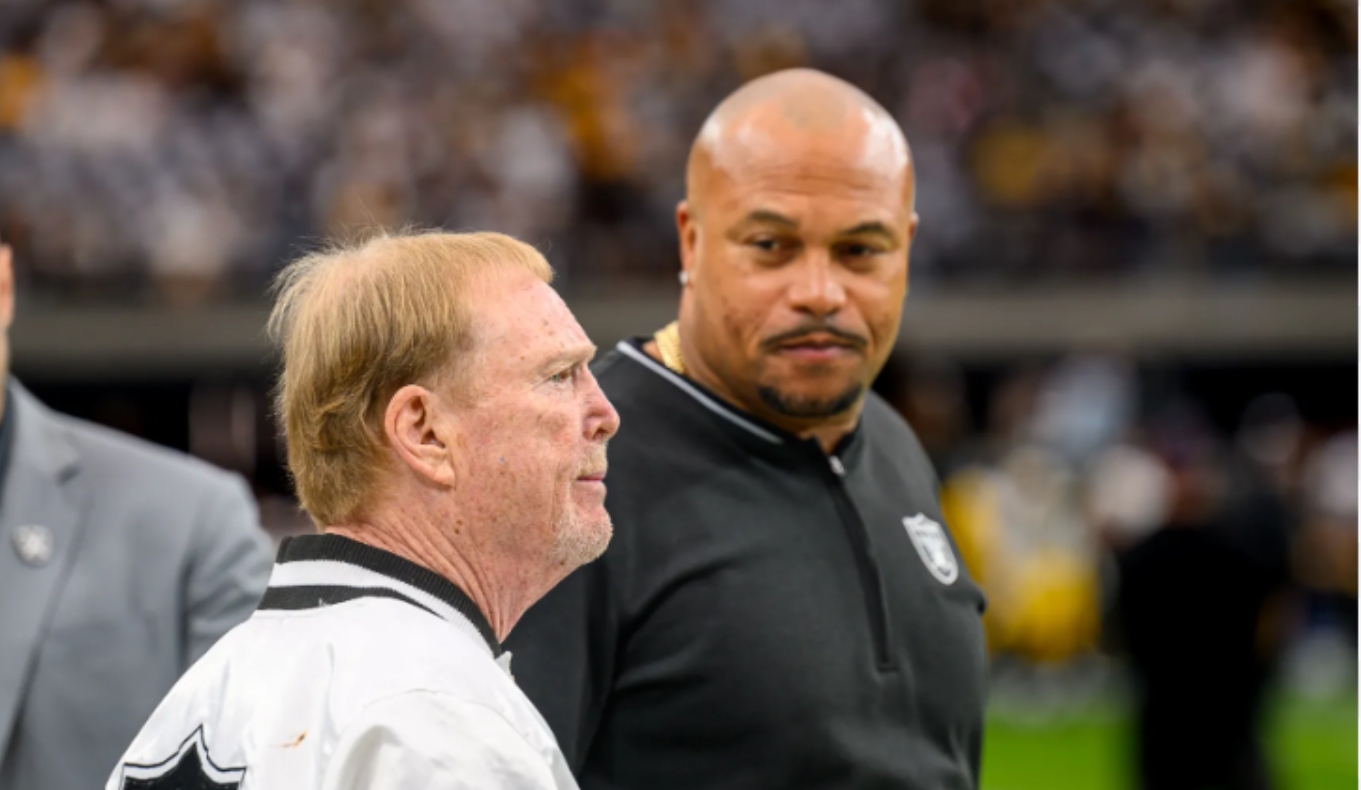
Pierce: Raiders Owner Mark Davis was on Board with Drafting Shedeur Sanders
DOJ: We Can’t Send Abrego To Costa Rica. Costa Rica: ¡Falso!
On Thursday, Judge Paula Xinis held a hearing on Kilmar Abrego Garcia’s habeas corpus petition. The occasion was a reunion of sorts, heralding the return of Assistant US Attorney Drew Ensign, the DOJ’s go-to guy when someone’s gotta look a federal judge in the eye and make a preposterous and/or dubiously truthful claim on the record. It was also the culmination of a tragicomic series of errors by the Trump administration in its dogged effort to dump immigrants into third-countries they have nothing to do with. Declaration of hostilities On March 14, the administration invoked the Alien Enemies Act, defining the gang Tren de Aragua as shock troops invading the country on behalf of the Venezuelan government — reality be damned! By the time the document was released the next day, hundreds of men, including Abrego, were being boarded onto planes in Texas headed for CECOT prison in El Salvador. In an emergency hearing, Judge James Boasberg ordered the government to turn the planes around and give the men an opportunity to challenge their deportations in court. But Ensign purported not to know whether or when the flights would be taking off. In fact they left during a recess Judge Boasberg called to allow Ensign to convey the order to DHS. This apparent lie led to a whistleblower report by former DOJ lawyer Erez Reuveni, as well as pending contempt proceedings. Stephen Miller says that returning Kilmar Abrego Garcia to the US would amount to "kidnapping" a citizen of El Salvador — Nikki McCann Ramírez (@nikkimcr.bsky.social) 2025-04-14T16:03:12.100Z Reuveni was later fired for admitting to Judge Xinis that Abrego had been mistakenly deported to the one country on earth where the government could not send him. Abrego, a Salvadoran man who fled to America in 2011, had an order barring his repatriation to his native country due to danger from the Barrio 18 gang. But if the government confessed the error and brought him back, it would have effectively conceded that the CECOT deportees were under de facto US government control, and thus subject to the jurisdiction of US courts. And so the administration loudly insisted that they had deliberately deported Abrego for being a dangerous gang member. Karoline Leavitt keeps saying Kilmar Abrego Garcia "was engaged in human trafficking" while calling him a "foreign terrorist" and a "MS-13 gang member" to justify why he shouldn't be returned despite court orders.The administration hasn't argued anywhere in court docs that he's a human trafficker.— Justin Baragona (@justinbaragona.bsky.social) 2025-04-15T17:54:48.201Z This charade went on for two more months until June 6, when the Justice Department announced that it was bringing Abrego back to charge him with human smuggling. To all appearances, it retconned a criminal case based on a 2022 traffic stop in Tennessee, based largely on testimony of co-conspirators facing deportation themselves. For one thing, the case revolves around a scheme that would have involved Abrego driving upwards of 100 hours a week back and forth between Texas and Maryland while holding down a full-time job. When the judge in Tennessee released Abrego from criminal custody in August pending trial, he was promptly picked up by DHS and threatened with immediate deportation. In correspondence with Abrego’s lawyers, the government promised to deport him to Costa Rica if he would accept a plea deal. That country was willing to take him and offered diplomatic assurances that he could live freely there without fear of being refouled to El Salvador. But on the eve of Abrego’s release, those negotiations broke down, and DHS revoked its offer to send him to Costa Rica. Since then, it has said it intends to send him to at least four African nations: Uganda, Eswatini, Ghana, and now Liberia, a country with a decidedly mixed human rights record. And so Ensign is now back in front of Judge Xinis fighting Abrego’s second habeas petition, and defending the government’s decision to send…

Le gruyère monégasque
Sébastien Puygrenier et le duo Malang Sarr – Alexander Nübel n’y étaient pas parvenus. Thilo Kehrer l’a fait ! Pour la…

“I truly just feel so violated”: Woman’s neighbors bulldoze all of her trees, sparking a discussion about tree law
A woman on TikTok is going viral after detailing how a neighbor’s backyard makeover ended with dozens of trees on her property getting bulldozed. Linz DeFranco (@linzdefranco), based in Georgia, explained that her neighbor approached her last year about extending his backyard farther out. That plan, she said, involved removing trees that sat on both of their lots. DeFranco made it clear that she wanted to protect her privacy and didn’t want a full clear-cut. According to her, the neighbor agreed to mark which trees would go before any work started. Then nothing happened for a year. No updates. No heads-up. That is, until she woke up one morning and realized most of her trees were gone. As she put it in her video, which has already racked up more than 2.3 million views as of Friday, the project she thought would be coordinated turned into a total wipeout of her backyard privacy. @linzdefranco/TikTok What happened next? DeFranco says the only communication she eventually received was a notice asking whether crews had “approval” to start cutting. She hadn’t signed anything. And, she said, her neighbor had promised to let her know if any of her trees were going to be affected. She showed viewers what her yard used to look like, full of trees and completely private. Then she cut to the present. “Imagine my surprise when I woke up one day to see this,” she said. “Complete and total destruction.” According to DeFranco, her home’s previous owners bought the lot next door specifically for privacy, yet “the privacy is all [expletive] gone.” She said she was devastated and immediately emailed her neighbor to say he had no right to remove the trees and that the remaining ones were off-limits. Her neighbor, she says, responded that the city required those trees to come down for his renovation plans. DeFranco pushed back. “Those aren’t your trees to cut down,” she told viewers. @linzdefranco Any advice? I don’t know exactly how many trees were cut down because they’ve removed all the stumps, but I can tell you it is over 100. #treegate #treelaw ♬ original sound - LinzDefranco She’s now trying to figure out how this was allowed in the first place. DeFranco says she has reached out to her HOA and told her neighbor not to “touch foot” on her property again until she gets answers. “I truly just feel so violated and taken advantage of,” she said. How something called ‘tree law’ might save her In the comments under DeFranco’s video, many people urged her to look into something called tree law. It sounds dramatic, but it’s really just the set of rules that spell out who owns what when it comes to trees and what happens when someone cuts one down without permission. At its core, tree law is about property rights. A tree belongs to whoever owns the land where its trunk sits. If that trunk straddles a property line, both neighbors own it, and both have to sign off before it comes down. People are allowed to trim branches or roots that cross onto their side, but only up to the line. If they overdo it and damage the tree, they can be held responsible. Liability comes into play when a tree causes damage. If it falls in a storm and is healthy, it’s often chalked up to an unavoidable act of nature. But if a neighbor ignored a dead or dangerous tree, they may be on the hook for the repairs. To avoid a mess like DeFranco’s, homeowners are urged to double-check their property lines, talk things through before cutting anything major, and bring in an arborist when a tree looks risky or complicated. Commenters say woman’s neighbor made a big mistake People who watched DeFranco’s video didn’t mince words. They immediately zeroed in on one thing: Tree law can get very real, very fast, and her neighbor may have opened himself up to a costly legal mess by cutting down trees he didn’t own. “You’re about to be rich, rich,” one woman quipped. “Tree law is serious.” “That was an expensive mistake for him to do,” another viewer said. “Girl, sue not just for tree law,…

Vinson & Elkins Announces Texas-Sized Bonuses For Associates
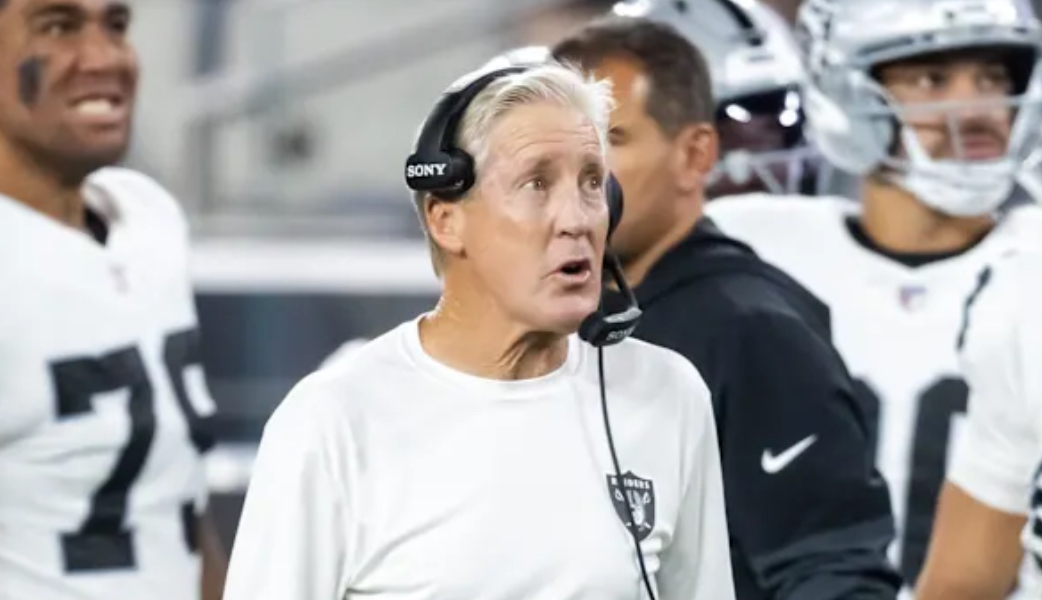
Raiders Host Calls Out Coaches on Rookie 3rd-Round Pick: “I Don’t Buy That… I’m Ringing the Bell on That”

Nintendo quickly pulls customized bikini-clad glider from “Kirby Air Riders”