Le Journal

The Foreign Worker Scam Exposes Trump's Economic Achilles Heel
'A Sharp Escalation': Americans Starting To Revolt Against Data Centers

Comment on Guest Finds Metal Bolt in Salad at Walt Disney World; TikTok Video Goes Viral by Wanda
Or they planted the item in an effort to get something for free, It has been known to happen at lot at Disney
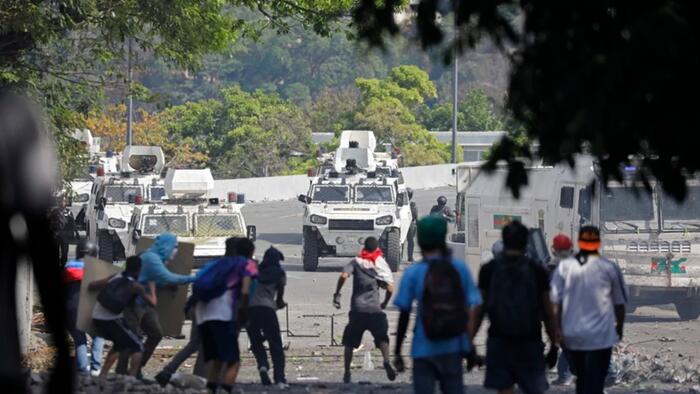
Chaos: The Trump Doctrine For Latin America
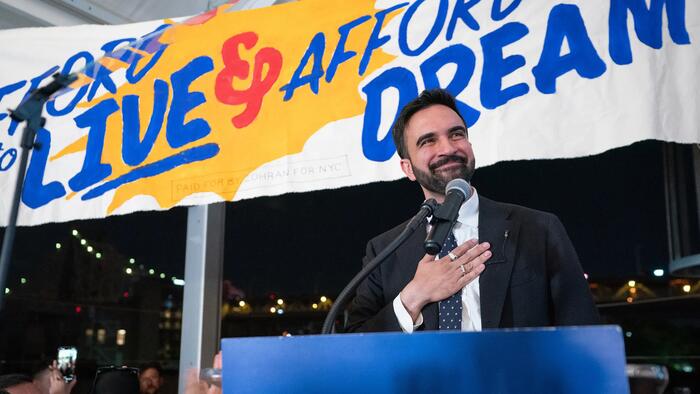
The Socialist Mayor Clown Show Is Truly Something To Behold

US Needs More Gas Infrastructure, Storage To Support Electric Grid: NARUC
US Needs More Gas Infrastructure, Storage To Support Electric Grid: NARUC By Robert Walton of UtilityDive Summary: The United States needs additional natural gas pipeline infrastructure and storage opportunities to reliably meet the growing demand for energy, a National Association of Regulatory Utility Commissioners task force report concluded on Wednesday. NARUC’s Gas-Electric Alignment for Reliability task force, or GEAR, was formed in 2023 in an effort to improve coordination between the two interwoven energy sectors, with an ultimate goal of bolstering grid reliability. The report includes nine recommendations but stopped short of advocating for a Gas Reliability Organization akin to electric grid efforts, and concluded changes to the gas-electric market day and force majeure contract provisions were unnecessary. The National Association of Regulatory Utility Commissioners on Nov. 12, 2025, published a report concluding greater harmonization between the gas and power sectors is needed “to ensure reliable and affordable electricity service.” More gas pipeline infrastructure will be key to the effort, the report said. Rising electricity demand and a reliance on gas-fired generation has at times left the power sector scrambling when necessary fuel was not available. During Winter Storm Uri in February 2021, some Texas electric companies cut power to gas production and transportation facilities as part of their emergency conservation response. That reduced fuel supplies to gas-fired power plants, contributing to energy shortages and blackouts. Almost 250 people in Texas died in the storm. And in 2022, unplanned generator outages reached 90,500 MW during Winter Storm Elliott, with gas fuel supply issues accounting for 20% of unplanned generating unit outages, derates and failures to start, according to the North American Electric Reliability Corp. The GEAR report parses diverse policy perspectives around the future of gas and gas infrastructure expansion, NARUC said. However, task force participants found common ground “on the need for harmonization between the electric and natural gas sectors to ensure reliable and affordable electricity service,” the report said. “The need for harmonization is crucial, regardless of one’s long-term perspective about future energy policy in various regions of the country,” it said. Recommendations include: creation of a natural gas “readiness forum”; development of additional gas pipeline infrastructure and gas storage opportunities; new and enhanced market tools to improve supplier performance in extreme weather; demand response initiatives for gas utilities; and market changes to incentivize gas pipeline capacity releases. Regulators and grid operators “should apply a strategic approach to expand opportunities for increased or new storage investment consistent with empowering end-users to exert greater control over supply needs,” the report found. There was some support for the formation of a Gas Reliability Organization, similar to the North American Electric Reliability Corp., but not enough to advance the recommendation, the GEAR report noted. “A majority of members [concluded] that such an option (on a national, regional or state basis) is unnecessary or not the best means to efficiently enhance gas-electric reliability,” it said. Similarly, discussions around aligning the timing of gas or electric days were not advanced. Gas and electric market schedules are typically several hours apart, though the Federal Energy Regulatory Commission has historically tried to better align them. “While it is obvious that the current bifurcated system is not how anyone would design the combined system from scratch, we are unaware of any systemwide outage that has occurred due to scheduling issues or mismatches,” the report said. And possible changes to standard force majeure contract provisions, which cover supply disruptions, were found to be “neither viable nor productive,” the report said. The task…
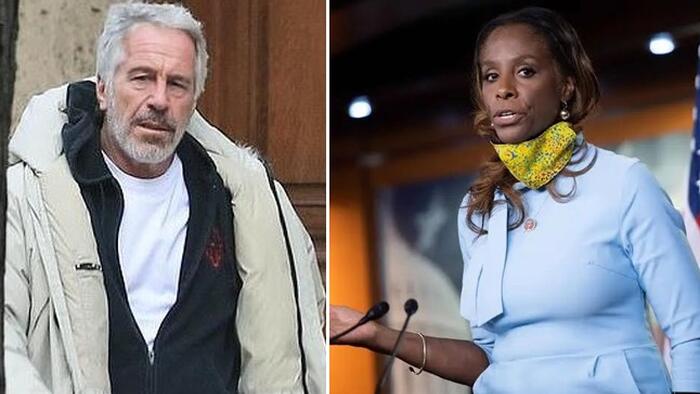
Epstein Backfire Intensifies: He Was Live-Texting With House Democrat During 2019 'Get Trump' Hearing
Epstein Backfire Intensifies: He Was Live-Texting With House Democrat During 2019 'Get Trump' Hearing What a week in Epstein news... After Democrats dumped a new trove of emails to try and show that President Trump was much better friends with the dead sex offender than he let on, we've learned a few things. 1. Trump was clearly pals with Epstein for a while. We've seen endless pictures of them hanging out. 2. They had a serious falling out, as evidence (in the new emails) by... 3. Epstein was helping Democrats with their efforts to hurt Trump with dirt, which we now learn extended to... 4. Texting with Del. Stacey Plaskett (D-Virgin Islands) during a 2019 congressional hearing with Michael Cohen... Plaskett, for those who didn't know, previously served in the Virgin Islands government - helping to give Epstein tax benefits, and worked for Epstein's fixer on the island before she was elected to Congress. Del. Stacey Plaskett (D-Virgin Islands) attends a March 2019 House hearing. (Tom Williams/CQ-Roll Call/Getty Images) As the Washington Post notes: In the texts, Epstein appeared to be watching the February 2019 hearing in real time and at one point informed Plaskett — whose name is redacted from the documents — that Cohen had brought up former Trump executive assistant Rhona Graff in his testimony. At the time, Cohen was testifying before the House Oversight Committee against his former boss, alleging that Trump was racist, manipulated financial records and directed hush money payments to cover up his extramarital affairs — allegations Trump denied. The president said on social media that Cohen was “lying” before testimony began. “Cohen brought up RONA - keeper of the secrets,” Epstein texted, misspelling Graff’s first name. “RONA??” Plaskett responded. “Quick I’m up next is that an acronym,” she added, suggesting she would question Cohen soon. In response, Plaskett's office said: "During the hearing, Congresswoman Plaskett received texts from staff, constituents and the public at large offering advice, support and in some cases partisan vitriol, including from Epstein," adding "As a former prosecutor she welcomes information that helps her get at the truth and took on the GOP that was trying to bury the truth. The congresswoman has previously made clear her long record combating sexual assault and human trafficking, her disgust over Epstein’s deviant behavior and her support for his victims." lol... lmao even. The emails reveal that Plaskett texted Epstein first before the meeting started that day... The messages show that Plaskett texted Epstein before the hearing started that day, at 7:55 a.m. Eastern time, to tell him: “He’ll talk about his grades” Epstein replied a minute later: “what privilege stands behind the none release of college transcripts?” And that he may have influenced her questions: Hes opened the door to questions re who are the other henchmen at trump org,” Epstein texted Plaskett at 12:25 p.m. “Yup. Very aware and waiting my turn,” she responded. When Plaskett questioned Cohen during the hearing, she asked about Trump associates that he had mentioned previously. “Are there other people that we should be meeting with?” Plaskett asked. “So Allen Weisselberg is the chief financial officer in The Trump Organization,” Cohen began to reply. “You’ve got to quickly give us as many names as you can so we can get to them,” Plaskett interjected. “Is Ms. Rhona, what is Ms. Rhona’s— …?” “Rhona Graff is the — Mr. Trump’s executive assistant … She was — her office is directly next to his, and she’s involved in a lot that went on,” Cohen replied. So Jeffrey Epstein was live-texting a Democrat lawmaker during a 'get Trump' hearing. Right... All Trump has to do at this point, after apologizing to MTG and Thomas Massie (WTF) of course, is admit he was buddies with Epstein, say he didn't bang underage girls, and point to all the evidence Democrats just dropped that's blowing up in their faces. Tyler Durden Sat, 11/15/2025 -…

Obamacare Is A Disaster, Just As Expected
Obamacare Is A Disaster, Just As Expected Authored by Stephen Soukup via American Greatness, Just over 15 years ago, when the Democrat-controlled House and the Democrat-controlled Senate were debating the healthcare proposals offered by the Democrat president, nearly everyone on the political right was unified in opposition. It may well have been the last time the right was united on anything, but it was indeed unified and resolute. Congresswoman Michelle Bachmann (MN) warned that “This monstrosity of a bill will not only destroy the private healthcare market, it will lead to massive increases in premiums and rationed care.” Congressman (and eventual vice-presidential nominee and Speaker of the House) Paul Ryan (WI) complained that “This bill is a fiscal Frankenstein. It’s a government takeover that will explode costs and kill jobs.” Senator (and Republican Leader) Mitch McConnell (KY) insisted that Americans “want reforms that lower costs, not a trillion-dollar government experiment.” Right-leaning commentators like George Will and Charles Krauthammer agreed, not only with each other but with Republicans in Congress as well. Krauthammer, in particular, argued that President Obama’s promise to “bend the cost curve” down was pure, unadulterated, and extensively documented fantasy. National Review, much maligned among Trump supporters these days, dedicated most of an issue to exposing and forecasting Obamacare’s fiscal absurdities and the likelihood that it would result in lower quality of care, increased taxes, and exploding insurance premiums. Even the Heritage Foundation—in the news lately for purportedly exacerbating rifts in the conservative coalition—likewise agreed with everyone in the movement, insisting that Obamacare was a disaster waiting to happen and would keep none of the promises that it made, all while destroying what was good and valuable in the private insurance market. More than a decade later, when it was clear that the system was in trouble and that only greater government intervention and spending could save it, Heritage (in the form of Robert Moffit, Edmund Haislmaier, and Nina Owcharenko Schaefer) took something of a victory lap, detailing Obamacare’s manifest failures and arguing that it was long past time to scrap the whole experiment. “The facts,” the Heritage analysts noted, “are in.” The ACA dramatically increased health insurance premiums and cost-sharing in the individual market…. The ACA collapsed insurer competition in the nation’s individual markets…. The ACA failed to meet official enrollment targets in the individual markets…. The ACA is pricing middle-class Americans out of individual market coverage…. The ACA expanded government coverage while wrecking the private individual health insurance market…. The ACA compromised access to care for persons—including those with preexisting medical conditions—enrolled in the nation’s individual markets…. The ACA failed—and failed miserably—to attract young people into the exchange insurance pools…. The ACA Medicaid expansion prioritizes able-bodied adults, many of whom are working, over the elderly, the disabled, and poor women and children…. The ACA did not, as predicted, “bend the curve” of America’s healthcare spending…. The ACA’s vaunted delivery reforms did not yield the anticipated savings. Everything Republicans warned would happen did happen. And the Democrats’ response was to offer a massive “temporary” increase in subsidies to help paper over the failures. Again, every sentient person in the country insisted that doing so would be a disaster, that the subsidies would only increase costs, and that they would not be temporary. The Democrats didn’t listen, however. They didn’t listen in 2009 and 2010 when Congress initially debated and then passed Obamacare—without a single Republican vote in either house. They didn’t listen in 2020, when they insisted they needed expanded subsidies to address the financial hardships created by COVID-19. They…
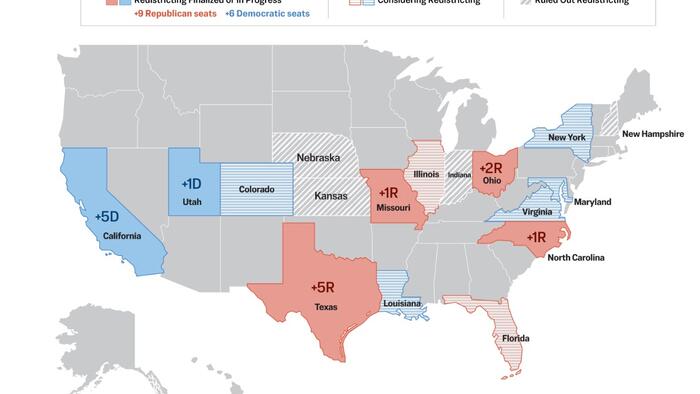
Redistricting Could Determine 2026 Elections: Here's What Each State Is Doing
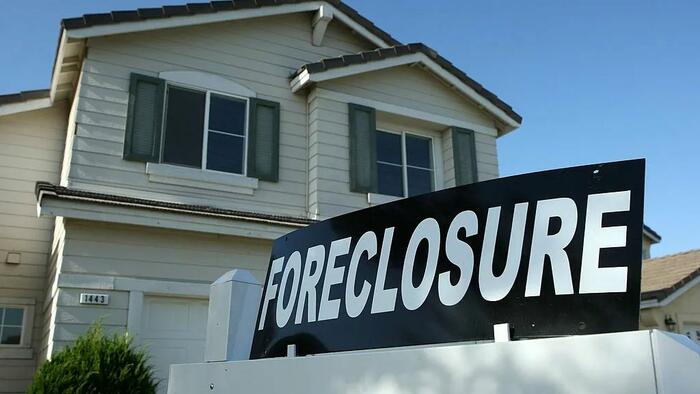
October Foreclosure Filings Jump 20% YoY

From Nukes To AI-Powered Drones: Saudi Arabia's MbS Bringing Wishlist To D.C. Next Week