Le Journal

Comment on If Raiders “Earn” No. 1 Pick, Insider Names 2 Teams to Watch for Potential Blockbuster Trade by Raiderfan60
Comment on If Raiders “Earn” No. 1 Pick, Insider Names 2 Teams to Watch for Potential Blockbuster Trade by PhillyRaider
In reply to Raiderfan60. Thanks bro. To your point though, Burrow isn't a free agent. He has no say in where he gets traded to. So if he wants to go a contender my question to him would be how does it feel to want?
Comment on If Raiders “Earn” No. 1 Pick, Insider Names 2 Teams to Watch for Potential Blockbuster Trade by Raiderfan60

NBC previews AI-driven advertising formats ahead of CES
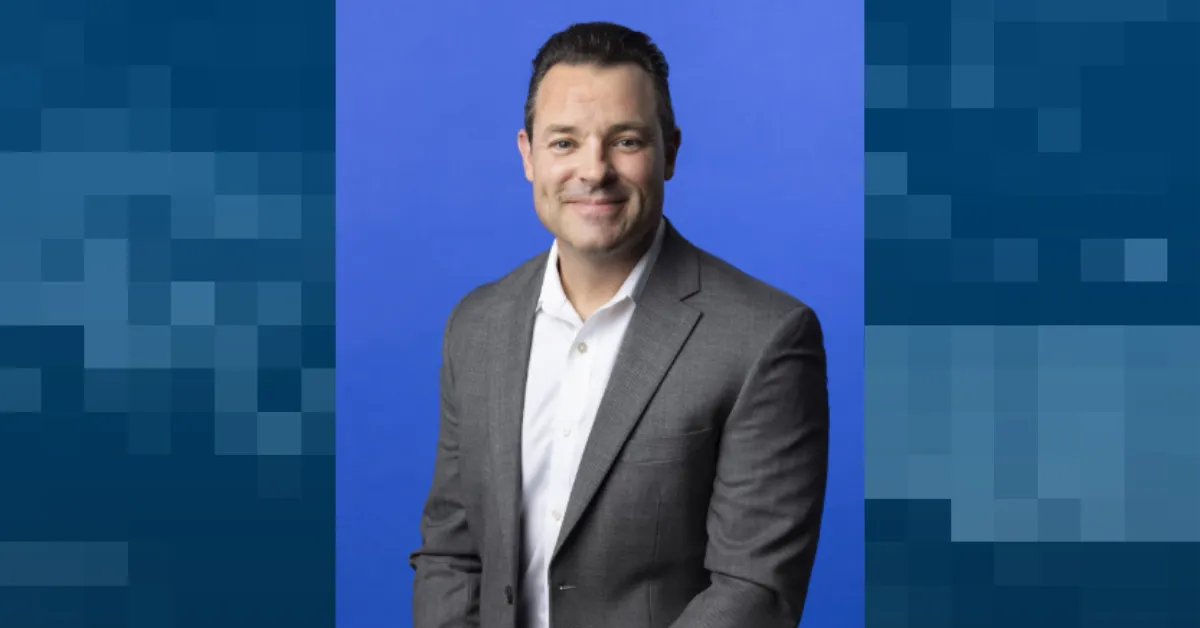
CBS hires former NASA TV supervisor to lead Dallas-Fort Worth stations
CBS News & Stations has hired Tim Hinson to serve as the Vice President and General Manager of its Dallas-Fort Worth owned-and-operated stations.

YouTube to stream Academy Awards starting in 2029

Sinclair multicast networks see sharp ratings growth in November

The low, low cost of ending extreme poverty

The 2,000-year-old debate that reveals AI’s biggest problem
Almost 2,000 years before ChatGPT was invented, two men had a debate that can teach us a lot about AI’s future. Their names were Eliezer and Yoshua. No, I’m not talking about Eliezer Yudkowsky, who recently published a bestselling book claiming that AI is going to kill everyone, or Yoshua Bengio, the “godfather of AI” and most cited living scientist in the world — though I did discuss the 2,000-year-old debate with both of them. I’m talking about Rabbi Eliezer and Rabbi Yoshua, two ancient sages from the first century. According to a famous story in the Talmud, the central text of Jewish law, Rabbi Eliezer was adamant that he was right about a certain legal question, but the other sages disagreed. So Rabbi Eliezer performed a bunch of miraculous feats intended to prove that God was on his side. He made a carob tree uproot itself and scurry away. He made a stream run backward. He made the walls of the study hall begin to cave in. Finally, he declared: If I’m right, a voice from the heavens will prove it! What do you know? A heavenly voice came booming down to announce that Rabbi Eliezer was right. Still, the sages were unimpressed. Rabbi Yoshua insisted: “The Torah is not in heaven!” In other words, when it comes to the law, it doesn’t matter what any divine voice says — only what humans decide. Since a majority of sages disagreed with Rabbi Eliezer, he was overruled. Key takeaways Experts talk about aligning AI with human values. But “solving alignment” doesn’t mean much if it yields AI that leads to the loss of human agency. True alignment would require grappling not just with technical problems, but with a major philosophical problem: Having the agency to make choices is a big part of how we create meaning, so building an AI that decides everything for us may rob us of the meaning of life. Philosopher of religion John Hick spoke about “epistemic distance,” the idea that God intentionally stays out of human affairs to a degree, so that we can be free to develop our own agency. Perhaps the same should hold true for an AI. Fast-forward 2,000 years and we’re having essentially the same debate — just replace “divine voice” with “AI god.” Today, the AI industry’s biggest players aren’t just trying to build a helpful chatbot, but a “superintelligence” that is vastly smarter than humans and unimaginably powerful. This shifts the goalposts from building a handy tool to building a god. When OpenAI CEO Sam Altman says he’s making “magic intelligence in the sky,” he doesn’t just have in mind ChatGPT as we know it today; he envisions “nearly-limitless intelligence” that can achieve “the discovery of all of physics” and then some. Some AI researchers hypothesize that superintelligence would end up making major decisions for humans — either acting autonomously or through humans that feel compelled to defer to its superior judgment. As we work toward superintelligence, AI companies acknowledge, we’ll need to solve the “alignment problem” — how to get AI systems to reliably do what humans really want them to do, or align them with human values. But their commitment to solving that problem occludes a bigger issue. Yes, we want companies to stop AIs from acting in harmful, biased, or deceitful ways. But treating alignment as a technical problem isn’t enough, especially as the industry’s ambition shifts to building a god. That ambition requires us to ask: Even if we can somehow build an all-knowing, supremely powerful machine, and even if we can somehow align it with moral values so that it’s also deeply good…should we? Or is it just a bad idea to build an AI god — no matter how perfectly aligned it is on the technical level — because it would squeeze out space for human choice and thus render human life meaningless? I asked Eliezer Yudkowsky and Yoshua Bengio whether they agree with their ancient namesakes. But before I tell you whether they think an AI god is…

Can money buy Americans happiness?
Ordinary Americans today enjoy a living standard that would have awed kings for most of human history. We live in homes conditioned to our ideal temperature in any season; drive vehicles that pack the power of 250 horses into a 100-square-foot metal frame; carry six-ounce rectangles that offer instant access to virtually any loved one, book, song, fact, or pornography; inhale gases that take the pain out of any surgery; replace our worn-out hips with titanium; glide 40,000 feet above the Earth in pressurized aluminum tubes; and eat ground beef wrapped in tacos made of Doritos. But we don’t seem that jazzed about it. Key takeaways • Wealthy nations have been getting richer — without getting happier — for decades, according to some studies. • Consumerism often functions like a zero-sum status competition, in which people must buy more stuff just to retain their social rank (aka “keep up with the Joneses”). • Given this, some environmentalists argue that we can shrink wealthy economies without sacrificing human well-being. But this is mistaken. Since 1996, America’s median household income (adjusted for inflation) has risen by 26 percent, enabling us to afford more flights, smartphones, and Gordita Supremes than ever before. And yet, over that same period, the share of Americans who described themselves as “not too happy” in the General Social Survey rose by 9 percentage points, while the segment calling themselves “very happy” shrank by more than 9.4 points. Meanwhile, measures of Americans’ economic confidence and consumer sentiment both declined. And in 2025, the percentage of Americans who were “very satisfied” with their personal lives hit an all-time low in Gallup’s polling. This disconnect between America’s rising prosperity and sagging spirits has grown more conspicuous in recent years. Since the middle of 2023 — when inflation returned to normal levels following the post-pandemic price spike — Americans’ real wages and net worths have ticked up. But the public’s mood has scarcely improved. Pundits dubbed this development “the vibecession” and proffered myriad plausible explanations for its emergence (people still haven’t adjusted psychologically to the new price level; housing remains unaffordable; living through a mass death event is a real bummer; Covid-19 turned too many of us into hermits; the kids need to get off their dang phones, and so on). Yet to some economists and social theorists, the “vibecession” is less a new phenomenon than the wealthy world’s default condition. In their account, people in developed countries have been getting richer — without getting happier — for more than half a century. That might seem bleak. For anti-growth environmentalists, however, it is actually a source of hope. The “degrowth” movement believes that humanity is rapidly exhausting the Earth’s resources. Thus, to prevent ecological collapse — without condemning the global poor to permanent penury — the movement has called on rich countries to throttle their use of energy and material resources. If economic growth had been making wealthy nations happier over the past 50 years, this would be a tall order. In that scenario, there would be a tragic conflict between the near-term well-being of the “first world” and the sustainability of the planet’s ecosystems. But this conflict is illusory, according to degrowth proponents like the philosopher Tim Jackson and the anthropologist Jason Hickel. In their view, the wealthy world has been burning vast resources on a zero-sum status competition — in which workers must perpetually increase their consumption just to “keep up with the Joneses.” By abandoning such spiritually corrosive consumerism — and embracing more egalitarian and communal ways of life — rich countries can downsize their economies and uplift their people simultaneously. Some aspects of this narrative are plausible. Growth may yield diminishing returns to well-being, and status…
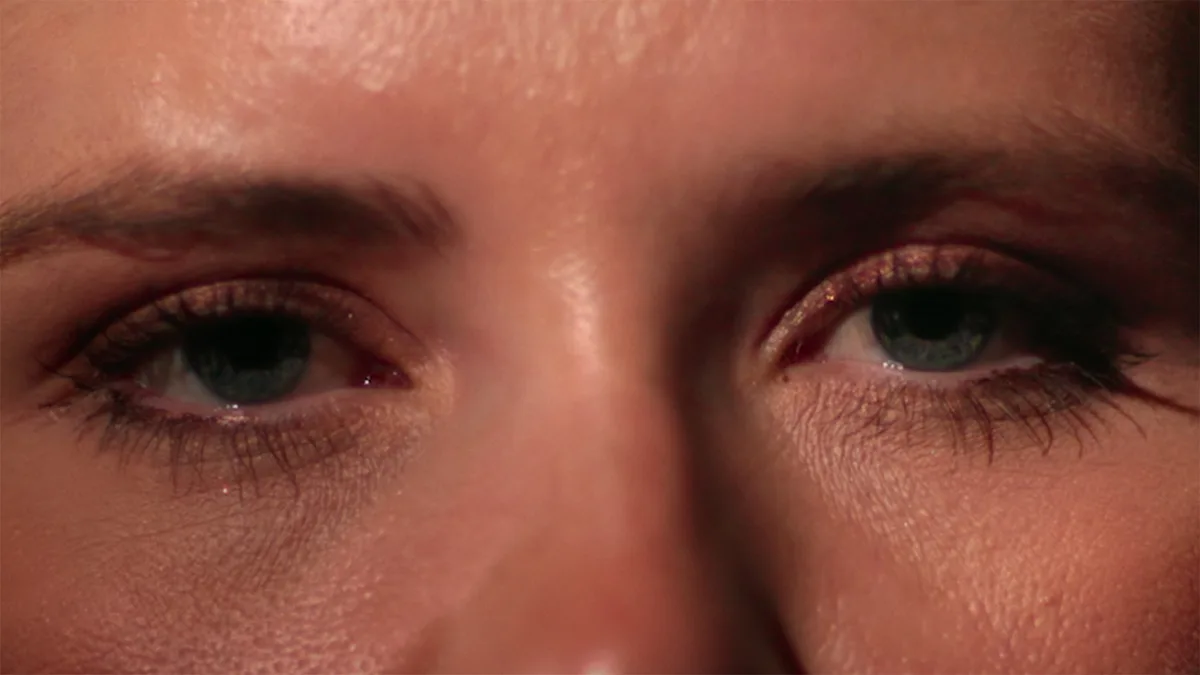
Kidnapped : Elizabeth Smart sur Netflix : le récit d’un enlèvement raconté par la victime en janvier
Netflix proposera le 21 janvier 2026 le documentaire Kidnapped : Elizabeth Smart, consacré à l’une des affaires d’enlèvement les plus médiatisées des États-Unis au début des années 2000. Plus de vingt ans après les faits, Elizabeth Smart revient pour la première fois dans un long format sur son enlèvement, sa captivité et les conséquences durables […] Cet article Kidnapped : Elizabeth Smart sur Netflix : le récit d’un enlèvement raconté par la victime en janvier est apparu en premier sur Netflix News : toute l'actualité de vos programmes Netflix.