
Le Journal

What the Bondi Attack Reveals About Radicalisation, Extremism, and Counterterrorism Risk
For more than two decades, counterterrorism thinking in the United States, Australia, and across allied democracies has been shaped by lessons drawn from 9/11 and its aftermath. Early models focused on organised networks, overseas training, and command-and-control structures. The rise of the Islamic State forced a further evolution, toward online radicalisation, lone-actor violence, and increasingly compressed timelines between ideological commitment and attack. The Bondi attack has unsettled many of those assumptions. Over the last decade, one of the strongest empirical findings across US, Australian, and European case studies was that offenders were getting younger and mobilising faster. The period between radicalisation, what practitioners sometimes call ‘flash’, and violence, ‘bang’, was shortening. This insight shaped intelligence prioritisation, threat assessment frameworks, and prevention efforts across allied systems. Bondi appears to challenge that model. Public reporting indicates that the alleged offender, Naveed, was radicalised at around 17 years of age but didn’t carry out an attack until he was 24. That six-year gap isn’t a rapid pathway to violence. It sits uneasily alongside assumptions that contemporary extremist mobilisation is necessarily fast, impulsive, or digitally accelerated. This matters because counterterrorism systems are built on models of risk over time. Those models influence how agencies triage leads, allocate finite resources, and decide which individuals warrant sustained attention and which do not. If reporting is accurate, Naveed maintained contact with Islamic State supporters or sympathisers over a prolonged period. His primary network appears to have been domestic and familial, centred in the home. From an intelligence perspective, this is a low-signal environment. It doesn’t generate the volume, velocity, or variety of indicators that would ordinarily justify the exercise of intrusive collection authorities. There would never have been sufficient intelligence to meet the legal thresholds required in either the United States or Australia for covert warrants, listening devices, or persistent surveillance. That isn’t a system failure; it’s the product of legal and ethical constraints that define liberal democratic policing and intelligence. What Bondi forces policymakers and practitioners to confront is a deeper challenge: how do we assess long-duration radicalisation that doesn’t translate into immediate action? In recent years, much counterterrorism analysis has implicitly treated inertia as a form of mitigation. Individuals who are radicalised but inactive are often categorised as lower priority unless new indicators emerge. Bondi suggests that this assumption deserves re-examination. A person can be ideologically committed, socially embedded in extremist belief systems, and operationally dormant for years, until something changes. That ‘something’ may be an accelerant. Accelerants aren’t necessarily ideological. They are catalysts that convert belief into violence. They can be personal, relational, psychological, situational, or symbolic. They may include personal crises, perceived grievance escalation, family dynamics, triggering events, or moments that provide moral permission for violence. Critically, accelerants are highly individualised and often invisible to institutions. At present, we don’t know what, if anything, accelerated Naveed and his father toward violence after six years. We may never know. But the absence of clarity is itself instructive. It highlights how limited our understanding remains of the transition from long-term radicalisation to action, particularly in closed domestic environments. This raises uncomfortable questions for homeland security systems in both the US and Australia. Do existing frameworks adequately account for long-duration radicalisation trajectories? Are periodic reassessments of ‘radicalised but not currently threatening’ persons of interest…

Jews and Muslims Embrace at Vigils for Those Killed in Bondi Beach Terror Attack
Jews and Muslims Embrace at Vigils for Those Killed in Bondi Beach Terror Attack
Bob Jensen Joins AIA Board as Public Director, Bringing Deep Disaster and Resilience Expertise
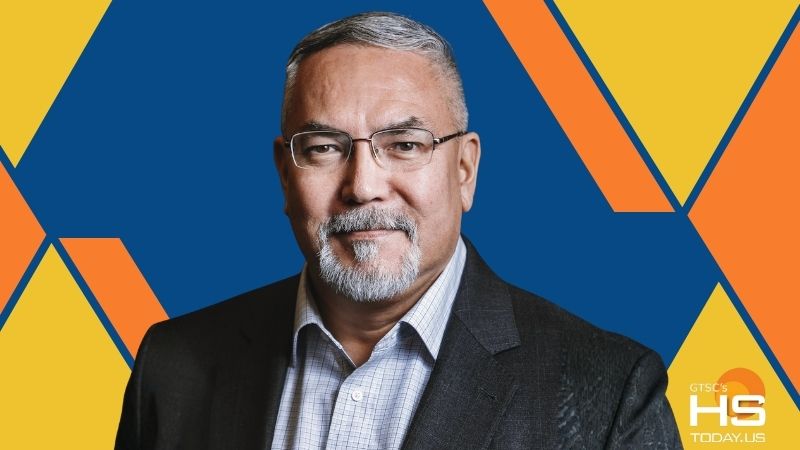
Bob Jensen has been appointed a Public Director on the American Institute of Architects’ 2026 Board of Directors, a role he announced this week as the organization prepares for a year focused on climate action, community resilience, and disaster risk management. Jensen brings more than three decades of federal service and crisis leadership to the AIA board, offering a public-sector perspective that aligns closely with the organization’s work at the intersection of design, resilience, and public safety. His career spans senior roles across the White House, the Department of Homeland Security, FEMA, the Department of State, and the Department of Defense, where he coordinated disaster response, strategic communications, and long-term resilience planning across agencies and jurisdictions. Currently, Jensen is the senior managing director of Strat3, a consulting firm that advises governments, corporations, and international development organizations on crisis management, emergency preparedness, and strategic engagement. Jensen also serves as President of the Emergency Management External Affairs Association (EMEAA), where he focuses on strengthening partnerships across government, industry, and nonprofit organizations to improve community resilience and professional readiness. His advisory work extends into academia, including service on design and policy advisory boards and engagement with programs focused on public affairs, risk, and the built environment. Earlier in his career, Jensen held senior communications and external affairs roles at FEMA, including acting director and deputy director of the Office of External Affairs, where he oversaw public affairs, intergovernmental engagement, and private-sector coordination during major disaster responses. He also served at the National Security Council as assistant press secretary for foreign affairs and led communication operations for the Department of Defense in Iraq, Afghanistan, and the Horn of Africa. (AI was used in part to facilitate this article.)
Bob Jensen Joins AIA Board as Public Director, Bringing Deep Disaster and Resilience Expertise

Claire Moravec Set to Join Sentinel as Director of Intelligence Operations for Social Media Exploitation

Former Treasury CTO Brian Peretti Joins Billington CyberSecurity as Advisory Board Member

Victoria Barton Takes On External Affairs Role at FEMA
Victoria Barton has stepped into a new senior leadership position at the Federal Emergency Management Agency, becoming Associate Administrator for the Office of External Affairs.
Former HSI Executive Derek Benner Visits DHS Cyber Crimes Center to Spotlight Fight Against Online Child Exploitation

FBI’s First Crisis Response Canine Gio Retires After a Decade of Service

Mike Derrios Named Executive Director of George Mason’s Baroni Center for Government Contracting

General Timothy Haugh, USAF (Ret.) and Former NSA Director Joins Insight Partners Government Advisory Board
Insight Partners has announced the appointment of Timothy Haugh, a retired four-star general in the United States Air Force (USAF), to its Government Advisory Board (GAB).