
Le Journal
Report: Apple's New AI Strategy Firms Up Under Craig Federighi
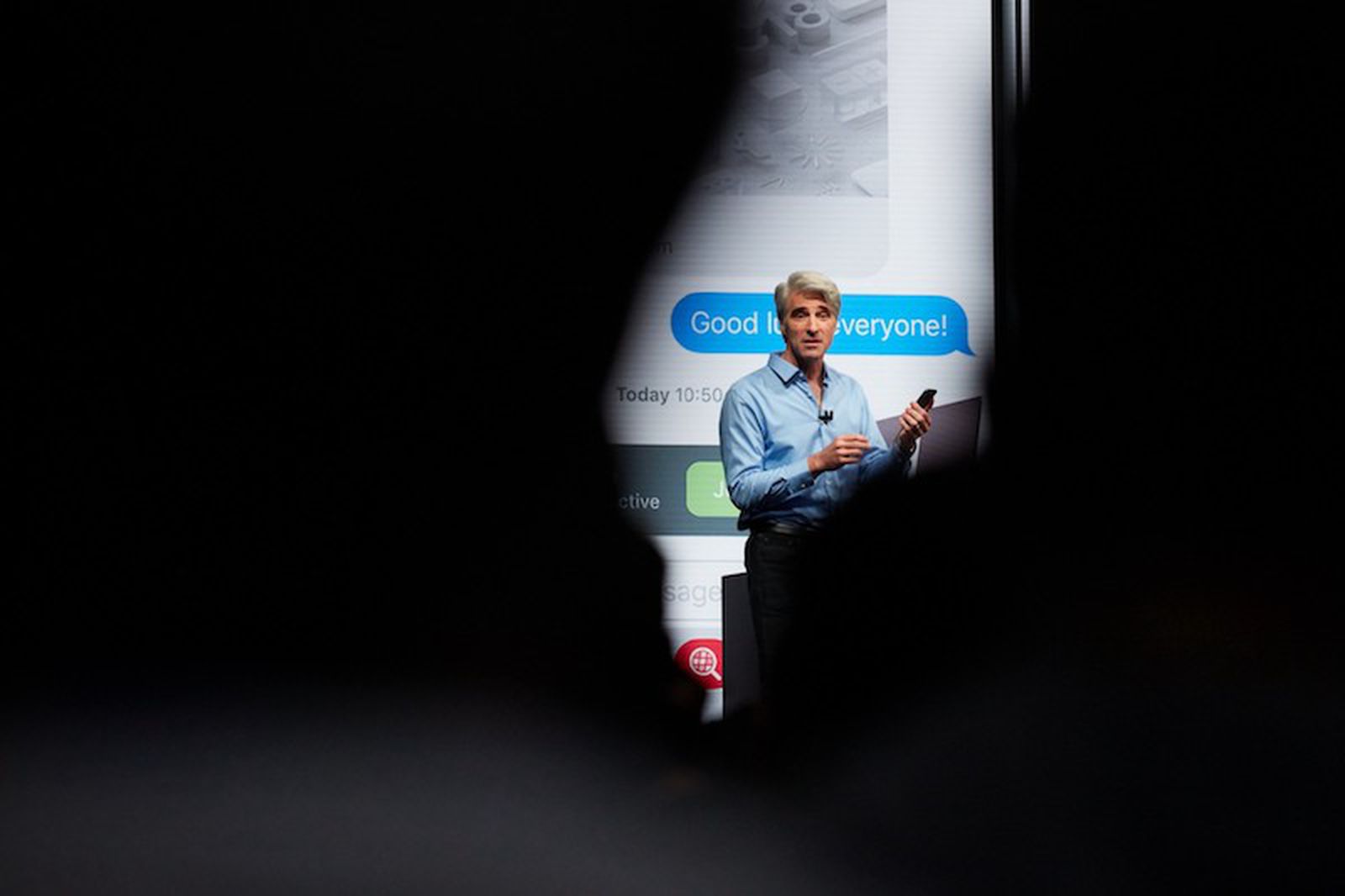
Apple has restructured its artificial intelligence strategy under software chief Craig Federighi, accelerating plans to overhaul Siri by relying on external AI models after years of internal delays and organizational friction. According to a detailed report from The Information, Apple's approach to artificial intelligence has undergone a significant shift over the past year. Apple software chief Craig Federighi is said to be at the center of that shift, having assumed direct oversight of the company's AI organization and is now driving decisions that will shape the future of ‌Siri‌ and other Apple Intelligence features across the product lineup. Last fall, Federighi apparently addressed a joint meeting of Apple's software and AI teams, expressing enthusiasm for closer collaboration while also signaling dissatisfaction with the company's pace of progress in artificial intelligence. Some members of Apple's foundation models team interpreted the remarks as criticism of their work. In December, Apple moved to consolidate its AI leadership under Federighi, completing a transition that had begun earlier in the year when responsibility for ‌Siri‌ was removed from the AI group and brought under Federighi's software division. In January, Apple announced plans to use Google's Gemini AI models to power future AI upgrades, including an improved version of ‌Siri‌. In Federighi's view, integrating a third-party model would allow Apple to finally ship a revamped ‌Siri‌ later this year after controversially postponing the update in 2025. However, the report also outlines internal concerns about the implications of placing AI under Federighi's control. People who have worked closely with him described him as highly cost-conscious and skeptical of investments with uncertain returns. This approach stands in notable contrast to rivals such as OpenAI, Meta Platforms, and Google, who invest tens of billions of dollars in data centers, chips, and AI researchers. Apple has attempted to limit infrastructure spending by emphasizing on-device processing and its Private Cloud Compute system, which uses Apple silicon. The company was said to be waiting for the cost of AI computation and talent to decline, betting that most consumer use cases will eventually be handled locally on devices. Federighi apparently viewed AI as unpredictable and difficult to control, preferring deterministic software behavior that could be clearly specified during design reviews. He rejected proposals to use AI to dynamically reorganize the iPhone home screen, arguing that such changes would confuse users. Tensions over AI strategy have surfaced internally before. Around 2019, Mike Rockwell, who was leading development of the Vision Pro headset, reportedly proposed an AI-driven interface. He criticized Federighi's software approach as overly conservative, prompting a rebuke. Rockwell was later placed in charge of ‌Siri‌ in early 2025 and now reports directly to Federighi. Despite his earlier skepticism, Federighi's stance shifted following the release of ChatGPT in late 2022. People close to him said he became convinced of the potential of large language models after experimenting with the technology and instructed his teams to explore ways to integrate similar capabilities into Apple products. Federighi reportedly concluded that Apple's internal models did not perform adequately on devices, while members of the foundation models team believed they were being blamed for challenges related to model optimization, which fell under the software organization's responsibilities. Some team members complained they were not given sufficient guidance on how their models would ultimately be used, limiting their ability to compete with external alternatives. Around the time Apple removed ‌Siri‌ oversight from Giannandrea and assigned it to Rockwell, with Federighi directing the broader effort, Federighi instructed teams to…

Justin Bieber Is Looking To End His Historic Grammy Losing Streak

2026 Academy Awards Nominations: ‘Sinners’ Receives 16 Nods, Breaking The Oscar Record

Amazon Reveals ‘Fallout’ Season 2 Viewership Minus Actual Numbers
Fallout season 2 has been watched less than season 1, but Amazon is laying out the details without actually mentioning numbers.

Zach Bryan Denied His First No. 1 On One Chart By Pop’s Newest Hitmaker
20th Anniversary iPhone May Not Have All-Screen Design After All

Ariana Grande Dominates One Chart As Multiple Career-Making Hits Return

Bruno Mars’ Debut Album Hits A New Peak, Thanks To His Latest Smash
Bruno Mars' debut full-length Doo-Wops And Hooligans soars to a never-before-seen peak on the U.K.'s albums streaming chart after he released new hit "I Just Might."
Apple Responds to Slowing China Sales With Lunar New Year Discounts

ChatGPT Atlas Gains Tab Groups, Auto Google/AI Search Switching

Claude AI iPhone App Can Now Connect to Apple Health in the US

Cut Apple Music iPhone Storage Usage in Minutes – Here's How
As an Apple Music subscriber, you're able to download songs, playlists, and albums from the Apple Music catalog to your iPhone or iPad for offline listening, but this can gradually eat up your device's storage space over time. Fortunately the Music app includes a handy feature that can spring into action whenever your device's storage space runs low, and automatically offload songs you haven't played for a while in order to make space for newer ones. It's called Optimized Storage, and here's how you can enable it. Launch the Settings app on your iPhone or iPad. Scroll down to the apps list and select Music. Under Downloads, tap Optimized Storage. Toggle the Optimized Storage switch to the "on" position so that it shows green. Choose a minimum storage amount that you want to keep for music before downloaded songs start being removed from your device.You can also monitor storage space by turning off automatic downloads and making sure to download new songs manually when needed. There's also an option to remove downloaded songs one by one from the Apple Music app if you prefer not to have songs offloaded by Apple automatically. Tag: Apple MusicThis article, "Cut Apple Music iPhone Storage Usage in Minutes – Here's How" first appeared on MacRumors.comDiscuss this article in our forums