Le Journal

The Road To De-Civilization: Inflation & The Moral Erosion Of Society

How A Missed Train In 1876 Led To The Adoption Of Standard Time
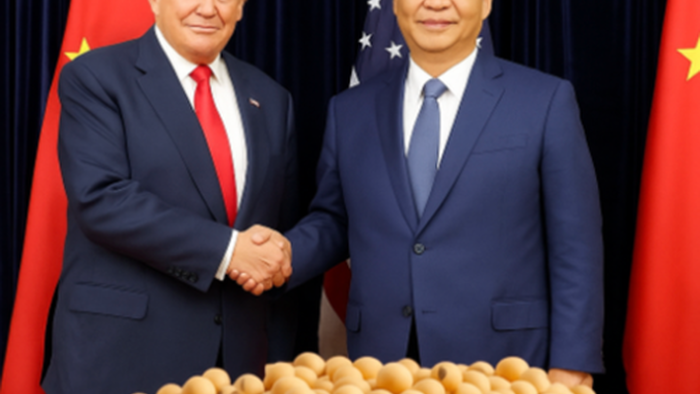
Beijing Jumps Back Into US Soybean Market, Snaps Up 20 Cargo Loads After Abrupt Pause

Pennsylvania School District Using AI-Enabled Wi-Fi To Search Students For Firearms

Ecuador Slams Door On Hosting US Military Base In National Referendum
Ecuador Slams Door On Hosting US Military Base In National Referendum Ecuador just had a major vote which has gone some underreported in US mainstream media, given perhaps the current focus on the Venezuela crisis. The Latin American country held a referendum Sunday on allowing allowing the return of foreign military bases in the country. This was ultimately seen as a vote on allowing an American military presence, which the US has long sought to reestablish. Ecuadoreans voted down the proposal in a significant blow to President Daniel Noboa, who has sought a change in the constitution. Since 2008, the constitution has banned foreign bases on Ecuadorean soil. Image source, US Air National Guard: Ecuador's military receives a US C-130H Hercules aircraft in Latacunga. One of Noboa's key rationales for seeking a reversal of the prior legislation was to have outside assistance in fighting soaring crime and drug-trafficking in the country and region. The referendum was held 16 years after the United States was made to shut down a military site on Ecuador's Pacific coast. The New York Times suggests that Ecuadoreans currently see the Trump administration pushing its military might around in the Caribbean while threatening countries like Venezuela, Colombia, and even more recently Mexico: They soundly rejected a national referendum on Sunday that he had backed, aimed at authorizing a foreign miliary presence in Ecuador. With more than 98 percent of ballots counted, 61 percent opposed the measure. The vote comes as the region has been roiled by the intensifying U.S. military campaign against boats the Trump administration claims are smuggling drugs. The Ron Paul Institute also sees in this a grass roots movement among foreign peoples to reign in US foreign policy and militarism in their lands. Journalist and pundit Adam Dick writes the following: There is not a lot of reason for hope for the US to start adhering soon to a noninterventionist foreign policy. Indeed, President Donald Trump has been moving the US in the opposite direction. He continued US participation in the wars of his predecessor. This includes the Ukraine and Israel wars, in regard to which Trump had promised, in the lead-up to becoming president, to bring peace very quickly. Further, Trump has begun a new war against Venezuela and is threatening to pursue a new “Global War for Christians,” starting with threats of US military attacks in Nigeria. Meanwhile, Congress does nothing to stop or curtail the intervention. There seems to be little hope of the US government choosing to move toward nonintervention abroad soon. Maybe some of the best hope for change in that direction comes from people in other countries saying “no more” to aiding the US government’s interventionist pursuits. On Sunday, a majority of voters in Ecuador voted in a national ballot measures election against allowing the US government to have military bases in the South American country. The “no” vote win occurred despite Ecuador President Daniel Noboa strongly campaigning for the ballot measure’s approval. So long as Americans fail to put an end to their government’s interventions abroad, there is hope that people in Ecuador and elsewhere around the world can impose some restraint. Also in the background has been Trump admin officials really pushing and reviving concept of influence in the world based on the 18th century Monroe Doctrine. AFP/Getty Images The historic Monroe Doctrine declared the Western Hemisphere off-limits to other countries, while vowing at the same time the US would stay out of European affairs. Of course, Washington is currently only interested in the former part of this and not so much the latter. Tyler Durden Tue, 11/18/2025 - 20:30

Federal Court Blocks Texas's New House-Map Favoring Republicans
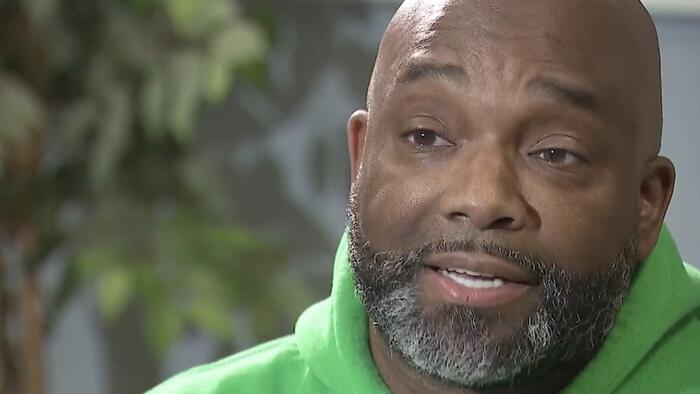
Maryland Gives $6M To Nonprofit Leader Who Owes Over $200K In Back-Taxes

TikTok Zombie Brain Rot Confirmed By Major Study
TikTok Zombie Brain Rot Confirmed By Major Study Authored by Steve Watson via Modernity.news, A bombshell Griffith University study has validated a long suspected reality: short-form videos (SFVs) like TikToks and Instagram Reels are frying brains, slashing attention spans, and crippling cognitive endurance. Such content is turning a generation into scatterbrained zombies unable to tackle real-world complexities amid algorithmic dopamine traps. The meta-analysis, reviewing 71 studies and data from 98,299 participants, uncovered a “consistent pattern” of harm from heavy SFV consumption. Bingeing TikTok reels may be hazardous to your well-being. 71 studies, >98k people: The more short-form videos teens and adults watched, the more they struggled with attention, self-control, and stress and anxiety. Read a book. Watch a movie. Long live longform. pic.twitter.com/Yzyv68kBDh — Adam Grant (@AdamMGrant) November 14, 2025 Researchers concluded: “Overall, this meta-analysis revealed a consistent pattern linking higher SFV use with poorer cognitive performance, particularly in attentional control and inhibitory processes.” They warn: “These associations may reflect cognitive strain or emerging disruptions in cognitive endurance and attentional regulation among heavier SFV users.” “Given the central role of attention and executive functioning in academic, occupational, and daily goal-directed tasks, these patterns may indicate broader difficulties in sustaining mental effort over time,” the study further notes. The study pinpoints risks for deep thinking: “Tasks requiring prolonged concentration (e.g., reading comprehension, complex problem solving) may be more difficult to sustain, especially as SFV platforms reinforce brief, high-reward interactions through rapid feedback and algorithmic content delivery.” National Review’s Michael Brendan Dougherty has amplified the alarm, linking SFV addiction to civilizational decay. “The last inherited habits of civilization are giving way to the onset of paranoia, distrust, and desperation for answers. Most things you thought were solid in our civilization have been vaporized and evacuated. The second you lean on these structures, they fall apart,” Dougherty urges. He envisions a grim future: “If we’re going to conserve anything through this period, it’s going to require heroic work and institution-building. Which will require trust, and trust implies some agreement on the deep values. But how can that be achieved when most thoughts are flattened into 15-second video shorts on TikTok and Instagram Stories? God help us.” The study confirms that social media obsession is self-sabotage, breeding a dumber electorate hooked on snippets over substance—paving the way for real discourse to reclaim focus and rebuild what algorithms have wrecked. Your support is crucial in helping us defeat mass censorship. Please consider donating via Locals or check out our unique merch. Follow us on X @ModernityNews. Tyler Durden Tue, 11/18/2025 - 19:15

Constellation Gets $1 Billion Loan From US Govt To Restart Three Mile Island

Appeals Court Sides With CNN Over Trump

Brazil's Banco Master Collapses: CEO Detained, Regulator Shuts Lender Down