Le Journal

Want to donate to charity? Here are 10 guidelines for giving effectively.

Want to help animals? Here’s where to donate your money.
In factory farms, pigs are sometimes locked in crates the width and length of their bodies, so they can’t even turn around. | Getty Images If you care about animals and want to reduce their suffering, but aren’t sure exactly how, Animal Charity Evaluators (ACE) is an organization that might be able to help. The California-based nonprofit puts out an annual guide for recommended animal charities, and it recently released its list for this year. (Disclosure: ACE has helped fund some of Future Perfect’s work since 2020.) Most of the top charities focus on improving conditions on factory farms, which makes sense, given that they’re sites of suffering on a massive scale. It’s not just the death that takes place there — in the US, factory farming kills more than 10 billion land animals each year — but the suffering that animals are forced to endure while they’re alive. Hens, calves, and pigs are often confined in spaces so small they can barely move, and conditions are so galling that “ag-gag” laws exist to hide the cruelty from the public. Sign up for the Meat/Less newsletter course Want to eat less meat but don’t know where to start? Sign up for Vox’s Meat/Less newsletter course. We’ll send you five emails — one per week — full of practical tips and food for thought to incorporate more plant-based food into your diet. When we hear about some of these conditions — like the fact that chickens are forced to produce eggs at such a fast rate that their intestines sometimes partially fall out under the strain — we may want to put a stop to them. But it can be hard to know which charities will actually make good use of our dollars. ACE researches and promotes the most high-impact, effective ways to help animals. The group uses three main criteria when deciding whether to recommend an organization: Charities must be “likely to significantly and cost-effectively reduce the suffering of many animals” — that is, they’re doing high-impact work and they’ve got the evidence to back it up. Charities must have “room for more funding” — meaning that if they get an influx of new funding as a result of being recommended as a top charity, they have the capacity to put it to good use. Charities must have strong “organizational health,” meaning the group is run well and has a positive, stable culture. With this in mind, ACE has selected its recommended charities for 2025: 1. Sinergia Animal: Industrialized meat production is growing rapidly across Latin America and Asia, and Sinergia Animal — which was founded only seven years ago in 2018 — has quickly become a leader in fighting back against it. The group has investigated conditions at numerous farms, persuaded dozens of food companies in the Global South to commit to higher animal welfare standards, and worked with school cafeterias to serve more plant-based meals. 2. Aquatic Life Institute: Fish are consumed in higher numbers than any other animals — an estimated 1.1 to 2.2 trillion are scooped out of the ocean annually, with an additional estimated 716 billion fish and crustaceans farmed in what activists describe as “underwater factory farms.” Aquatic Life Institute was formed in 2019, making it one of the first animal protections groups focused on advocating for wild-caught and farmed fish and crustaceans. So far, the organization has helped pass Washington’s and California’s bans on octopus farming, persuaded major food companies to improve the treatment of aquatic animals raised and caught for food, and improved welfare standards for major seafood certification programs, among other changes. The Vox guide to giving The holiday season is giving season. This year, Vox is exploring every element of charitable giving — from making the case for donating 10 percent of your income, to recommending specific charities for specific causes, to explaining what you can do to make a difference beyond donations. You can find all of our giving guide stories here. 3. Dansk Vegetarisk Forening: Operating in…

Want to help save the most lives possible? Here’s where to give money.

Want to fight climate change effectively? Here’s where to donate your money.

The end of malaria
I wasn’t always a boring newsroom-bound editor. Back in my days as a Time magazine foreign correspondent, I used to fly to far-flung places, recorder and notebook in hand. That’s how, in the summer of 2005, I found myself in Mae Sot, a small city in Thailand near the border with Myanmar, tasked with contributing to a major cover package the magazine was producing on heroes of global health. I was there to visit a rural medical clinic largely run by and for refugees from Myanmar’s military government. The patients were overwhelmingly there for one reason: malaria. While southeast Asia had made significant progress against the disease, malaria was still highly active in Mae Sot. I saw rows and rows of feverish patients laying motionless in their net-covered beds. And then, when I got back to my home in Hong Kong a few days later, I became one of them. After a few extremely unpleasant days of shaking chills alternating with high fevers, my case resolved itself. I was lucky. Hundreds of thousands of people each year aren’t so fortunate. Over 260 million people contracted malaria in 2023, and nearly 600,000 died — the vast majority of them young children in sub-Saharan Africa. Malaria has been killing human beings for at least 10,000 years, if not longer. And for millennia, it was treated as a miserable fact of life. But today, malaria is no longer inevitable. Not just in places like the southern US, where it has long since been eradicated, but anywhere. Since 2000, the global malaria death rate has been cut roughly in half. The World Health Organization (WHO) estimated that, between 2000 and 2023, malaria treatment and prevention programs averted about 2.2 billion cases and 12.7 million deaths worldwide. Countries from China to Sri Lanka to Paraguay have been certified malaria-free, and many more now report only a scattering of cases each year. A child born in Africa today is far less likely to die of malaria than one born in 2000. But the news isn’t all good. Since the mid-2010s, the declines in malaria cases and deaths have largely plateaued. Mosquitoes are evolving to resist the insecticides used on most bed nets, and the malaria parasite carried by the insects has developed partial resistance to the most common malaria medications in parts of East Africa. Climate change is lengthening transmission seasons and nudging mosquitoes into new areas. Covid-19 disrupted bed net campaigns and routine care. You can see it in the global data. The latest WHO figures show 263 million cases and 597,000 deaths in 2023 — about 11 million more cases than 2022 and, essentially, the same number of deaths. The graph that once sloped downward now looked uncomfortably flat. View Link A new generation of tools arrives — but will we choose to use them? But, this is the Good News newsletter, and I have some good news for our fight against malaria. In November, researchers announced results from a major trial of a new malaria treatment called GanLum, a combination of ganaplacide and a once-daily formulation of lumefantrine. GanLum achieved a 97.4 percent cure rate. Ganaplacide works differently than past malaria treatments, disrupting the parasite’s protein transport system, and the combo appears to work well even against partially drug-resistant strains that have been emerging in Rwanda, Uganda, and Eritrea. Novartis calls it the first major innovation in malaria treatment since artemisinin-based combination therapies (ACT) were introduced more than 25 years ago, and it plans to seek regulatory approval, with a commitment to provide it on a not-for-profit basis in endemic countries. That’s the sword once malaria invades your body. But, we also have new shields to stop the parasite from getting in. For the first time, we now have two malaria vaccines that work well enough to roll out across high-burden African countries: RTS,S/AS01 and R21/Matrix-M. Both target the malaria parasite in children in areas with moderate to high transmission. RTS,S has…

Congress is the Supreme Court’s favorite punching bag, and it’s about to get decked

Your blood could save up to three lives this Giving Tuesday

Isabelle Campagnola-Savon pose les bases des nouvelles frontières d’Euroméditerranée

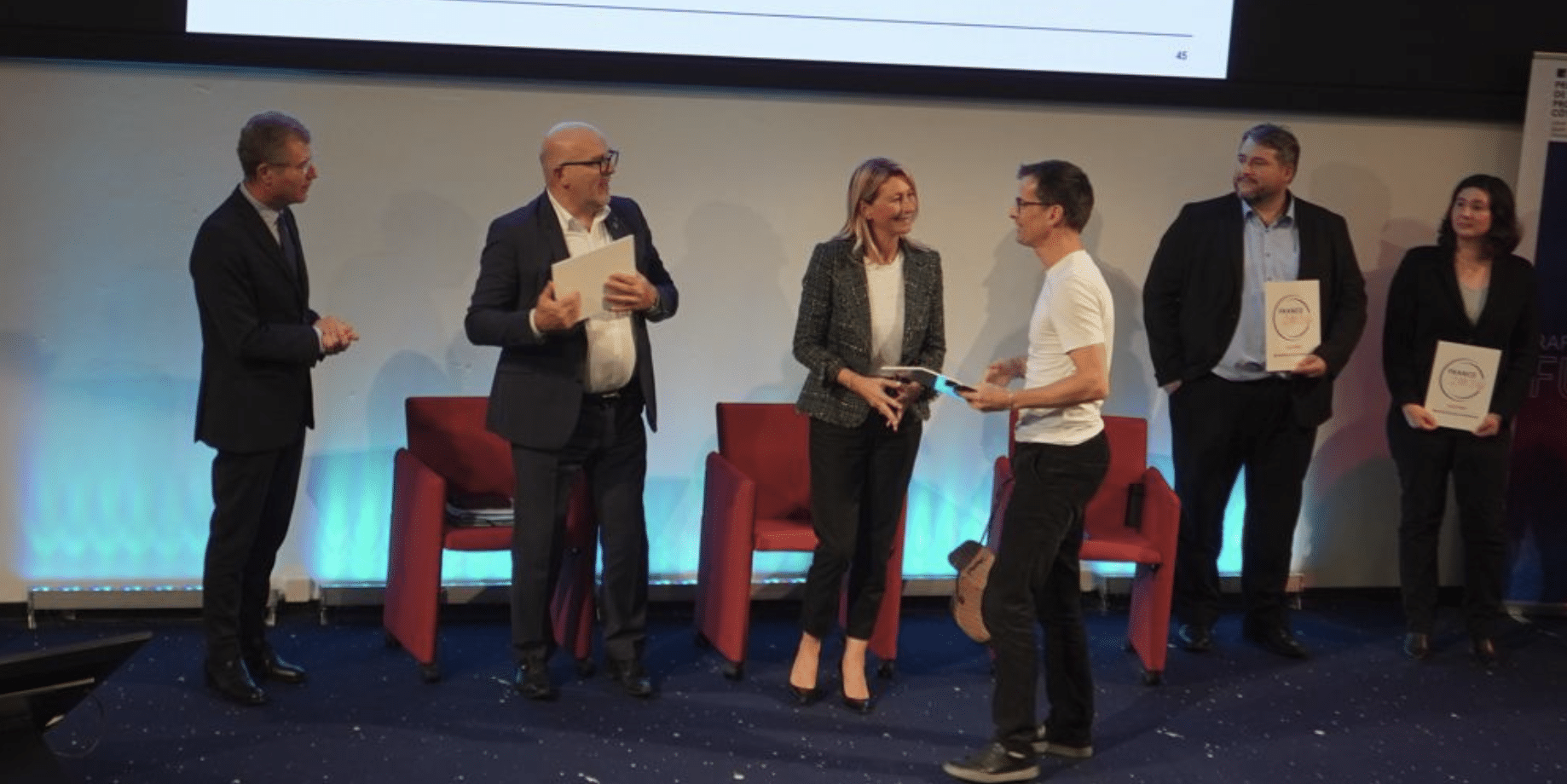
France 2030 : Bruno Bonnell veut « amplifier la dynamique » dans le Sud
Bruno Bonnell, Secrétaire général pour l’investissement, en visite dans la métropole vendredi 28 novembre, a réaffirmé la poursuite du soutien de l’État aux entreprises innovantes de la région Provence-Alpes-Côte d’Azur lors d’une journée consacrée à la poursuite du déploiement du plan d’investissement France 2030 et à la rencontre d’entreprises lauréates. Après les visites d’entreprises dans […]

Agenda : notre sélection de temps forts du 1er au 5 décembre 2025
Lundi 1er décembre 9h15, Marseille. Sept ans après le lancement du dispositif Make The Choice, l’UPE 13 organise un point presse dans ses locaux, pour revenir sur cette démarche initiée en faveur des jeunes entrepreneurs. 11h, Marseille. Nommé par décret du président de la République, le 19 novembre 2025, Jacques Witkowski dépose dans la matinée, à […]