
Le Journal

Ford’s Raptors Got Schooled By A Budget Brand At Dakar

Selling His Lucid After Just 6.5K Miles Cost Him Nearly $50,000

Most Western Carmakers Could Be Pushed Out Of China By 2030

La prospective financière des collectivités territoriales - Méthodologie pour élaborer et piloter sa stratégie financière
Pilotage et contrôle financier de la délégation de service public - Comment maîtriser l'économie du contrat
Cet ouvrage vous donne les clés pour structurer, piloter et contrôler l'économie des délégations de service public. Il vous aide […]
La M57 en pratique - 23 fiches pour passer de la norme à l'action
Responsabilité des élus et des agents publics devant les juridictions financières

Measure–Meet–Repeat: Why tracking happiness is crucial to AI at work
Every major technological shift arrives with bold promises of efficiency and productivity. The current wave of artificial intelligence is no different. The forecasts are breathless: tasks automated, workloads reduced, insights unlocked, entire sectors transformed. But behind the promises sits a neglected question: what will work actually feel like? Efficiency projections tell us nothing about the emotional reality of daily working life. And those emotional realities determine whether people collaborate, innovate, stay in their roles, or quietly disengage. In an era dominated by AI hype, we need a different lens to understand the future of work. That lens is happiness — not as a perk or a soft ideal, but as a dynamic, measurable signal of how well work is working. AI will transform what we do at work. But only human leadership will determine how it feels to do it. Tracking happiness is the compass leaders need to guide that transition. The hype is clear: The emotional reality is not The dominant AI narrative is astonishingly one-dimensional. It focuses on speed, output, and efficiency. Organizations want to know what can be automated, streamlined, or redesigned. But the human experience of work doesn’t hinge on efficiency. It hinges on connection, fairness, autonomy, growth, and meaning. These emotional forces determine whether technology is experienced as liberating or oppressive. History shows that technological revolutions rarely reduce the pace of work. Email sped up expectations. Smartphones dissolved boundaries between home and office. Collaboration tools multiplied communication channels. In theory, each innovation made things easier; in practice, work often became more intense. AI could repeat this pattern — or radically improve it. The difference won’t be in the code. It will be in the culture into which AI is introduced. And that is why happiness matters. Fear is legitimate — and dangerous if ignored Many workers worry that AI threatens their jobs. These fears aren’t irrational. People sense the scale of change coming, and they know decisions are being made behind closed doors. Fear itself isn’t the problem. But fear left to its own devices is dangerous. When people are frightened about the future of their roles, their nervous systems switch into threat mode. Threat mode triggers withdrawal: silence, disengagement, reluctance to take risks. That is the opposite of what organizations need during transformation. Creativity shrinks. Collaboration becomes cautious. Initiative declines. The real danger isn’t AI — it’s secrecy. When AI is developed “behind the curtain” and then imposed on the workforce, people imagine the worst. And in the absence of clear information, imagination rarely paints a hopeful picture. People don’t need perfect reassurance. They need honesty. They need to feel part of the process, not passive recipients of decisions made elsewhere. When leaders treat AI as a social transition as much as a technical one, fear becomes something to work with rather than something that corrodes morale. Fair and transparent processes create psychological safety — and without psychological safety, no amount of technology will produce good work. Why happiness is the missing guide to AI adoption Well-being has been a major organizational focus for years. It tells us whether people are coping; but it rarely tells us whether they are thriving. Happiness is different because when feel people good they do good work, they thrive. More importantly, happiness is dynamic. It fluctuates week by week, responding to workload, relationships, fairness, and progress. These fluctuations are signals, not noise. They give leaders clear, real-time insight into whether teams feel energized or overwhelmed, hopeful or anxious, supported or alone. This is exactly the kind of frontline feedback leaders need during rapid technological change. Leaders need something more agile — a live emotional dashboard showing how people are experiencing the…
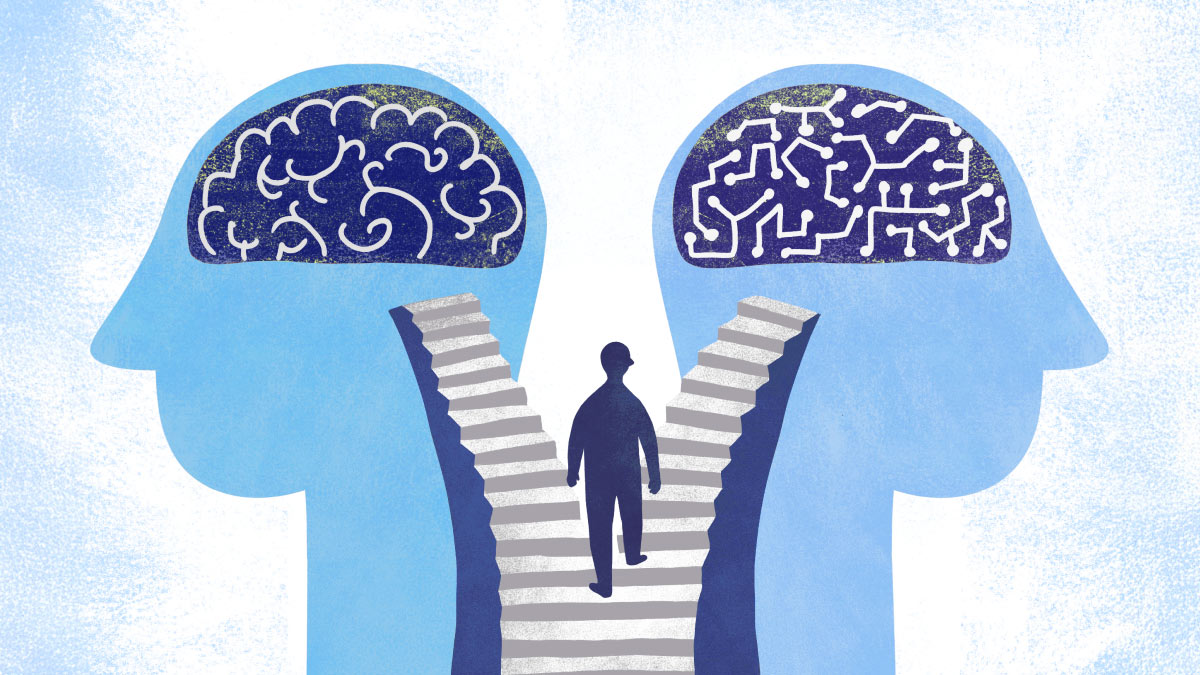
Critical guides for the AI era: Shakespeare, Plato, and Carl Jung

Les résultats du week-end de l’Association (S3) 📆

Le programme de la semaine (S4) 📆
