
Le Journal

Le PSG récupère un badge à Lens
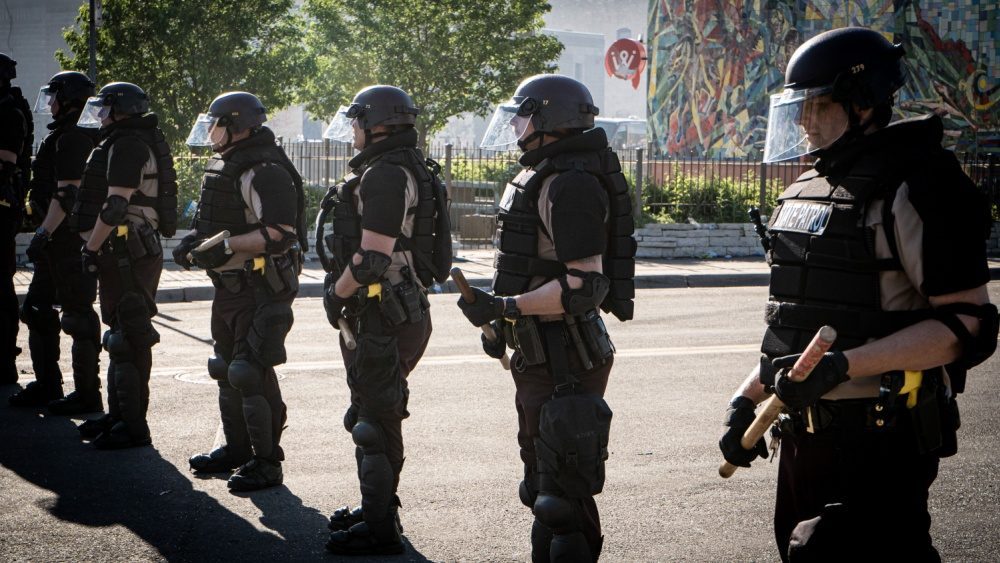
Pentagon readies 1,500 troops for potential deployment to Minnesota
The U.S. military has directed roughly 1,500 active-duty Army personnel to be ready for a potential mission to Minnesota, according to U.S. defense officials, as tensions rise following large demonstrations tied to federal immigration enforcement efforts. Citing unnamed defense officials, The Washington Post reported that the army placed the units on prepare-to-deploy orders in case violence in the northern state escalates – adding that it is not clear whether any of them will be sent. The soldiers are drawn from two infantry battalions within the Army’s 11th Airborne Division stationed in Alaska, with the division known for operating in extreme cold environments. Officials described the move as a contingency measure should conditions in Minnesota deteriorate, emphasizing that no final decision has been made on whether the troops will actually be sent. Defense officials said the order reflects routine planning rather than an imminent deployment. The White House echoed that position, noting that the Pentagon must remain ready for “any decision the President may or may not make.” A Defense Department spokesperson added that the military stands prepared to carry out lawful directives from the commander in chief. Officials also stressed that the preparation has no connection to recent comments by President Donald Trump regarding Greenland. The heightened alert follows Trump’s public warnings that he could invoke the Insurrection Act if Minnesota leaders fail to prevent protesters from interfering with immigration officers. In a post on his Truth Social account, Trump wrote: “If the corrupt politicians of Minnesota don’t obey the law and stop the professional agitators and insurrectionists from attacking the Patriots of I.C.E., who are only trying to do their job, I will institute the INSURRECTION ACT.” Despite that threat, Trump later appeared to soften his stance, saying there was no need to invoke the law “right now,” while adding, “If I needed it, I’d use it.” The Insurrection Act, enacted in 1807, allows a president to deploy active-duty troops or take control of a state’s National Guard in response to rebellion or severe civil disorder. Its use is rare and generally viewed as a last resort. The most recent invocation came in 1992, when President George H.W. Bush sent troops to Los Angeles during riots that left dozens dead and caused extensive damage. Even without invoking the statute, presidents can deploy military forces domestically for limited purposes, such as guarding federal property or personnel. Trump relied on that authority when he sent Marines to Los Angeles during earlier protests. Minnesota has become a focal point of the administration’s immigration agenda since December, when the Department of Homeland Security launched Operation Metro Surge. In response to the unrest in his city, Minneapolis Mayor Jacob Frey criticized the federal response, arguing it was designed to provoke confrontation. Frey said on CNN: “We’re not going to give them an excuse to do the thing that clearly they’re trying to set up to do right now, which is these 1,500 troops. I never thought in a million years that we would be invaded by our own federal government.” Frey, along with Minnesota Governor Tim Walz, have urged demonstrators to remain peaceful. Walz has authorized the state’s National Guard to assist local agencies if needed, though the troops have not been deployed. At the same time, the Justice Department has opened an investigation into whether Walz, Frey, and other Democratic officials obstructed immigration enforcement. Both leaders have condemned the probe as politically motivated, with Frey stating that his office had not yet received a subpoena. He called the investigation “deeply concerning,” and added, “This whole investigation would ultimately be the product of one of the most basic, foundational responsibilities that I have as mayor, which is to speak on behalf of my constituents.” Editorial credit: MUNSHOTS /…

European leaders push back at Trump’s Greenland tariff threats, triggering emergency talks

Rams beat Bears 20-17 in overtime to advance to NFC Championship Game

New England Patriots defeat the Houston Texans 28-16 in the AFC Divisional Round
The New England Patriots are returning to its first AFC Championship Game since 2018, after a 28-16 victory agains the Houston Texans at Gillette Stadium in Foxboro, Massachusetts on Sunday in the AFC Divisional Round. QB Drake Maye scored three touchdowns despite four fumbles and the Patriots turning over the ball three times. They recorded five takeaways against quarterback C.J. Stroud and Houston’s offense to secure a hard-fought victory over the Texans. Stroud tossed four interceptions in the first half, with running back Woody Marks losing a fumble for Houston’s fifth turnover of the day. The Patriots will face the No. 1 seeded Broncos in Denver next Sunday at 3 p.m. ET in the AFC Championship Game. Editorial credit: M Sunny 39 / Shutterstock.com The post New England Patriots defeat the Houston Texans 28-16 in the AFC Divisional Round appeared first on KLBJ-AM - Austin, TX.

Michael J. Fox joins Harrison Ford in Season 3 trailer for ‘Shrinking’ on Apple TV+

Chris Hemsworth returns as Thor in teaser for ‘Avengers: Doomsday’

En France, 53 milliardaires sont plus riches que 32 millions de personnes

« Au Verdon, pas de saumon » : des centaines de manifestants en Gironde contre un mégaprojet d'élevage
Quelque 800 personnes ont défilé au Verdon-sur-Mer, en Gironde, pour s'opposer à la construction d'un vaste élevage de saumons, la veille de la conclusion de l'enquête publique sur le projet. Le Verdon-sur-Mer (Gironde), reportage L'incertitude a plané jusqu'à 14 heures : combien se déplaceraient jusqu'ici, ce dimanche, au Verdon-sur-mer, petit port girondin à l'extrême pointe du Médoc pour dénoncer l'installation d'un élevage de saumons Pure Salmon ? 200, 300 personnes ? « Déjà, nous (…) Lire la suite - Reportage / Photographies , Luttes , Pêche , Mille Vaches et fermes-usines

Moins chère, aspergée de pesticides : la lentille canadienne met à mal la filière française
Produite avec des pesticides interdits en Europe, la lentille du Canada est largement présente dans nos assiettes. Au risque de fragiliser une production française en plein essor. Près de 80 tonnes de lentilles attendent preneur à Laure-Minervois, dans l'Aude. Dans les hangars de la coopérative Graines équitables, une bonne moitié de la dernière récolte reste sur les bras des producteurs. « Faut-il dire à nos agriculteurs de ne pas semer pour l'an prochain ? » s'inquiète Yann Bertin, son (…) Lire la suite - Info / Pesticides , Quotidien , Alimentation

Avec Donald Trump, « la lutte contre le changement climatique est vue comme de l'extrémisme »
Depuis son retour au pouvoir, Donald Trump s'acharne sur les environnementalistes et antifascistes, traités de « terroristes » et « extrémistes ». Une bascule répressive qui ne cesse de s'élargir, explique le journaliste d'investigation Will Potter. Will Potter est journaliste d'investigation, spécialiste de l'utilisation de lois antiterroristes contre les mouvements environnementaux. Il a écrit Green is the new Red (Le Vert est le nouveau Rouge) sur la peur entretenue par le pouvoir (…) Lire la suite - Entretien / Monde , Libertés , Luttes
